Air Fryer, Microwave, or Toaster Oven: Which Is Better for Each Use?
Compare air fryers, microwaves, and toaster ovens for reheating, defrosting, crisping, cake, pizza, and everyday cooking.
Choose a microwave mainly for reheating and defrosting, an air fryer for fast crispy food, and a toaster oven for baking, pizza, bread, and larger flat cooking areas. Base the decision on your three most frequent foods and usable capacity.
Air Fryer, Microwave, or Toaster Oven: Which Is Better for Each Use?
These appliances are not direct substitutes. Each uses a different dominant heating method. A microwave excels at rapid reheating and defrosting, an air fryer at quickly crisping small-to-medium portions with high-speed hot air, and a toaster oven at oven-style baking, toasting, grilling, and handling broader tray-based foods.
Quick answer: Choose a microwave if leftovers, liquids, and defrosting dominate your routine. Choose an air fryer for fries, wings, snacks, and fast crisping with little added oil. Choose a toaster oven for cake, pizza, bread, gratins, and larger flat cooking areas. Buy around your most common foods rather than the number of preset programs.
Core technology
| Appliance | Dominant method | Main strength |
|---|---|---|
| Air fryer | High-speed hot-air circulation | Fast crisping |
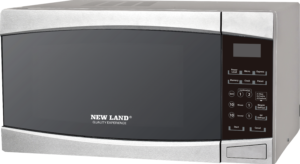
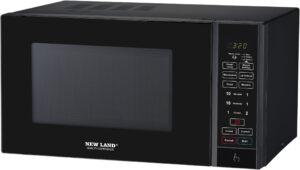
| Microwave | Microwave energy | Fast reheating and defrosting |
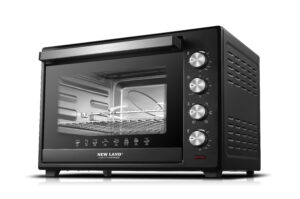
| Toaster oven | Radiant elements, sometimes convection | Bake, Toast, Grill, larger flat area |
Leftovers
A microwave is generally fastest for rice, stews, soups, and moist foods. Foods that need their crust restored usually benefit from an air fryer or toaster oven.
French fries
An air fryer is usually the natural choice for a crisp surface with little added oil. A convection toaster oven can also perform well depending on its airflow and tray design.
Chicken
Wings and smaller pieces crisp efficiently in an air fryer. Larger portions or tray-sized meals may fit a toaster oven more naturally.
Pizza
A toaster oven offers a flat baking area and oven-style heat. Air fryers suit smaller pizzas; a conventional microwave does not crisp dough like an oven.
Cake
A toaster oven with a controlled Bake mode generally offers greater flexibility. Some air fryers can bake, but basket geometry and element distance impose limits.
Bread and toast
A toaster oven is naturally suited to toast and bread. Air fryers can brown bread too, with different capacity and control.
Defrosting
Microwave Defrost is normally the fastest practical option. Hot-air appliances can heat the exterior before the center is thawed.
Gratins and browning
Toaster ovens and appliances with Grill provide direct surface browning. An air fryer can work with compatible cookware that fits without blocking airflow.
Heating drinks
A microwave is the practical choice when microwave-safe containers and liquid-heating precautions are observed.
Which is fastest?
Microwaves usually win for reheating and defrosting. Air fryers can be fast for small crisp foods because of their compact cavity and strong airflow. Toaster ovens may require more preheating depending on the recipe.
Which makes food crispest?
Air fryers and toaster ovens remove surface moisture through hot air and radiant heat. A standard microwave is not designed primarily for crisping unless it includes additional combination functions.
Which is better for moist foods?
Microwaves are highly practical for soups, stews, rice, and many moist dishes. A perforated air-fryer basket is not intended to contain free liquids.
Capacity
Do not compare liters alone. Cavity shape determines which real dishes fit. Toaster ovens often provide more flat tray area, while large or dual-basket air fryers have different practical capacity.
Electricity use
Rated wattage alone does not determine energy use. Energy depends on power, operating time, and cycling. A smaller appliance may finish a small load sooner, but model and recipe matter.
Is an air fryer oil-free?
It avoids deep frying. Many foods can cook with no added oil or a small amount, but “zero oil” is not a universal requirement for every recipe.
What changes with a grill microwave?
Grill and Combination modes can brown surfaces and expand capability, but they do not make the appliance identical to an air fryer or toaster oven.
How close is a convection toaster oven to an air fryer?
Both circulate hot air, but air speed, cavity geometry, element distance, and basket/tray design differ. Identical recipes may therefore need different time and temperature.
One or two people
If small crisp meals dominate, a compact air fryer can be very convenient. If reheating dominates, a microwave may deliver more value.
Larger families
Usable cooking area becomes important. Compare internal dimensions and tray/basket geometry rather than relying on nominal capacity.
Small kitchens
Identify the dominant use before buying three appliances. Combination products can cover overlap but do not always replace every specialized function.
If you do not own an oven
For baking, pizza, and tray cooking, a toaster oven is usually the closest countertop substitute. For fast crisping, an air fryer may be more attractive.
If time is the priority
Microwave reheating is difficult to beat for speed. An air fryer balances speed with browning for small portions.
Lower-oil cooking
Air fryers can prepare many browned foods with less oil than deep frying. Overall nutritional quality still depends on the food and recipe.
Cooking versatility
Toaster ovens can combine Bake, Toast, Grill, and sometimes Convection. Combination microwaves are also versatile, but actual model capabilities must be checked.
Use-case table
| Main use | First choice | Second choice |
|---|---|---|
| Fast reheating | Microwave | Toaster oven |
| Defrosting | Microwave | — |
| Crispy fries/snacks | Air fryer | Convection toaster oven |
| Cakes/pastries | Toaster oven | Air fryer suitable for baking |
| Pizza | Toaster oven | Large air fryer |
| Toast | Toaster oven | Air fryer |
| Moist dishes | Microwave | Toaster oven for final baking |
| Small-batch crisping | Air fryer | Toaster oven |
If you can buy only one
Mostly reheat and defrost: microwave. Mostly fast crispy food: air fryer. Mostly baking and oven-style versatility: toaster oven. If needs are evenly mixed, compare real Combination functions, usable capacity, and accessories.
If you can buy two
Microwave + air fryer covers fast reheating plus crisping. Microwave + toaster oven covers reheating plus baking. Air fryer + toaster oven makes more sense when microwave-style reheating is not important to you.
Cookware
Microwave-safe does not automatically mean Grill- or oven-safe. Air-fryer and toaster-oven cookware must tolerate cooking temperature and should not excessively block airflow.
Preheating
Standard microwave reheating does not require preheating. Air fryers and toaster ovens may require it depending on the recipe and appliance instructions.
Cleaning
Air fryers typically have removable baskets and drip trays. Microwaves need splash removal from the cavity. Toaster ovens collect crumbs and grease around trays and heating areas. Follow each manufacturer’s method.
Noise
Air fryers and convection toaster ovens use fans. Microwaves can also produce cooling-fan, transformer/inverter, and turntable noise. Actual sound levels are model-specific.
10 buying mistakes
- Choosing by wattage alone.
- Comparing capacity only in liters.
- Expecting a standard microwave to crisp like an air fryer.
- Choosing an air fryer for free-liquid foods.
- Ignoring toaster-oven tray dimensions.
- Assuming every Combination model has identical functions.
- Ignoring countertop ventilation clearance.
- Using incompatible cookware between appliances.
- Buying by preset count rather than actual use.
- Ignoring cleaning effort and real family capacity.
Buying checklist
- Write down your three most frequent foods.
- Decide whether reheating, crisping, or baking matters most.
- Measure the cookware and tray size you actually need.
- Check countertop space and ventilation.
- Consider power together with cooking time.
- Verify actual operating modes.
- Compare basket, tray, and cavity cleaning.
- For Combination products, confirm what each mode really does.
Conclusion
There is no universal winner. Microwave = reheating and defrost speed; air fryer = fast crisping for small-to-medium portions; toaster oven = baking and oven-style flexibility. The best choice is the appliance that matches your most frequent foods, usable family capacity, and kitchen space.
Common mistakes
Change only one variable at a time while diagnosing.
- Do not choose by wattage alone.
- Do not compare capacity only in liters.
- Do not expect a standard microwave to crisp like an air fryer.
- Do not choose an air fryer for free-liquid foods.
- Do not ignore actual toaster-oven tray dimensions.
- Do not assume all Combination models are identical.
- Do not ignore ventilation clearance.
- Do not assume Microwave-Safe automatically means Oven-Safe.
- Do not make preset count the main criterion.
- Do not ignore cleaning and usable capacity.
Frequently asked questions
Is an air fryer better than a microwave?
For crisping, usually yes; for rapid reheating and defrosting, a microwave is generally better.
Air fryer or toaster oven?
Air fryers excel at small-batch fast crisping, while toaster ovens offer more flexibility for baking, pizza, and larger flat foods.
Does a grill microwave replace an air fryer?
It expands capability but its heating method and results are not necessarily identical to an air fryer.
Which is better for cake?
A toaster oven with a suitable Bake mode and temperature control is usually the more natural choice.
Which is better for a small household?
It depends on food habits: frequent reheating favors a microwave; small crispy meals favor an air fryer.
If I can buy only one, which should I choose?
List your three most frequent foods and choose according to whether reheating, crisping, or baking dominates.