
Why Is My Juicer Producing So Little Juice?
Troubleshoot low juicer output by checking produce type and freshness, speed, piece size, feed pressure, filter blockage, assembly, and basket speed.
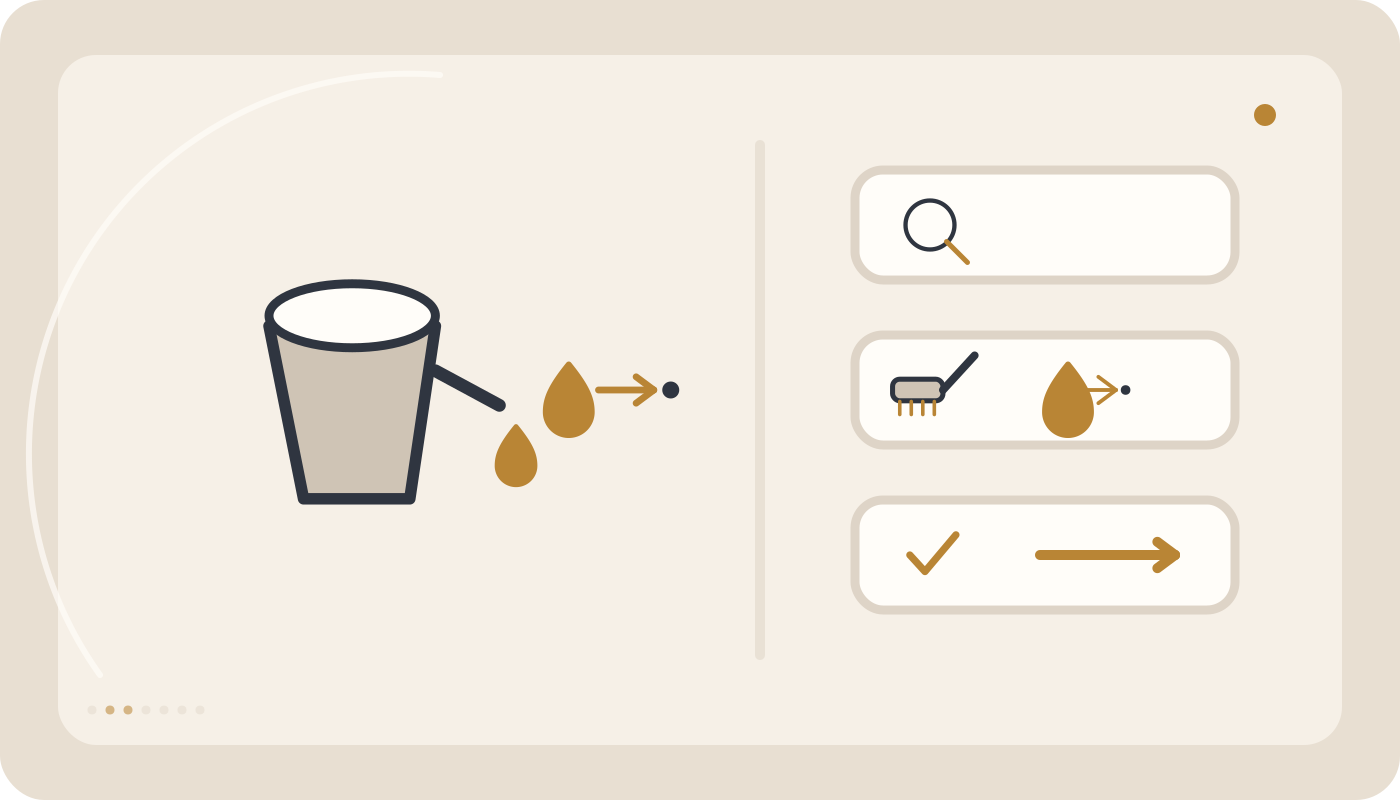
Use fresh suitable produce, prepare pieces to the recommended size, select the proper speed, and feed with steady moderate pressure. Keep the filter and juice path fully clean and assemble all parts correctly. If pulp is very wet or yield has clearly declined, inspect the extraction and drive system.
Where should you start?
Why Is My Juicer Producing So Little Juice?
Low juice yield does not automatically mean the motor is weak. Common causes include fruit type, ripeness, piece size, speed selection, feed rate, a clogged filter basket, incomplete assembly, or unusually wet pulp. The key is to determine whether yield has always been low, is low only with certain produce, or has declined compared with previous use.
Quick answer: Use suitable fresh produce, prepare pieces according to the feed chute, select the correct speed, and feed ingredients with steady moderate pressure. Keep the filter basket and juice path clean and make sure the cutting/filter assembly and lid are fully locked. If pulp is unusually wet, basket speed drops under load, the drive slips, or yield has clearly fallen compared with the past, follow the wet-pulp diagnostic path and consider technical assessment.
Quick diagnosis: where is the problem?
| Condition | Likely cause | First check |
|---|---|---|
| Yield has always been low | Produce type/speed/feed technique | Check produce and speed |
| Only some produce gives low yield | Natural moisture and texture | Compare normal yield for that produce |
| Used to be better, now lower | Clogged filter or drive-speed loss | Check filter, blade, and coupling |
| Low juice + very wet pulp | Incomplete extraction | Follow wet-pulp troubleshooting |
| Juice exits slowly or drips | Blocked juice path/filter | Clean spout and mesh |
| Speed drops under load | Overload/binding/drive issue | Stop and inspect load and assembly |
1. Different produce has different yield
Watermelon, oranges, juicy apples, and grapes naturally release more juice than bananas, avocado, or very starchy foods that are not suited to centrifugal juicing.
2. Unripe produce may yield less
Some fruits are firmer and less juicy when underripe. Overripe produce can also become too soft for efficient filtering.
3. Wilted or old produce contains less moisture
Long-stored produce can lose water. Weight loss and wrinkling may indicate lower moisture content.
4. Pieces are too large
Oversized pieces can feed unevenly into the cutting zone. Prepare them according to the model instructions.
5. Pieces are too small or pre-mashed
Excessive pre-cutting can turn soft produce into pulp before it reaches the intended extraction zone.
6. The wrong speed is selected
Multi-speed models often use different settings for soft and hard produce. Incorrect speed can reduce extraction efficiency.
7. Feeding is too fast
Overfeeding gives the cutting and filter system less time to extract liquid. Use a steady controlled feed.
8. Excessive pressure is applied to the pusher
Hard pressure can slow the motor, overload the filter, and push pulp through before extraction is complete.
9. Feeding is excessively intermittent
In some designs, a more consistent feed improves process stability. Avoid abrupt stop-start loading unless the manual directs it.
10. The micro-mesh filter is clogged
Fine fibers can block the filter openings and significantly reduce juice flow. This is one of the most common reasons yield declines over time.
11. Residue from the previous use remains
Dried pulp blocks effective filter area. Clean the basket promptly before residue hardens.
12. The filter brush is not being used
Where a cleaning brush is supplied, rinsing alone may not remove fine fibers. Use the recommended soft brush.
13. The juice outlet is blocked
Extraction may be normal while the spout or channel is partially obstructed by pulp or foam.
14. The pulp container is too full
A full pulp container can interfere with pulp discharge and increase internal buildup.
15. The filter basket is not seated correctly
Incomplete seating of the filter, bowl, or cutter changes effective speed and contact with produce.
16. The lid is not fully locked
Safety-interlock models depend on correct assembly. Follow all Lock markings.
17. The cutting/filter assembly is dirty or worn
Residue or blade damage can reduce initial cutting performance. Do not improvise blade sharpening.
18. The filter basket is damaged or distorted
A centrifugal basket must remain balanced. Cracks or deformation can affect yield and safety.
19. The drive coupling is slipping
If the motor runs but basket speed falls under load, the drive system may need inspection. Rubber smell or slipping noise is important evidence.
20. Motor speed falls under heavy load
Hard produce, overfeeding, or excessive batch size can reduce RPM. If the same happens with a light load, a technical issue becomes more likely.
21. Thermal protection activates
If the juicer stops and later restarts after cooling, overload or poor cooling may be involved. Correct the cause before continuing.
22. Fibrous produce clogs the mesh quickly
Celery, ginger, and fibrous greens can generate strands that block the filter. Smaller batches and interim cleaning may be needed.
23. Thick peel or hard pits remain
Some skins, stones, and hard seeds should be removed before juicing. Follow produce and appliance instructions.
24. Very soft produce may not suit this juicer type
Soft foods may turn into puree rather than clear juice. A blender or another method may be more appropriate.
25. Your expected yield may be unrealistic
No juicer removes 100% of the water from produce. Some moisture in pulp is normal; compare against the same appliance and same produce type over time.
Why does apple yield vary?
Apple variety, ripeness, firmness, freshness, and storage conditions all affect output.
Why does carrot yield seem low?
Carrots are hard and need appropriate speed and controlled feeding. Overfeeding can slow the machine and reduce extraction.
Why is orange output low?
On centrifugal models, thick peel and unsuitable non-edible parts should be removed as instructed. Pulp content and orange variety also affect yield.
Why do celery and leafy greens give less juice?
Fibrous low-moisture produce naturally produces lower yield and can clog the filter faster.
Is wet pulp normal?
Some moisture is normal, but very wet heavy pulp can indicate incomplete extraction and deserves separate troubleshooting.
Can pulp be fed through again?
Only if the manufacturer permits it. Re-feeding can create extra load and does not always improve results.
Does chilled produce change yield?
Temperature can influence texture, but the appliance manual and recipe should guide preparation. Do not use frozen produce unless the model is approved for it.
Does more juice always mean better quality?
Not necessarily. Excess speed or force can increase foam, fine particles, and heating. Aim for stable operation and appropriate yield.
Step-by-step troubleshooting
- Switch off and unplug the appliance.
- Check produce type, freshness, and ripeness.
- Prepare pieces to the recommended size.
- Select the appropriate speed.
- Clean the filter basket and juice path thoroughly.
- Assemble the basket, bowl, lid, and pulp container correctly.
- Test with a small batch and steady feed pressure.
- Observe how wet the pulp is.
- If speed drops under load, check loading and drive engagement.
- If yield remains clearly lower than before, arrange technical assessment.
A simple test: produce problem or appliance problem?
Choose a familiar juicy fruit that previously produced good results in the same juicer. Process a similar measured amount with a completely clean filter and appropriate speed. If output returns to normal, the earlier issue was likely produce or technique. If yield remains low, inspect the filter, cutting system, basket speed, and drive system more closely.
10 common mistakes
- Comparing the yield of different fruits directly.
- Using wilted produce and expecting high output.
- Selecting the wrong speed.
- Pressing the pusher too hard.
- Overfeeding the chute.
- Failing to clean the micro-mesh.
- Running with a full pulp container.
- Incorrect filter-basket assembly.
- Ignoring unusually wet pulp.
- Continuing with speed loss, slipping noise, or unusual odor.
When should you stop using the juicer?
Stop and unplug if the filter basket is cracked or distorted, vibration is severe, metallic noise develops, there is a rubber or electrical burning smell, motor speed drops dramatically, or liquid enters the motor base.
When is service appropriate?
If a juicy fruit, light batch, fully clean filter, and correct assembly still produce clearly less juice than before, or the basket fails to reach normal speed, the drive coupling slips, or the motor loses speed under a light load, technical assessment is appropriate.
Conclusion
For better juice yield, first control produce type and freshness, speed, piece size, feed pressure, filter cleanliness, and correct assembly. Yield loss often begins with a clogged micro-mesh or poor technique before it points to motor failure. If pulp is unusually wet or output remains low under a light proper test, deeper troubleshooting is warranted.
Common mistakes
Change only one variable at a time while diagnosing.
- Do not directly compare the yield of different fruits.
- Do not expect high output from wilted produce.
- Do not select the wrong speed.
- Do not press the pusher excessively hard.
- Do not overfeed the chute continuously.
- Do not leave the micro-mesh dirty.
- Do not continue with a full pulp container.
- Do not install the filter basket incorrectly.
- Do not ignore unusually wet pulp.
- Do not continue with speed loss, slipping noise, or unusual odor.
Frequently asked questions
Why does my juicer produce so little juice?
Produce type, freshness, incorrect speed, overfeeding, a clogged filter, or reduced basket speed are common causes.
Why did it produce more juice before?
If the same produce now gives less output, inspect the micro-mesh, cutting system, assembly, and drive system.
Is wet pulp normal?
Some moisture is normal, but very wet pulp can indicate incomplete extraction.
Does pushing harder produce more juice?
Not necessarily; excessive pressure can slow the machine and reduce extraction efficiency.
Why does celery give little juice?
Celery is fibrous and relatively low in moisture, and its fibers can clog the filter more quickly.
When does the juicer need service?
When a juicy fruit, clean filter, light batch, and correct assembly still produce low yield with speed loss.
Related guides and products
Still having the problem?
If safe user-level checks do not solve the issue, do not open the appliance. Submit a service request for technical inspection.