
Why Does Rice Dry Out on Keep Warm?
A practical guide to rice drying, hardening, or crusting on a rice cooker's Keep Warm mode, including holding time, water ratio, batch size, lid sealing, steam management, inner pot, and heating behavior.
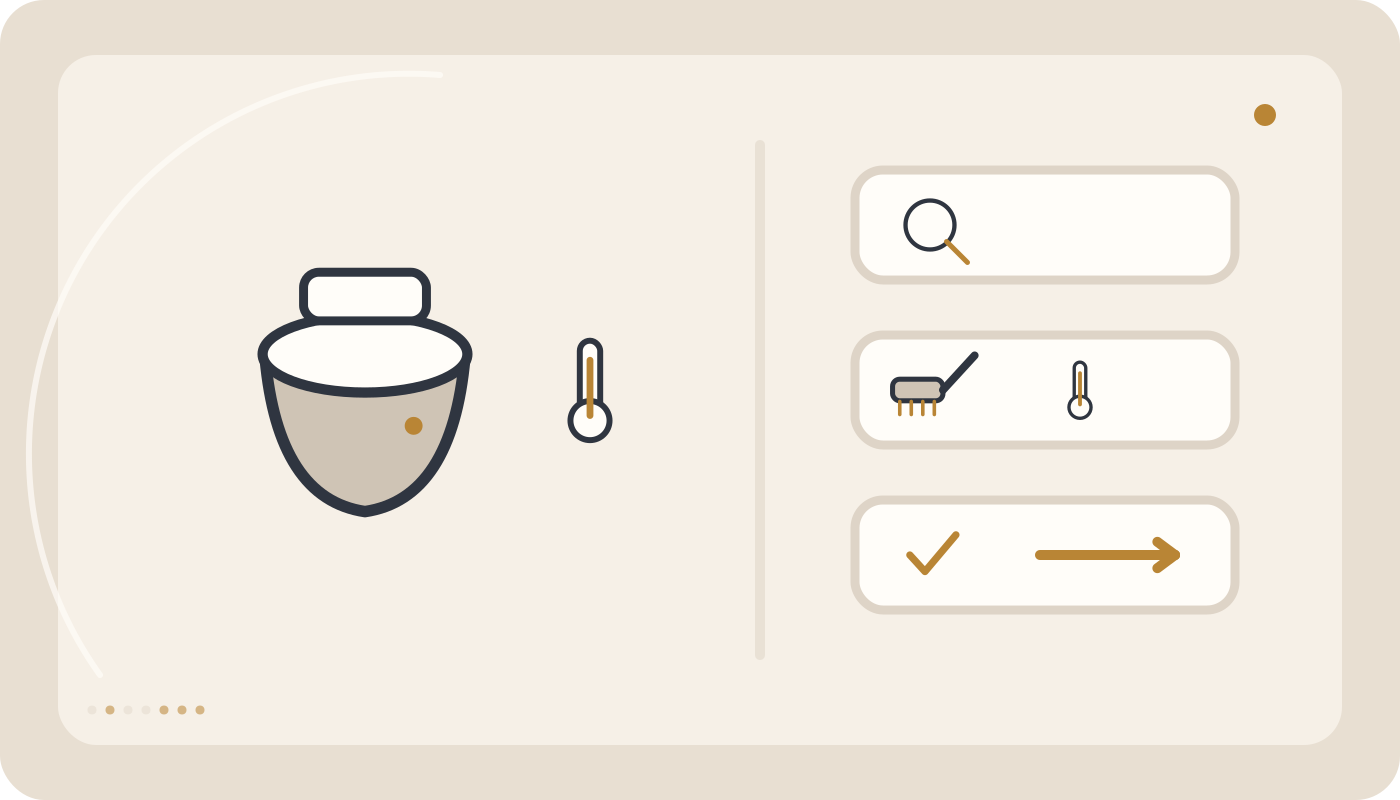
The longer rice remains on Keep Warm, the more moisture can redistribute or escape. Shorten holding time, keep the Cook recipe standardized, fluff gently when instructed, and inspect the lid, gasket, and steam path.
Where should you start?
Why Does Rice Dry Out on Keep Warm?
Keep Warm is intended to hold cooked food warm, not to continue a long cooking cycle. If rice becomes dry, hard, crusty, or discolored while being held, check holding time, initial water ratio, batch size, lid sealing, steam management, post-cook fluffing, and inner-pot condition.
Quick answer: The longer rice remains on Keep Warm, the more opportunity there is for moisture to redistribute and escape. Shorten holding time, standardize the cooking water ratio and program, fluff as directed after cooking, and make sure the lid, gasket, and steam components are correctly installed. For extended holding, follow the appliance instructions and applicable food-safety guidance.
What does Keep Warm actually do?
After Cook finishes, most rice cookers reduce heating power to maintain a warm holding temperature. This stage does not replace moisture lost during cooking, so rice texture can gradually change.
Long holding time
The most common cause is simply extended time on Keep Warm. Rice near the pot bottom and walls can lose moisture first.
Rice was already slightly dry
A marginally low cooking-water ratio may look acceptable at the end of Cook but become noticeably firm during holding.
Low initial water
Measure accurately. Do not make a large water increase because that may make the cooking stage mushy; tune in small steps.
Rice variety
Basmati, Iranian rice, short-grain, brown, fresh, and aged rice retain moisture differently.
Small batch
A small quantity has more pot-contact area relative to its volume and may seem to dry faster. Check the model’s recommended minimum.
Large batch
Very large loads can also hold moisture unevenly. Stay within the specified capacity.
Not fluffing after cooking
Many methods recommend gently fluffing after cooking so moisture redistributes more evenly. Follow the cooker instructions.
Overmixing
Fluffing is not aggressive stirring. Excessive mixing can break grains and damage texture.
Opening the lid repeatedly
Each opening releases steam and moisture. Repeated access during a long hold can accelerate drying.
Lid not fully closed
A lid that does not close or lock correctly can increase moisture loss. Check for food debris and correct component installation.
Lid gasket
On gasketed designs, dirt, twisting, displacement, or damage can alter steam and moisture behavior.
Steam vent
Steam components should be clean and assembled according to the manual. Restriction or incorrect assembly can change the moisture balance.
Condensation collector
On models with a collector, empty and install it as instructed; it is part of the appliance’s moisture-management system.
Incorrect replacement pot
The inner pot should be designed or approved for the cooker. Pot geometry and thermal contact can affect Keep Warm behavior.
Warped pot
A distorted base may contact the heater or sensor unevenly and create localized drying.
Dirty outer pot base
The outside bottom should be clean and dry before installation. Rice grains or debris can interfere with thermal contact.
Heating plate
Food residue can create uneven contact. Clean only when cool and unplugged, according to the manual.
Keep Warm seems excessively hot
If a standardized recipe becomes dry or browned unusually quickly even during a short hold, temperature control or sensing may need inspection.
Sudden change from previous performance
If the same rice, water, and holding time used to work, inspect the pot, lid, sensor, and heating system and consider whether the rice itself changed.
Wrong cooking program
If too much moisture was lost during Cook, Keep Warm will make the problem more obvious. Use the appropriate White Rice, Brown Rice, or recommended mode.
Quick Cook
Some cookers produce a different moisture profile on Quick Cook. Compare the normal program if you intend to hold rice afterward.
Brown rice
It requires different water and time and does not behave exactly like white rice during holding.
Soaked rice
Soaking changes pre-cook hydration. If the cooking ratio is not adjusted, the starting texture for Keep Warm will also change.
Fresh versus aged rice
Initial moisture varies. Changing rice brand or crop can change how a previous recipe performs during holding.
Why is the bottom dry but the top fine?
The bottom is closest to the heat source. Long holding, a small batch, or uneven thermal contact can make this difference stronger.
Why does the top dry out?
Excess steam loss, frequent lid opening, or poor lid sealing can dry the upper surface.
Why does rice crust along the walls?
Rice touching the warm pot wall can lose moisture faster. Gentle fluffing and shorter holding can help.
Why does rice turn yellow?
Extended warm holding can change color, aroma, and texture. Yellowing together with drying generally indicates declining holding quality.
Why does the aroma change?
Long holding, temperature, rice variety, and residue on food/steam-contact components can all affect odor.
Should you add water during Keep Warm?
There is no universal recommendation to pour water into a cooker while it is on Keep Warm. If the manual provides a refresh method, use that model-specific procedure.
Should you spray water over the rice?
This is not a general fix and can create uneven moisture. Correct holding time, cooking ratio, and lid condition first.
Should you restart Cook?
Repeating a full Cook cycle for rice that merely dried during holding can overheat the bottom. Follow the model’s reheating guidance.
Is overnight Keep Warm appropriate?
This depends on the appliance design and instructions. Observe manufacturer holding limits and food-safety guidance rather than assuming Keep Warm means unlimited storage.
Keep Warm and food safety
Cooked food must be held under safe time and temperature conditions. Follow the appliance instructions and food-safety guidance applicable to your location.
If the rice will be eaten much later
Instead of indefinite warm holding, use an appropriate safe storage and reheating method for the planned delay.
Repeatedly switching Warm off and on
Repeated cooling and reheating can alter quality and must also be considered from a food-safety perspective.
Butter or oil
Fat can change mouthfeel but does not replace moisture and holding-time control.
Mixed rice dishes
Rice with meat, vegetables, sauces, or other ingredients has a different moisture profile. A holding time suitable for plain rice may not suit a mixed dish.
Holding a tiny leftover amount
A thin layer of rice often dries noticeably faster. Another safe storage method may be more appropriate for a very small remainder.
Record actual holding time
Do not guess. Record when Cook ended and when the rice was served so you can identify when quality begins to decline.
Quick diagnostic table
| Symptom | Likely cause | First adjustment |
|---|---|---|
| Dry after a long hold | Extended Keep Warm | Shorten holding time |
| Slightly dry immediately | Cooking water/program | Correct the Cook recipe |
| Only bottom dries | Bottom heat/small batch | Review time and quantity |
| Only top dries | Steam loss/lid | Inspect lid and gasket |
| Crust around walls | Long hold/no fluff | Fluff gently and hold less |
| Browns very quickly | Abnormal heating | Inspect pot, sensor and heater |
| Sudden change | Hardware/new rice | Identify what changed |
Standard Keep Warm test
- Choose one rice variety.
- Record exact rice and water quantities.
- Use the same cooking program.
- Fluff after Cook if instructed.
- Avoid unnecessary lid opening.
- Record texture immediately after Cook.
- Check again after 30 minutes.
- Continue recording quality at later intervals.
- Identify the first noticeable decline.
- Change only one variable in the next test.
Iranian rice
If separate grains are the goal, prolonged holding can reduce the desired texture. Tune water and holding time for the exact variety.
Basmati
Once moisture is lost, basmati can feel dry and brittle relatively quickly. Keep the recipe and holding duration measurable and consistent.
Brown rice
Its structure and water needs differ, so do not automatically apply white-rice holding expectations.
Single-serving quantity
Very small leftovers have a high contact-area-to-volume ratio and may dry faster.
Serving a large gathering
Test the real batch size beforehand. Establish capacity, cooking ratio, and holding duration before service.
Should you put a towel over the lid?
No. Do not cover steam or ventilation paths with towels or other objects; this can interfere with safe appliance operation.
Should you block the steam vent?
No. The steam path is part of the appliance’s designed operation and safety system and should not be obstructed or modified.
Should Keep Warm be switched off and back on?
Follow the manufacturer’s method for holding and reheating. Random cycling is not a substitute for a defined storage plan.
When is the recipe more likely responsible?
If the rice is already dry at the end of Cook, or the problem occurs only with one rice type and water ratio, correct the cooking recipe first.
When is the appliance more likely responsible?
If a previously stable recipe becomes abnormally dry or browned after a very short hold, or one area consistently overheats, technical inspection is reasonable.
Signs service may be needed
- Rice burns or browns very quickly on Keep Warm.
- The pot or body becomes abnormally hot.
- The cooker reports errors or Keep Warm is unstable.
- The inner pot is warped or damaged.
- The lid or gasket cannot close correctly.
- Behavior changed suddenly with the same recipe and holding time.
10 common mistakes
- Holding rice for a long time without considering quality loss.
- Starting Keep Warm with rice already cooked too dry.
- Opening the lid repeatedly.
- Ignoring gasket and steam-component condition.
- Using a batch below the recommended minimum.
- Skipping post-cook fluffing when recommended.
- Randomly adding water during Keep Warm.
- Covering or blocking the steam vent.
- Assuming Keep Warm is intended for unlimited storage.
- Ignoring a sudden change in heating behavior.
Before Keep Warm checklist
- Rice has the correct texture at the end of Cook.
- Water ratio is tuned for the rice variety.
- Lid and gasket are clean and sound.
- Steam path is clean and correctly assembled.
- Inner pot is sound and correctly seated.
- Required holding time is known.
Quality-loss checklist
- Record actual holding duration.
- Identify whether drying is at the bottom, top, or throughout.
- Check the remaining rice quantity.
- Consider how often the lid was opened.
- Review the original cooking recipe.
- If the change is sudden, inspect pot and heating behavior.
Conclusion
Rice drying on Keep Warm is usually a combination of time, starting moisture, batch size, and steam management. First make sure the rice finishes Cook with the correct texture, then measure and shorten holding time, inspect the lid and steam path, and never block the vent. If drying or browning becomes unusually rapid under unchanged conditions, the cooker should be inspected.
Common mistakes
Change only one variable at a time while diagnosing.
- Do not hold indefinitely without considering quality loss.
- Do not expect Keep Warm to fix rice cooked too dry.
- Do not repeatedly open the lid.
- Do not ignore gasket and steam components.
- Do not use a batch below the recommended minimum.
- Do not skip recommended post-cook fluffing.
- Do not randomly add water during Keep Warm.
- Do not cover or block the steam vent.
- Do not assume Keep Warm means unlimited storage.
- Do not ignore a sudden change in heating behavior.
Frequently asked questions
Why does rice dry after several hours on Keep Warm?
Extended holding allows moisture to redistribute and escape, especially near the pot bottom and walls.
Why does only the bottom dry?
It is closest to the heat source; long holding, small batches, or uneven thermal contact can worsen it.
Should I add water during Keep Warm?
Not as a universal fix; use only a model-specific refresh method if the manual provides one.
Can I block the steam vent to retain moisture?
No. The steam vent should never be obstructed or modified.
Why does rice turn yellow on Keep Warm?
Extended warm holding can alter color, aroma, and texture.
When should the cooker be serviced?
When a stable recipe suddenly dries or browns very quickly, Keep Warm becomes unstable, or heating appears abnormal.
Related guides and products
Still having the problem?
If safe user-level checks do not solve the issue, do not open the appliance. Submit a service request for technical inspection.