
Why Is an Electric Kettle Leaking From the Bottom or Lid?
Learn how to distinguish a genuine kettle leak from condensation, overfilling, or water running down the body, and when to stop using the appliance.
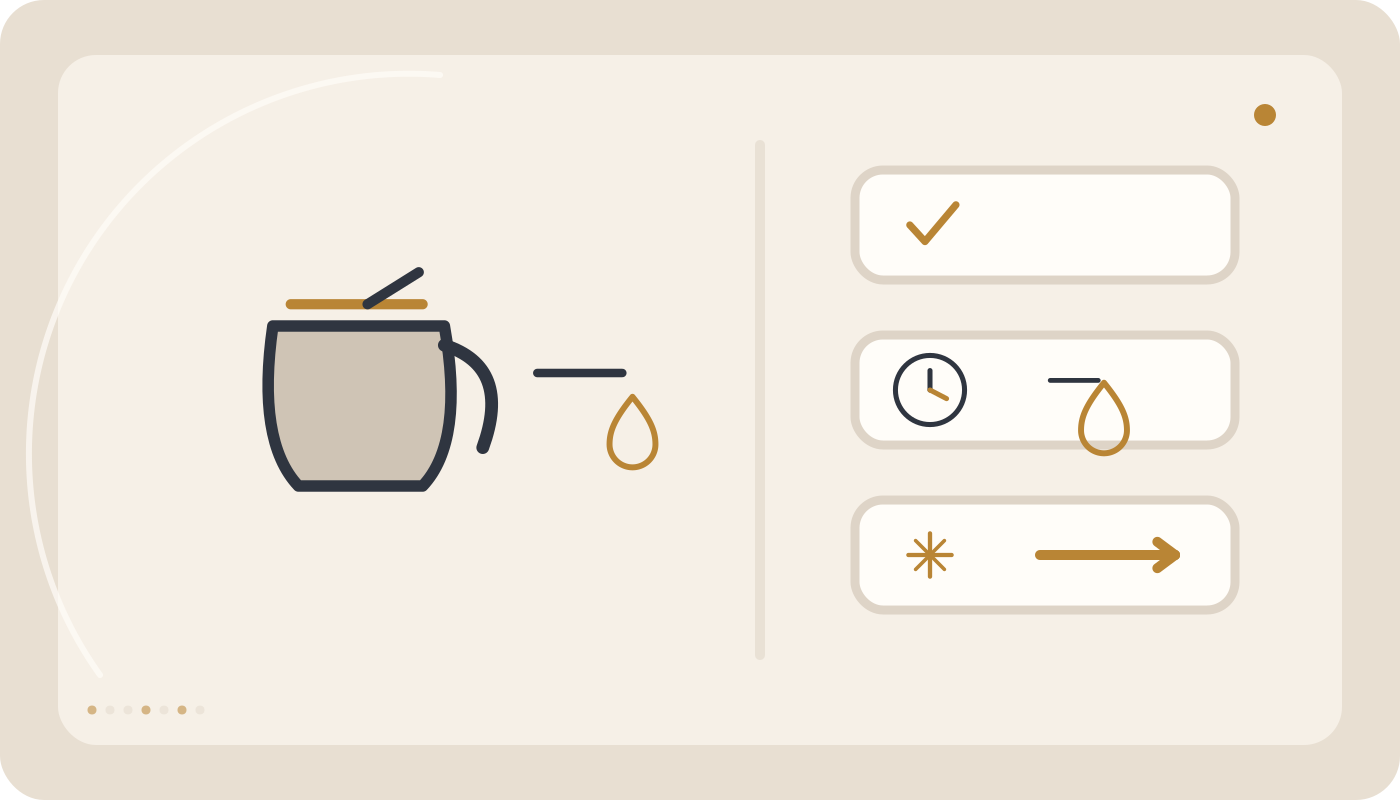
Fill below the MAX line, close the lid fully, and dry the exterior to identify where fresh water appears. Leakage from the bottom, reservoir seams, or near the electrical base requires discontinuing use.
Where should you start?
Why Does an Electric Kettle Leak Water From the Bottom or Around the Lid?
Water around a kettle does not always mean the reservoir is leaking. Overfilling, an incorrectly closed lid, vigorous boiling, steam condensation, or water running down the body while pouring are common explanations. However, if water is genuinely escaping from the bottom, a reservoir joint, or near the electrical base, stop using the appliance.
Quick answer: fill the kettle below the MAX line, close the lid fully, and dry the exterior. Then identify exactly where fresh water appears. Moisture around the lid may be related to overfilling, steam, or lid sealing, while leakage from the bottom or near electrical connections requires discontinuing use and technical inspection.
1. The kettle is filled above the MAX level
Overfilling is one of the most common reasons for water escaping around the lid or spout. During boiling, vigorous water movement and steam generation can push water into the upper area of the kettle.
Check: test with the water level clearly below the MAX mark.
2. The lid is not fully closed or seated correctly
If the lid is misaligned, its latch does not engage completely, or an obstruction prevents full closure, water and steam may escape through the resulting gap.
Check: after the appliance has cooled, inspect the hinge, latch, and lid seating. Do not force the lid closed.
3. Steam is condensing into water droplets
Steam can condense when it contacts cooler surfaces. A small amount of moisture near the lid or spout after boiling may therefore be condensation rather than a leaking reservoir.
How to distinguish it: dry the exterior completely and observe whether moisture appears only after boiling at the top, or continues even when the appliance is off and contains cold water.
4. Water runs down the body while pouring
If the kettle is tilted too far or poured too quickly, water can divert from the spout and run down the exterior. It may then collect underneath and appear to be a bottom leak.
Check: dry the kettle and pour at a normal angle and rate.
5. Lid sealing components may be damaged
On models that use a seal, gasket, or steam-management structure around the lid, displacement, deformation, or damage can increase water or steam escape. Do not dismantle these components unless the manufacturer instructions specifically allow it.
6. Is the kettle genuinely leaking from the bottom?
This is the most important distinction. Dry the exterior and bottom completely. Add an appropriate amount of cold water and place the kettle on a dry surface without connecting it to power. If fresh droplets appear from the body base or reservoir seam, a genuine leak is likely.
If bottom leakage is observed: do not switch the kettle on and do not place it on the powered base.
7. Cracks, impact, or physical damage
Dropping the appliance or mechanical impact can damage the reservoir, water-level window, or component joints. Fine cracks may become visible only when the reservoir is filled.
8. Leakage around the water-level window or body seams
On models with a transparent water-level indicator, the sealing around this component is part of the reservoir system. Water appearing specifically from this area requires technical assessment and continued use is not recommended.
9. What if water reaches the electrical base?
If water reaches the underside of the kettle, central connector, or electrical base, disconnect power first. Do not immerse the base in water and do not operate the appliance again until the cause has been identified. Water near electrical connections is a safety issue.
Quick diagnosis table
| Where water appears | Likely cause | Action |
|---|---|---|
| Around the lid only while boiling | Overfilling, lid closure, or condensation | Check water level and lid closure |
| On the body after pouring | Water running back from the spout | Dry the body and review pouring technique |
| From the bottom even with cold water | Possible reservoir or seam leak | Do not power the appliance; arrange inspection |
| Around the water-level window | Possible sealing fault | Stop use and arrange inspection |
| On the connector or electrical base | Water near electrical components | Disconnect power and do not operate |
What should you not do?
- Do not fill above the MAX line.
- Do not attempt to repair a reservoir leak with household glue or sealant.
- Do not power a leaking kettle for another test.
- Do not connect a wet electrical base or connector to power.
- Do not open the appliance housing at home to inspect seals.
When should you contact service?
If water escapes from the bottom, water-level window, or body seams with the correct water quantity and while the appliance is cold, if the lid has physical damage, or if water has reached electrical connections, the appliance should be inspected. Continued use is not appropriate in these conditions.
Summary
To diagnose a kettle leak, first identify the true source of the water. Moisture around the lid may result from overfilling, condensation, or pouring behavior, while water escaping from the bottom, reservoir seams, or near electrical components is a different issue. For a genuine leak, keep the appliance disconnected from power and arrange technical inspection.
Leak location changes the diagnosis
Moisture around the lid, drips from the spout, a body leak, and water collecting under the kettle are different conditions. Water reaching the electrical base requires immediate disconnection.
Common mistakes
Change only one variable at a time while diagnosing.
- Do not fill above the MAX line.
- Do not repair a reservoir leak with household glue or sealant.
- Do not power a leaking kettle for testing.
- Do not connect a wet base or connector to power.
- Do not open the appliance housing at home to inspect seals.
Frequently asked questions
Is moisture around the lid always a leak?
No. Steam condensation or overfilling can create moisture around the lid.
How can I check whether a bottom leak is genuine?
Dry the kettle, add cold water, and place it on a dry surface without connecting power. Fresh droplets from the bottom or a seam are significant.
What should I do if water reaches the electrical base?
Disconnect power and do not operate the appliance until the cause is identified and the unit is fully dry and safe.
Can I repair a bottom leak with glue?
No. Household repairs to a reservoir or sealing system near electrical components are not considered safe.
Related guides and products
Still having the problem?
If safe user-level checks do not solve the issue, do not open the appliance. Submit a service request for technical inspection.