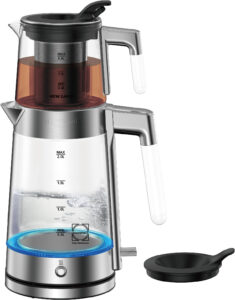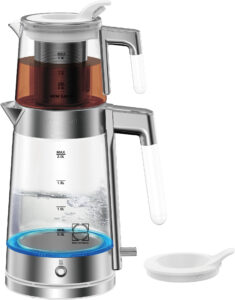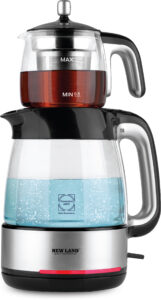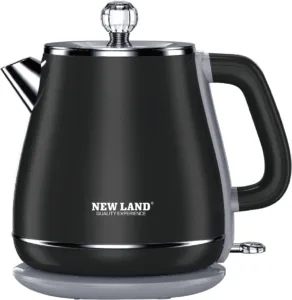
How to Clean a Tea Maker Kettle, Teapot, and Power Base
A step-by-step guide to cleaning a tea-maker kettle, glass teapot, filter, lid, and electrical base without damaging glass, finishes, or electrical components.
Unplug and cool the appliance. Clean and descale the kettle gently when required, wash the teapot and filter according to the manual with a soft sponge, and wipe the base and connector only with a slightly damp cloth while keeping electrical areas completely dry.
Before you start
How to Clean the Kettle, Teapot, and Base of a Tea Maker
Cleaning a tea maker involves more than washing the teapot. The kettle is exposed mainly to mineral deposits, the teapot and filter collect tea residue, and the base is an electrical component that requires a completely different cleaning method. Treating each area correctly helps preserve the appliance and reduces the risk of water reaching electrical components.
Quick answer: unplug the appliance and allow it to cool. Clean and descale the kettle gently when necessary; wash the teapot, lid, and removable filter according to the manual using a soft sponge; never rinse or immerse the electrical base, cable, or connector. Wipe the base only with a soft, slightly damp cloth and make sure it is completely dry before reconnecting power.
Before cleaning: unplug and allow the appliance to cool
Switch the tea maker off, unplug it, and allow the kettle, teapot, and warming surface to reach a safe temperature. Cleaning hot components can cause burns and may expose glass parts to thermal shock.
1. How should the inside of the kettle be cleaned?
The kettle interior is generally affected more by mineral scale than by grease. For routine care, discard remaining water and rinse the interior as permitted by the model instructions. If white mineral deposits develop, use an appropriate descaling procedure.
- Do not use steel wool, blades, or metal scraping tools.
- Do not pour strong cleaners, bleach, or solvents into the kettle.
- Keep the connector and underside of the kettle dry.
- Rinse thoroughly with clean water after descaling.
2. Do not confuse mineral scale with ordinary dirt
A white or cream-colored layer inside a kettle is commonly mineral scale. Aggressive scrubbing is not the preferred removal method. A suitable kettle descaler or an approved mild citric-acid method can dissolve scale more gently than scraping the surface.
3. How should the kettle exterior be cleaned?
With the appliance unplugged, wipe the exterior using a soft, slightly damp cloth and then dry it. Avoid abrasive powders and rough scouring pads on stainless steel, glass, or decorative finishes because they can scratch or dull the surface.
4. How should a glass teapot be washed?
Allow a hot teapot to cool gradually first. Then wash it using water and a soft sponge according to the product instructions. Abrupt temperature changes, such as putting hot glass directly under cold water, can increase the risk of thermal shock.
- Do not suddenly rinse hot glass with very cold water.
- Do not use steel wool or metal tools.
- Avoid striking the glass against the sink or faucet.
- Do not reuse a teapot with a chip or hairline crack.
5. How should tea stains inside the teapot be removed?
Tea can gradually leave deposits on the teapot and especially on the filter. Regular gentle cleaning prevents a heavy layer from forming. For persistent staining, use only a method suitable for the teapot material and permitted by the product instructions rather than aggressive chemicals.
6. Do not forget the tea filter
The filter can collect tea particles and staining quickly. If it is removable, take it out according to the manual, rinse it, and clean the openings with a very soft brush.
Do not use needles, blades, or sharp objects to clear the openings because they can damage the mesh or filter structure.
7. Clean the kettle and teapot lids
Steam and droplets can remain underneath lids and around their edges. Clean these areas with a soft cloth or sponge and dry them afterward. Do not dismantle spring-loaded or mechanical lid components unless the manufacturer instructions permit it.
8. How should the tea-maker base be cleaned?
The base is an electrical component and must not be washed. Unplug the appliance, allow the base to cool, and wipe its surface with a soft, slightly damp cloth. Remove remaining moisture with a dry cloth.
- Do not rinse the base under a faucet.
- Do not immerse it in a sink or water.
- Do not spray cleaner directly onto the base.
- Do not allow water to enter the connector, switches, or openings.
9. Take extra care around the electrical connector
The kettle-to-base connection should remain clean and dry. If water or tea reaches it, keep the appliance disconnected until the area is completely dry and safe. Never insert metal or sharp objects into the connector for cleaning.
10. How should the cable and plug be cleaned?
When disconnected from power, the cable surface and plug body can be wiped with a soft, nearly dry cloth. Both must be completely dry before use. A cracked cable jacket, deformed plug, or signs of overheating or burning are not cleaning issues and require further inspection.
Simple cleaning schedule
| Part | Normal method | When |
|---|---|---|
| Kettle interior | Empty remaining water and inspect for scale | Regularly according to use |
| Kettle descaling | Suitable descaler or approved manual method | When visible scale develops |
| Teapot and filter | Water and a soft sponge | Preferably after use and before heavy staining develops |
| Exterior surfaces | Soft slightly damp cloth, then dry | As needed |
| Base and warming surface | Soft slightly damp cloth only | When cool and unplugged |
| Connector | Keep dry and wipe externally | Whenever moisture or contamination is noticed |
Can components go in a dishwasher?
Only if the instructions for that specific model explicitly identify the component as dishwasher-safe. Glass, plastics, seals, and decorative parts vary between models, so dishwasher suitability should not be assumed.
What should you avoid?
- Do not immerse the base, cable, or electrical components in water.
- Do not spray water or cleaner directly onto the base or connector.
- Do not use steel wool, blades, or abrasives for scale or stains.
- Do not rinse a hot glass teapot with cold water.
- Do not mix cleaning chemicals.
- Do not reconnect power until electrical areas are completely dry.
Summary
Each part of a tea maker requires a different cleaning approach: the kettle mainly needs scale control, the teapot and filter need tea residue removal, and the base and connector must always be protected from water. Regular gentle cleaning, correct drying, and avoiding abrasives and electrical immersion provide a practical routine for everyday tea-maker care.
Do not clean every component the same way
The kettle, teapot, and electrical base have different restrictions. Keep electrical connectors dry, allow hot glass to cool, and treat mineral scale separately from tea staining.
Common mistakes
Change only one variable at a time while diagnosing.
- Do not rinse or immerse the base or connector.
- Do not spray cleaner directly onto electrical areas.
- Do not use steel wool, blades, or abrasives.
- Do not rinse a hot glass teapot with cold water.
- Do not mix cleaning chemicals.
- Do not power the appliance before electrical areas are completely dry.
Frequently asked questions
Can the tea-maker base be washed?
No. It is an electrical component and should only be wiped with a soft, slightly damp cloth and then dried completely.
What is the white layer inside the kettle?
It is commonly mineral scale and should be dissolved using a suitable descaling method rather than scraped with metal tools.
How can tea staining on the teapot and filter be reduced?
Regular cleaning before deposits become heavy makes them much easier to remove.
Can the teapot go in a dishwasher?
Only if the instructions for that specific model explicitly identify it as dishwasher-safe.