
Why Does Espresso Flow Too Fast From the Portafilter? 8 Causes and Fixes
If espresso runs very fast, pale and thin from the portafilter, check grind, dose, distribution, tamp and basket fit before adjusting the machine.
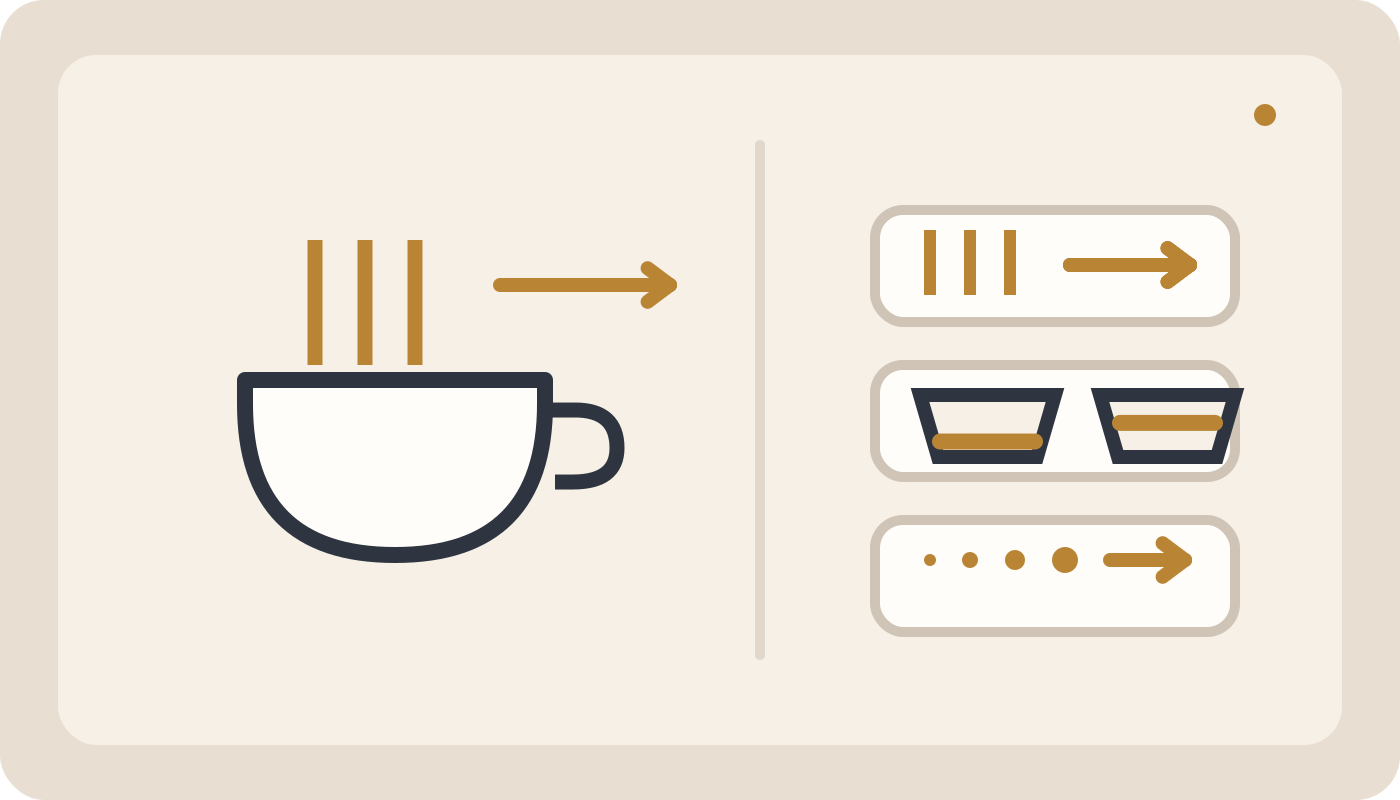
Fast espresso flow usually means the water is meeting too little resistance in the coffee puck. Move the grind one step finer, then check dose, distribution, tamp and basket fit. Change only one variable at a time.
Where should you start?
What is happening when espresso flows too fast?
If coffee begins flowing quickly and pale only moments after extraction starts, and the drink lacks body, sweetness and depth, the water is usually meeting too little resistance in the coffee puck. Grind size, dose, distribution and puck preparation are the first things to inspect.
Diagnostic note: do not judge “fast flow” by appearance alone. Consider start time, stream color, beverage amount and taste together.
1. The grind is too coarse
Coarse particles create larger water paths and lower puck resistance. Move the grinder only one step finer and compare the next shot.
2. The dose is too low for the basket
A low dose creates a thinner puck and less resistance. Match the amount of coffee to the basket and portafilter design of the specific model.
3. Coffee is distributed unevenly
If one side of the basket is dense and the other loose, water finds the easier route. This channeling can make one side flow faster and leave part of the coffee under-extracted.
4. The tamp is tilted or inconsistent
The goal is a flat, stable and repeatable surface. A tilted tamp can create low-resistance paths. Excessive force is not a universal solution.
5. The basket does not match the dose
Using a basket designed for a different dose changes puck thickness and headspace. Use the appropriate basket and match the dose to it.
6. The coffee has changed
A new bean, blend, roast level or freshness can shift the ideal grind setting. If the machine and technique are unchanged but a new bag suddenly runs fast, re-dial the grinder for that coffee.
7. Do not compensate with excessive output
Extending extraction just to get more volume can make the drink thin and unbalanced. Correct the fast flow first, then set beverage output according to the machine guidance and desired taste.
8. Could machine pressure be too high?
Fast coffee flow alone is not enough to conclude that pump pressure is excessive. If water flow without the portafilter is normal and the shot responds to grind and puck-preparation changes, correct those variables first. Technical inspection becomes more relevant if the machine also behaves abnormally without the portafilter or other functions have changed.
Recommended correction sequence
Prepare a baseline shot. Move the grind one step finer. If flow is still fast, check dose and basket fit, then distribution and tamp. Change one variable at a time so the effect remains measurable.
Diagnose fast flow with more than appearance
Consider first-drip timing, beverage weight, color, and taste together. Grinder setting is usually the first variable to adjust, followed by dose and distribution.
Very hard tamping is not a substitute for a suitable grind. If water flow is normal without the portafilter and modest grinder changes control the shot, pump failure is unlikely.
Common mistakes
Change only one variable at a time while diagnosing.
- Do not jump several grind settings finer at once.
- Do not overfill the basket beyond its intended capacity.
- Do not treat extremely hard tamping as the main solution.
- Do not change several variables at once.
- Do not simply extend extraction to compensate for fast flow.
- Do not diagnose pump pressure from flow speed alone.
Frequently asked questions
Why does espresso gush out in a few seconds?
The most common causes are a coarse grind, low dose, uneven distribution or channeling. Move one grind step finer and compare.
Will tamping harder slow the flow?
It can affect resistance, but very hard tamping is not the primary fix. Even distribution, correct dose and a level tamp matter more.
Do I need to adjust the grinder when I change coffee?
Often yes. Bean type, roast and freshness can shift the appropriate grind setting.
Does fast flow mean pump pressure is too high?
Not necessarily. Check coffee-puck preparation first and use other machine symptoms before suspecting a technical fault.
How is fast flow different from watery espresso?
Fast flow is one common cause of watery espresso, but a watery cup can also result from excessive beverage yield, stale coffee or other factors.
Related guides and products
Still having the problem?
If safe user-level checks do not solve the issue, do not open the appliance. Submit a service request for technical inspection.