Everyday Rice in a Rice Cooker: From Rinsing to Keep Warm
Consistent measuring, gentle rinsing, water based on pot markings or model instructions, a short post-cook rest, and sensible keep-warm use create repeatable everyday rice.
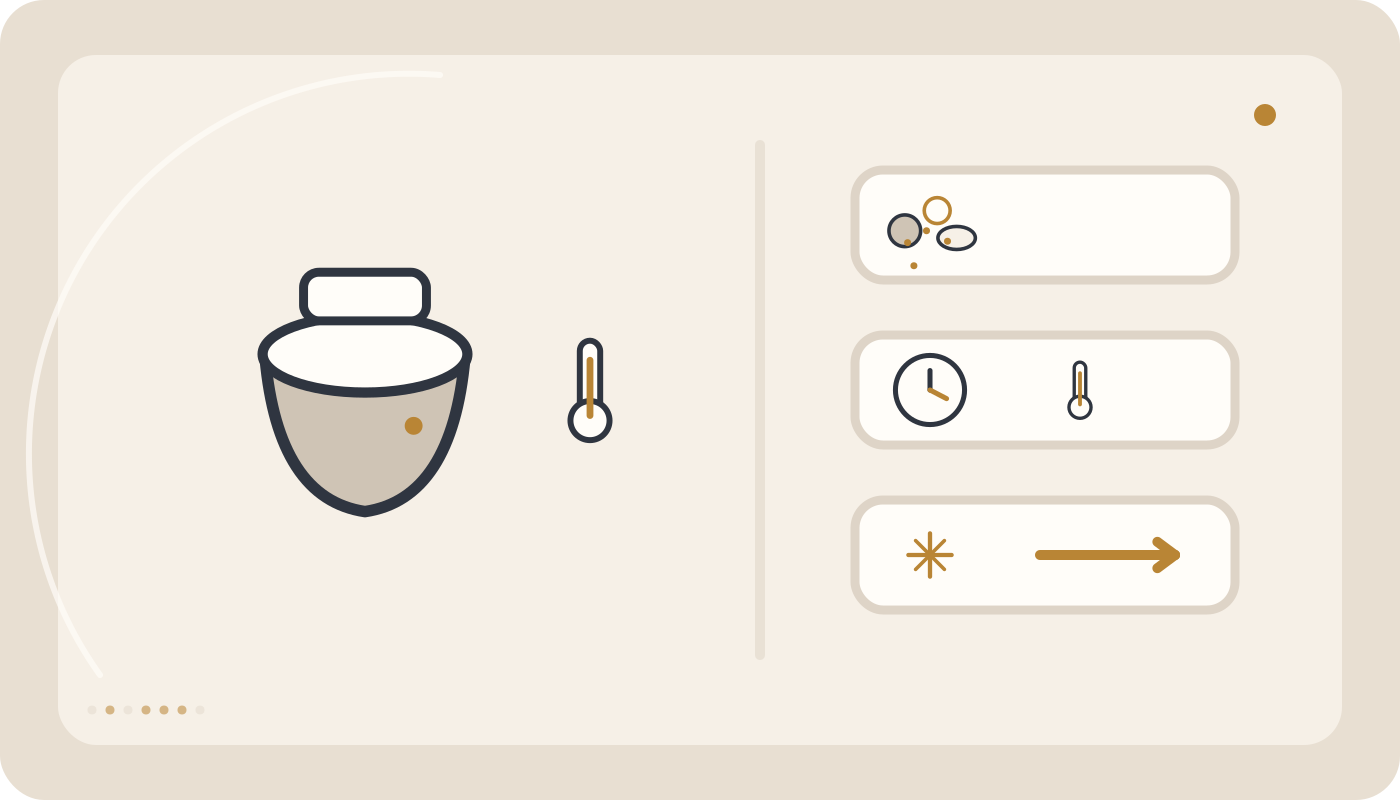
Measure rice consistently, rinse several times in cold water, add it to the inner pot, and set water using the pot markings or exact appliance instructions. Choose the correct program and avoid unnecessary lid opening during cooking. Rest for about 5 to 10 minutes after the cycle, fluff gently, and use keep-warm only for a duration allowed by the appliance.
Before you start
Everyday Rice in a Rice Cooker: From Rinsing to Keep Warm
Reliable everyday rice comes from consistent measuring, appropriate rinsing, water matched to the rice type, leveling the grains, and avoiding repeated lid opening during cooking. A short rest after the cooking cycle and gentle fluffing also help distribute steam and moisture more evenly.
Quick answer: Measure rice with a consistent cup, rinse several times in cold water until the rinse water becomes noticeably clearer, place it in the inner pot, and add water according to the rice-cooker markings or exact appliance instructions. Level the rice, select the correct program, and avoid opening the lid during the cycle. Rest for about 5 to 10 minutes after cooking, then fluff gently with a suitable paddle. Use keep-warm only as directed by the appliance, and chill leftovers promptly for longer storage.
Basic ingredients for everyday rice
| Ingredient | Amount | Note |
|---|---|---|
| Rice | Based on servings | Measure with the same cup every time |
| Water | According to pot line or manual | Rice type and rinsing affect the result |
| Salt | To taste | Dissolve evenly in the water |
| Oil or butter | Optional | Use a small amount for flavor and texture |
1. Use a consistent measuring cup
Switching between the appliance cup and a household glass makes the water-to-rice relationship inconsistent.
2. The supplied rice cup may differ from a standard kitchen cup
When using pot markings, the manufacturer-supplied cup is usually the best reference.
3. Stay within the rice cooker’s capacity
Do not exceed the stated minimum and maximum amounts.
4. Inspect the rice before cooking
Remove visible debris or foreign particles when necessary.
5. Rinse with cold water
Cold water removes loose surface starch without unnecessarily softening the grain.
6. Rinse gently
Move the grains lightly rather than crushing or aggressively rubbing them.
7. The rinse water does not need to become perfectly clear
Several rinses until it is noticeably clearer than the first wash are usually sufficient.
8. Rinsing intensity affects texture
Different rice types carry different amounts of loose surface starch.
9. Soaking is not mandatory for every rice type
Some rice benefits from soaking while other varieties cook well without it.
10. Keep your soaking method consistent
Soaking changes initial water absorption, so use a repeatable method when calibrating the final result.
11. Start with a clean inner pot
Old rice and grease can affect sticking and texture.
12. Keep the outside of the inner pot dry
Wipe the exterior before placing the pot into the cooker.
13. Do not trap rice grains beneath the pot
Foreign material between the pot and heating surface can interfere with even contact.
14. Add the rinsed rice evenly
Distribute the grains without compacting them.
15. Add water using pot markings or the exact manual
Internal lines are generally designed around the manufacturer’s measuring system and programs.
16. If there are no markings, begin with the model instructions
The ideal ratio depends on rice variety, age, rinsing, and preferred texture.
17. Adjust water gradually
If rice is slightly firm or too soft, make small changes from one batch to the next.
18. Distribute salt before starting
Mix it into the water for more even seasoning.
19. Oil or butter is optional
A small amount changes aroma and mouthfeel but is not required for basic operation.
20. Excess oil is not the main solution to sticking
Sticking can involve water level, rice type, pot coating, and keep-warm duration.
21. Level the rice surface
A reasonably even layer helps different areas cook under similar conditions.
22. Do not leave the rice piled on one side
Uneven distribution can create inconsistent texture.
23. Close the lid fully
Follow any locking or positioning requirements for the exact cooker.
24. Select the correct rice program
If the cooker has separate programs for rice types or textures, choose the suitable one.
25. A quick program is not always the best texture program
Fast cycles are useful when time is limited but may produce a different result from the standard cycle.
26. Avoid repeatedly opening the lid
Opening releases heat and steam and changes the cooking process.
27. Keep hands and face away from escaping steam
Hot steam can cause burns.
28. Never block the steam vent
Do not place towels or other objects over the outlet.
29. Investigate foaming or overflow
Excess batch size, insufficient rinsing, or unsuitable water level can contribute.
30. Automatic keep-warm usually indicates the cooking cycle has finished
However, immediately opening the lid is not always best for texture.
31. Rest for 5 to 10 minutes
A short rest helps steam redistribute through the rice.
32. Fluff gently after resting
Use a suitable paddle and lift from the bottom without crushing the grains.
33. Avoid metal utensils on nonstick inner pots
Use a utensil compatible with the pot coating.
34. Do not overmix the rice
Excessive stirring breaks grains and releases more starch.
35. If rice is slightly firm
Adjust water or the selected program slightly on the next batch.
36. If rice is too soft
Excess water or program choice may be involved.
37. If the bottom sticks excessively
Review pot coating, water level, rice type, and keep-warm time.
38. Keep-warm is not unlimited storage
Use it only for the duration and conditions allowed by the exact appliance.
39. Longer keep-warm generally increases drying
Rice gradually loses moisture, especially near the hot pot surface.
40. Avoid unnecessary lid opening during keep-warm
Each opening releases steam and can accelerate drying.
41. Serve only what you need
Close the lid again to preserve remaining moisture.
42. Do not use keep-warm as long-term storage
For longer storage, cool leftovers appropriately and refrigerate them.
43. Do not leave cooked rice lukewarm for hours
Either keep it safely hot within appliance guidance or refrigerate it promptly.
44. Shallow containers help leftovers cool faster
Smaller food depth supports more rapid cooling.
45. Preserve moisture when reheating
Choose a reheating method that heats the center thoroughly without unnecessarily drying the rice.
46. A repeatable everyday workflow
- Measure rice with the same cup.
- Rinse gently several times in cold water.
- Soak only when appropriate for the rice type.
- Keep the outer pot surface clean and dry.
- Spread rice evenly in the inner pot.
- Add water according to pot markings or appliance instructions.
- Add salt and optionally a small amount of oil or butter.
- Select the correct program.
- Avoid unnecessary lid opening during cooking.
- Rest for 5 to 10 minutes after the cycle.
- Fluff gently with a compatible paddle.
- Use keep-warm only for a suitable duration.
47. Recipe troubleshooting table
| Result | Likely cause | Next-batch correction |
|---|---|---|
| Rice is firm | Too little water or unsuitable program | Increase water slightly or review the program |
| Rice is too soft | Too much water | Reduce water slightly |
| Bottom sticks | Low water, long keep-warm, or pot coating | Review variables separately |
| Excess foam or overflow | Large batch or loose surface starch | Review load and rinsing |
| Rice dries on keep-warm | Excess time or frequent lid opening | Reduce keep-warm duration |
| Uneven cooking | Rice is unevenly distributed or pot contact is poor | Level rice and clean the outer pot surface |
48. Record your successful settings
For repeatability, note the rice type, measuring cup, water line, program, and final texture.
49. Change only one variable at a time
If water, soaking, program, and oil all change together, it becomes difficult to identify what improved the result.
50. The best setting is the one calibrated to your household rice
Rice variety, age, family preference, and cooker design all differ, so preserve the method once you find the result you like.
Common mistakes
- Using different measuring cups from one batch to another
- Ignoring the inner-pot water lines or appliance instructions
- Rinsing rice too aggressively
- Exceeding rice-cooker capacity
- Opening the lid repeatedly during cooking
- Blocking the steam vent
- Overmixing rice after cooking
- Using metal utensils on a nonstick pot
- Leaving rice on keep-warm for too long
- Changing several variables at once
Conclusion
Good rice in a rice cooker comes from a stable, repeatable method. Keep the measuring system consistent, rinse gently, set water using the inner-pot markings or exact model instructions, avoid wasting steam during cooking, and allow a short rest after the cycle. Keep-warm is useful for short-term serving, while longer storage should use prompt cooling and refrigeration.
Common mistakes
Change only one variable at a time while diagnosing.
- Do not switch measuring cups between batches.
- Do not ignore pot markings or appliance instructions when setting water.
- Do not rinse rice aggressively.
- Do not exceed cooker capacity.
- Do not repeatedly open the lid during cooking.
- Do not block the steam vent.
- Do not aggressively stir cooked rice.
- Do not use metal utensils on a nonstick inner pot.
- Do not leave rice on keep-warm for excessive periods.
- Do not change several variables at the same time.
Frequently asked questions
How many times should rice be rinsed?
Rinse gently several times in cold water until the water becomes noticeably clearer than the first rinse; it does not need to become perfectly clear.
How much water should I use in a rice cooker?
The inner-pot markings and exact model instructions take priority, and rice variety and rinsing also affect the ideal amount.
Do I need to soak the rice?
Not for every rice type. Soaking depends on the variety and preferred texture.
What should I do after cooking finishes?
Rest for about 5 to 10 minutes, then fluff gently from the bottom with a suitable paddle.
Why does rice dry out on keep-warm?
Long holding time and repeated lid opening are common factors; detailed troubleshooting should be handled separately.
Can rice stay on keep-warm for many hours?
Only within the duration and conditions permitted by the appliance. For longer storage, cool leftovers appropriately and refrigerate them.