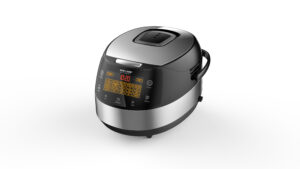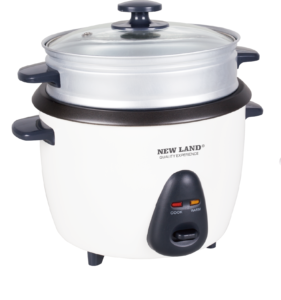
Simple One-Pot Soups and Meals in a Rice Cooker
If your rice cooker supports soup or multipurpose cooking, simple one-pot meals can work well when fill level, ingredient order, steam flow, and cooking safety are managed correctly.
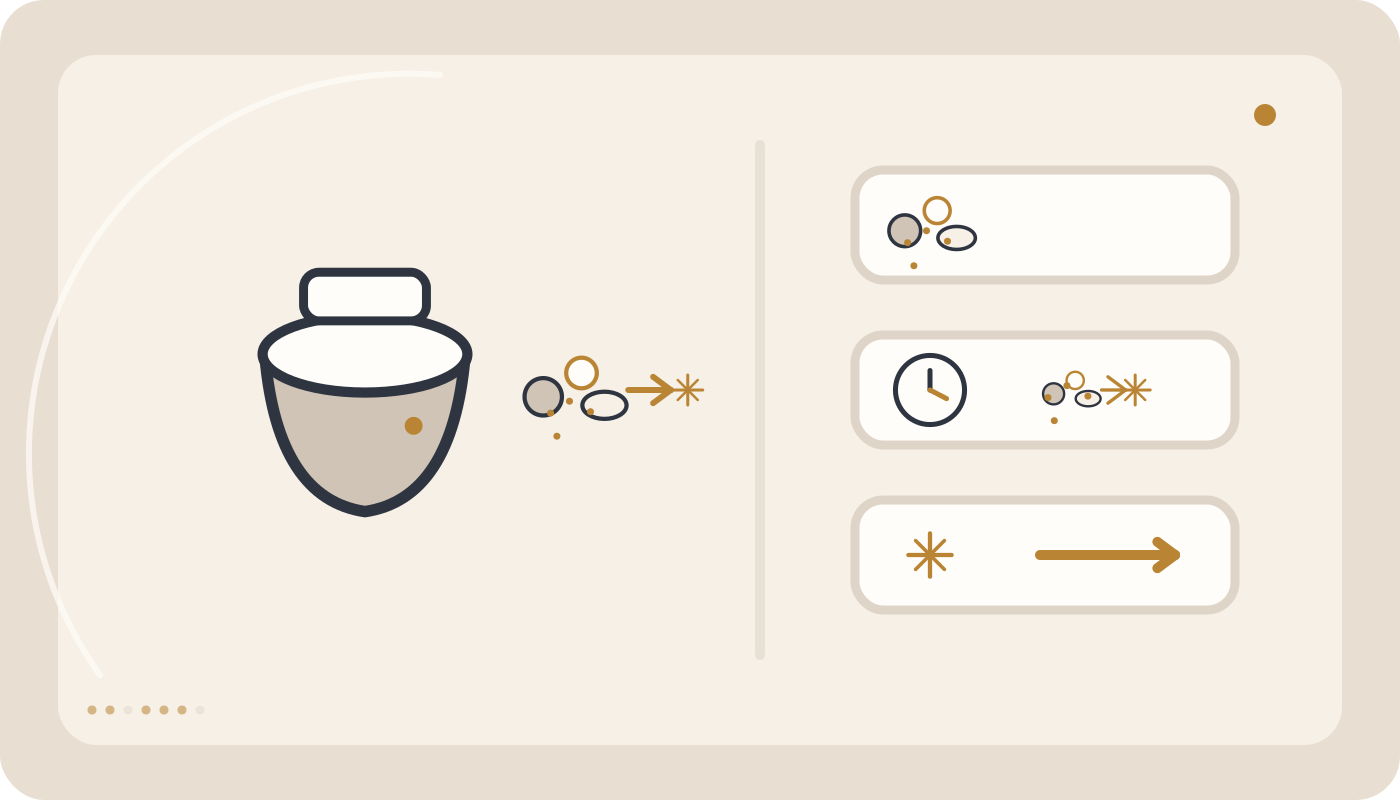
First confirm that the rice cooker has an approved soup or multipurpose program. Add slower ingredients such as carrots, lentils, and chicken earlier, while delicate herbs and dairy should go in near the end. Do not overfill the pot, keep the steam vent clear, and for chicken verify at least 74 degrees Celsius or 165 degrees Fahrenheit in the thickest center.
Before you start
Simple One-Pot Soups and Meals in a Rice Cooker
A rice cooker can do more than plain rice when the manufacturer explicitly allows it. Some models can prepare soups, lentil dishes, one-pot rice meals, and simple vegetable-and-chicken combinations. The key is to stay below the fill limit, keep the steam vent clear, and add ingredients in an order that matches their cooking times.
Quick answer: Check the appliance manual first and use only a soup or multipurpose program that the manufacturer permits. Add slow-cooking ingredients such as carrots, lentils, or chicken earlier, while tender herbs, dairy, and delicate ingredients should go in near the end. Never overfill the pot or block the steam vent. For chicken-based meals, the thickest part of the chicken should reach at least 74 degrees Celsius or 165 degrees Fahrenheit.
Five checks before you start
| Area | What to check |
|---|---|
| Cooking program | Is soup or multipurpose cooking allowed by the manual? |
| Fill limit | Food and liquid remain below the maximum line |
| Steam vent | Clean and unobstructed |
| Inner pot | Clean, intact, and free of severe damage |
| Raw animal foods | Safe center temperature is verified at the end |
1. Not every rice cooker is designed for every meal
Some models only provide rice and keep-warm functions, while others include soup, slow-cook, or multipurpose programs.
2. Do not force an unsuitable program to act like another mode
Repeatedly restarting a rice cycle is not a reliable substitute for a manufacturer-approved soup program.
3. Fill level is the main volume limitation
Soups and stews bubble and expand, so never fill the inner pot to the rim.
4. Leave more headroom for foaming ingredients
Lentils, barley, beans, and grains can generate more foam.
5. Never cover the steam vent
Do not place towels or improvised covers over the outlet.
6. Check the vent before cooking
Dried food residue can restrict steam flow.
7. Dry the outer base of the inner pot
The outside should be clean and dry before insertion.
8. Cut ingredients to similar sizes
Large carrots beside tiny potatoes cook unevenly.
9. Cut slow vegetables smaller
Carrots, potatoes, and root vegetables can be sized to match the overall cook time.
10. Add delicate herbs late
Fresh parsley, cilantro, dill, and similar herbs lose more color and aroma during long cooking.
11. Raw onion can be a simple base
If the cooker has no approved saute function, use onion without improvised stovetop frying.
12. Saute only in an approved mode
Do not place a rice-cooker inner pot directly over a stove flame unless the manufacturer explicitly allows it.
13. Use only a small amount of oil
Most one-pot meals need very little added fat.
14. Add ingredients in a logical order
Slower ingredients should begin earlier and fast ingredients should be added later.
15. Match liquid to the meal type
Soup needs more liquid than a thick stew, while both must stay below the appliance fill limit.
16. Boiling water is not always required
Some cookers are designed to start with cold liquid, while others may heat faster with warm liquid.
17. Add salt conservatively at first
Evaporation can concentrate seasoning, so final adjustment near the end is useful.
18. Do not overload the bottom with concentrated tomato paste
Dense ingredients can stick or scorch. Dilute and distribute them through the liquid.
19. Add dairy near the end
Milk, cream, and cheese can split or stick during long cooking.
20. Use gentler approved settings for dairy dishes
Add dairy during the finishing stage and stir gently when the appliance allows it.
21. Add soup noodles late
Noodles and some pasta become overly soft with long cooking.
22. Raw rice in soup needs enough time and liquid
Account for rice absorption when setting the total liquid.
23. Add cooked rice near the end
This prevents excessive breakdown.
24. Dry beans need appropriate soaking and programs
Do not treat dried chickpeas or beans as instant soup ingredients without a suitable appliance program.
25. Red lentils cook faster than many beans
They work well for quick soups and naturally thicken the broth.
26. Green lentils retain more shape
Use controlled timing when you want a firmer texture.
27. Raw chicken must cook completely
Avoid oversized chunks and check the thickest center at the end.
28. Chicken should reach at least 74 C or 165 F
Color alone is not a reliable safety test.
29. Other animal foods need their own safe-temperature guidance
Do not apply chicken timing to red meat or fish automatically.
30. Simple vegetable soup
| Ingredient | Approximate amount |
|---|---|
| Carrot | 1 medium |
| Potato | 1 medium |
| Onion | 1 small |
| Red lentils | Half a cup |
| Water or chicken stock | Within the appliance fill limit |
| Salt and pepper | To taste |
| Fresh herbs | Add at the end |
31. Vegetable soup method
- Cut carrot, potato, and onion evenly.
- Rinse the lentils.
- Add the slow-cooking ingredients to the pot.
- Add liquid while staying below the fill limit.
- Select the approved soup or similar program.
- Check texture near the end.
- Add final salt and fresh herbs at the finish.
32. If the soup becomes too thick
Add a small amount of hot water and continue briefly in an approved mode.
33. If the soup is too thin
Continue slightly longer when an appropriate program allows it or mash a small portion of the softened ingredients.
34. Simple lentil and vegetable stew
Use lentils, carrots, onion, tomato, spices, and less liquid than soup for a thicker final texture.
35. Control liquid gradually for lentil stew
Too much starting liquid turns the meal into soup.
36. Simple chicken-and-rice one-pot meal
Combine rinsed rice, small chicken pieces, carrots or peas, and seasoning only when the appliance program and capacity support the recipe.
37. Use reasonably small chicken pieces
Oversized pieces can need longer than the rice.
38. Do not automatically add much more water than plain rice
Chicken and vegetables release moisture, so final water needs adjustment by recipe and appliance.
39. Add frozen peas and corn later
They heat quickly and become overly soft during long cooking.
40. One-pot meals are best prepared in practical serving quantities
Avoid repeated heating and cooling when possible.
41. Keep-warm is not suitable for every soup
Follow appliance instructions for keep-warm use and duration.
42. Do not hold dairy soups on keep-warm for long periods
Texture and food quality can deteriorate.
43. Chill leftovers promptly
Do not leave perishable cooked foods lukewarm for extended periods.
44. Shallow containers cool faster
Divide large amounts into appropriate shallow containers for refrigeration.
45. Reheat leftovers thoroughly
Use a food thermometer for perishable mixed dishes when appropriate.
46. If foam approaches the vent
Review batch size, foaming ingredients, and rinsing rather than ignoring repeated overflow.
47. If food scorches
Dense ingredients, too little liquid, or an unsuitable program may be involved.
48. If ingredients are firm but liquid is low
Add a small amount of hot water and continue only in an approved cooking mode.
49. If vegetables become mushy
The pieces were too small or added too early.
50. If chicken is done but vegetables remain hard
The vegetable pieces were too large or the ingredient order needs adjustment.
51. If the dish is too watery
Reduce starting liquid next time and account for water released by vegetables.
52. If the dish becomes too salty
Use less salt at the beginning and adjust near the end.
53. If spice aroma fades
Add part of the spices or fresh herbs during the finishing stage.
54. Avoid metal utensils on nonstick pots
Use silicone, wooden, or manufacturer-approved utensils.
55. Clean the steam vent after thick meals
After the cooker is fully cool, clean removable steam components according to the manual.
56. A simple framework for building a one-pot recipe
- Choose a base such as rice, lentils, or vegetables.
- Add a protein if desired.
- Group ingredients by cooking time.
- Start slower ingredients first.
- Set liquid below the fill limit.
- Select the approved program.
- Add delicate ingredients and dairy near the end.
- Adjust seasoning at the finish.
- Verify animal-food temperature and texture.
- Clean the pot and vent after cooling.
57. Quick troubleshooting table
| Problem | Likely cause | Correction |
|---|---|---|
| Foam and liquid rise | Overfilling or foaming ingredients | Reduce batch and leave more headroom |
| Bottom scorches | Too little liquid or dense ingredients | Review liquid and program |
| Vegetables turn mushy | Added too early | Add later |
| Carrots or potatoes stay firm | Pieces too large or time too short | Cut smaller or add earlier |
| Chicken is undercooked | Pieces too large or insufficient time | Continue cooking and verify center temperature |
| Soup is too thick | Too little liquid or high absorption | Add hot water gradually |
58. This article does not replace dedicated rice-cooker troubleshooting
If rice repeatedly sticks, foam overflows, or keep-warm dries rice, use the specific troubleshooting guidance for that issue.
59. Tune a recipe through small changes
Change one variable at a time, such as liquid amount, cut size, or ingredient timing.
60. The final one-pot principle
Success depends on ingredient order and controlled volume. The greater the difference in cooking time, the more staged the ingredient additions should be.
Common mistakes
- Using a program not approved for soup
- Filling the pot close to the rim
- Blocking the steam vent
- Adding every ingredient at the beginning
- Adding dairy too early
- Placing very dense sauce or paste directly on the bottom
- Using oversized chicken pieces
- Relying on chicken color instead of a thermometer
- Using metal utensils on a nonstick pot
- Holding cooked food lukewarm for too long
Conclusion
A rice cooker can be useful for selected soups and simple one-pot meals when the appliance is designed for that kind of cooking. Control the fill level, keep the steam vent clear, start slower ingredients earlier, add delicate ingredients later, and use a food thermometer for animal foods. With a consistent method and small adjustments, you can develop reliable recipes for your own cooker.
Common mistakes
Change only one variable at a time while diagnosing.
- Do not use a soup method when the appliance does not approve it.
- Do not fill the inner pot close to the rim.
- Do not block the steam vent.
- Do not add every ingredient at the beginning without considering cooking time.
- Do not add dairy at the beginning of long cooking.
- Do not concentrate very thick sauce or paste on the bottom.
- Do not use oversized chicken pieces.
- Do not rely on chicken color instead of a thermometer.
- Do not use metal utensils on a nonstick pot.
- Do not hold cooked food lukewarm for extended periods.
Frequently asked questions
Can every rice cooker make soup?
No. Only use this method when the appliance manual permits soup, slow-cook, or multipurpose cooking.
Why does soup foam toward the vent?
Overfilling, foaming ingredients, or insufficient rinsing of some grains and legumes can contribute.
When should dairy be added?
Usually near the end, and only in a program approved by the manufacturer.
When is chicken safe in a one-pot meal?
When the thickest center reaches at least 74 degrees Celsius or 165 degrees Fahrenheit.
What if vegetables become mushy?
Cut them larger or add them later than the slower ingredients.
What if the soup becomes too thick?
Adjust liquid gradually and add a small amount of hot water when needed.