
Pressure Cooker Safety: What Should You Check Before Every Use?
Before every pressure-cooker use, inspect the vent, valves, gasket, lid lock, handles, liquid level, and maximum fill. Use this practical pre-cooking safety checklist.
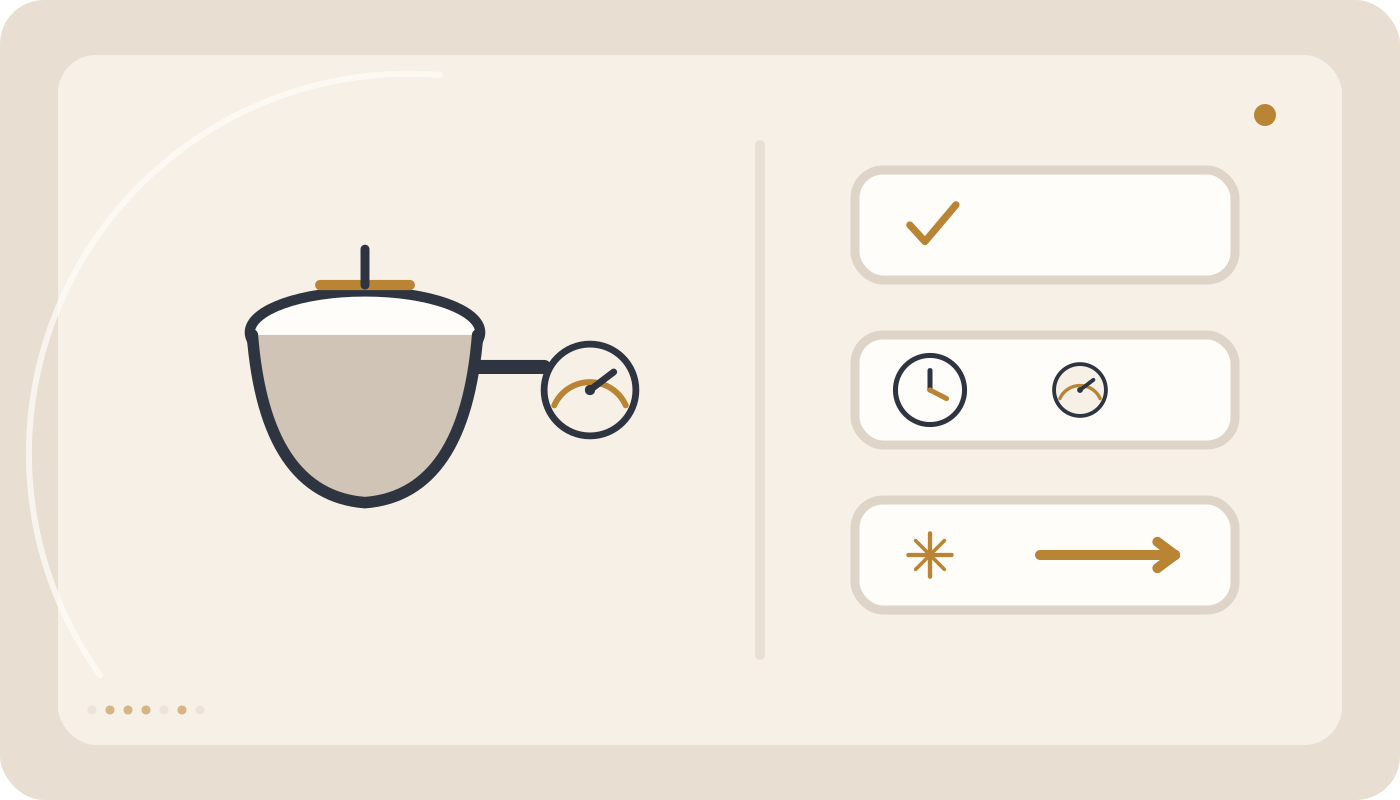
Before every use, confirm that the steam path is clear, valves are clean and operate as designed, the gasket is intact and correctly seated, handles are secure, the lid locks fully, and the model-specific minimum liquid and maximum fill limits are respected. Never pressure cook without sufficient liquid and never force the lid open until all internal pressure is fully released.
Before you start
Pressure Cooker Safety: What Should You Check Before Every Use?
A pressure cooker is safe and highly useful when the steam path, valves, gasket, lid lock, body, handles, liquid level, and filling level are checked before cooking. Even a normally functioning cooker should not be pressurized if the vent is blocked, the lid is not correctly locked, or the vessel is overfilled.
Quick answer: Before every use, confirm that the steam-release path is clear, valves move as designed, the gasket is intact and correctly seated, handles are secure, the lid and rim are undamaged, the required minimum liquid is present, and the manufacturer’s maximum fill level is not exceeded. Lock the lid exactly as specified. Never pressure cook without sufficient liquid, and never force the lid open until all internal pressure has been fully released.
One-minute pre-use checklist
| Part | Check | If abnormal |
|---|---|---|
| Steam path | Clear and unobstructed | Do not use until fully cleaned |
| Operating and safety valves | Clean and movable as designed | Inspect and clean according to the manual |
| Gasket | No cracks, tears, severe hardening, or misplacement | Replace if damaged |
| Lid and lock | Closes fully without abnormal force | Find the cause before cooking |
| Handles | Secure and not loose | Correct according to manufacturer instructions |
| Liquid | Not below the required minimum | Add liquid according to the model instructions |
| Fill level | Below the specified maximum | Reduce contents |
1. The manual for the exact model is the primary reference
Pressure cookers differ in valve design, locking method, minimum liquid, fill markings, and pressure-release procedures.
2. Inspect the steam outlet before use
The vent should be fully clear. Food particles, grease, or scale should not restrict the path.
3. Inspect the steam path visually where the design permits
If the manufacturer allows disassembly or visual inspection, confirm that no visible blockage remains.
4. Do not enlarge the vent with unsuitable tools
The goal is to clean the designed passage, not alter its diameter or damage the component.
5. The operating valve should be clean and correctly installed
A dirty, stuck, or incorrectly fitted pressure-control component should be corrected before cooking.
6. Do not ignore the safety valve
Many cookers include one or more additional safety devices. They should be unobstructed and in normal condition.
7. Never modify safety components
Do not alter weights, springs, valves, or locking components to increase pressure.
8. Inspect the gasket before closing the lid
The gasket should be clean, flexible, and correctly seated without twisting or bulging.
9. Cracks or tears in the gasket matter
Replace a gasket that is cracked, cut, severely hardened, or deformed according to manufacturer guidance.
10. Gaskets are model-specific
A similarly sized ring is not necessarily the correct replacement.
11. Keep the pot rim clean
Rice grains, food particles, or grease on the sealing surface can interfere with proper lid seating.
12. Inspect the rim for deformation
Impact damage can affect sealing geometry. If the lid no longer closes normally, investigate before use.
13. Inspect the lid for structural damage
Cracks, distortion, or damage around the locking and valve areas should not be ignored.
14. The lock should engage without abnormal force
If closing requires unusual pressure, check the gasket, rim, and locking mechanism first.
15. Never heat a pressure cooker that is not fully locked
A partially engaged lid is not acceptable for pressure cooking.
16. Check the handles
Main and helper handles should not be loose, especially because a full pressure cooker can be heavy.
17. Damaged handles need attention
Cracked, burnt, or loose polymer handles should be corrected before use.
18. Check base flatness
A visibly warped vessel can be unstable and may contact flat cooktops poorly.
19. Never pressure cook without enough liquid
Steam comes from liquid. The minimum amount varies by model and recipe and should come from the product instructions.
20. Do not guess the required liquid amount
Follow the recipe and manual, especially for long cooking or water-absorbing foods.
21. Respect the maximum fill marking
Headspace is needed for steam generation and pressure control.
22. Expanding and foaming foods need extra headspace
Rice, dried legumes, and some starchy or foaming foods can expand significantly. Many manufacturers specify a lower fill limit for these foods; use the exact model guidance.
23. Food must not obstruct the steam path
Overfilling or excessive foaming can carry material toward the vent system.
24. Large amounts of oil are not a substitute for required liquid
Pressure cooking is not the same as deep frying. Use only cooking methods explicitly permitted by the manufacturer.
25. Very thick foods need validated instructions
Thick sauces and low-flow mixtures can behave differently under pressure and should follow trusted model-specific recipes.
26. Match the cooker to the heat source
Confirm that the base and temperature limitations are compatible with gas, electric, or induction cooking.
27. Keep gas flames under the base
Oversized flames can overheat handles and upper components.
28. Do not automatically begin induction cooking at maximum power
Heating can be rapid. Follow both cookware and cooktop instructions.
29. Use a stable cooking zone
The burner grate or cooking zone should support the vessel securely.
30. Check valve position before heating
If the model has separate cooking and release positions, set it correctly before pressure buildup.
31. Observe the cooker during pressure buildup
Stay nearby during the initial phase to notice abnormal venting or sealing behavior.
32. Do not treat steam from an abnormal location as normal
Persistent steam around the lid or another unintended area deserves inspection. Detailed leak diagnosis is covered separately.
33. If the cooker does not pressurize, do not simply keep increasing heat
Failure to build pressure has several possible causes. Excessive heat without diagnosis is not a safe fix.
34. Keep hands away from the steam outlet
Pressurized steam is extremely hot and can cause severe burns.
35. Direct steam away from people
During an approved release procedure, keep hands, face, nearby people, and cabinets away from the exhaust path.
36. Avoid unnecessary movement while pressurized
If movement is unavoidable, follow the product instructions and use the handles carefully.
37. Never force the lid open
If the lid is difficult to open, assume pressure may remain. Do not open until the model’s pressure indicators and release procedure confirm complete depressurization.
38. Use the model-specific pressure indicator
A pin, lock, float, or other indicator may show whether pressure remains. Silence alone is not proof of zero pressure.
39. Keep your face away when opening
Open according to the manufacturer’s direction so remaining steam moves away from you.
40. Do not invent your own rapid-release method
Quick-release procedures differ by design and should come from the exact product manual.
41. Cold-water cooling is not approved for every model
Do not place a hot cooker under running water unless the manufacturer specifically allows that method.
42. Keep children away from the steam zone
The area around the cooker should remain clear during pressure buildup and release.
43. Maintain appropriate supervision
Especially during pressure buildup and burner adjustment, observe the appliance.
44. Recheck components after use
Cleaning provides an opportunity to inspect the gasket, valves, rim, and steam path.
45. Consumable parts do not last forever
Gaskets and some components may require replacement based on age, use, heat exposure, and manufacturer intervals.
46. Replacement parts must match the model
Do not substitute visually similar valves or gaskets without confirmed compatibility.
47. Inspect more carefully after a fall or hard impact
Check the lid, rim, lock, handles, and base for deformation.
48. Inspect fully after long storage
The gasket can age or deform and the vent may accumulate dust during extended storage.
49. Final checklist before heating
- You know the operating instructions for the exact model.
- The steam outlet is clear.
- The valves are clean and free to operate as designed.
- The gasket is intact and correctly seated.
- The pot rim and lid are clean and undamaged.
- The handles are secure.
- There is sufficient cooking liquid.
- Contents are below the allowed fill level.
- The lower fill limit for expanding foods is respected where required.
- The lid is fully locked without force.
- The valve is in the correct cooking position.
- The cooker is stable on a compatible cooking zone.
50. When should you not start cooking?
| Condition | Action |
|---|---|
| Steam path is blocked | Do not use until fully cleared |
| Gasket is cracked or incorrect | Install the correct replacement |
| Lid does not lock fully | Find and correct the cause |
| Handle is loose or broken | Correct before cooking |
| Base or rim is severely deformed | Have the cooker inspected |
| Safety component is unknown or modified | Stop use |
| Required liquid or fill limit is unknown | Consult the exact model manual |
Common mistakes
- Starting without checking the steam path
- Using a cracked or incorrect gasket
- Overfilling beyond the approved limit
- Pressure cooking without sufficient liquid
- Ignoring foaming or expanding foods
- Forcing the lid closed
- Increasing heat aggressively when pressure does not build
- Placing hands or face in the steam path
- Opening before pressure is fully released
- Using unknown replacement safety parts
Conclusion
Pressure-cooker safety begins with a short inspection before every use. The steam path, valves, gasket, lock, handles, liquid quantity, and fill level are the seven core checks. If any of them is abnormal, do not begin cooking. When opening, one rule is non-negotiable: never force the lid until all internal pressure has been completely released.
Common mistakes
Change only one variable at a time while diagnosing.
- Do not start cooking without checking the steam path.
- Do not use a cracked or incorrect gasket.
- Do not overfill the pressure cooker.
- Do not pressure cook without sufficient liquid.
- Do not ignore reduced fill limits for expanding or foaming foods.
- Do not force the lid closed.
- Do not apply excessive heat when pressure fails to build.
- Do not place hands or face in the steam path.
- Do not open before pressure is fully released.
- Do not use unknown or incompatible safety parts.
Frequently asked questions
What should I check before every pressure-cooker use?
The steam path, valves, gasket, lid lock, handles, minimum liquid, and fill level are the core checks.
How full can I fill a pressure cooker?
The exact limit depends on the model and food. Follow the marked maximum and any lower limit specified for expanding or foaming foods.
Can I cook if the steam vent is partly blocked?
No. The steam path should be fully clear before cooking begins.
What if the lid is difficult to close?
Inspect the gasket, rim, and locking mechanism and do not force the lid.
What if the lid will not open after cooking?
Assume pressure may remain and do not force it open until the model-specific indicators and release procedure confirm full depressurization.
Can I substitute a similar-looking safety part?
Use only parts confirmed compatible with the exact model or approved by the manufacturer.
Related guides and products
Still having the problem?
If safe user-level checks do not solve the issue, do not open the appliance. Submit a service request for technical inspection.