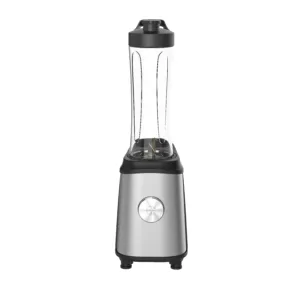
Balanced Smoothie in a Blender: Ingredient Loading Order Matters
For a smooth balanced smoothie in a conventional blender, add liquid first, soft ingredients and greens next, fresh fruit after that, and frozen ingredients last.
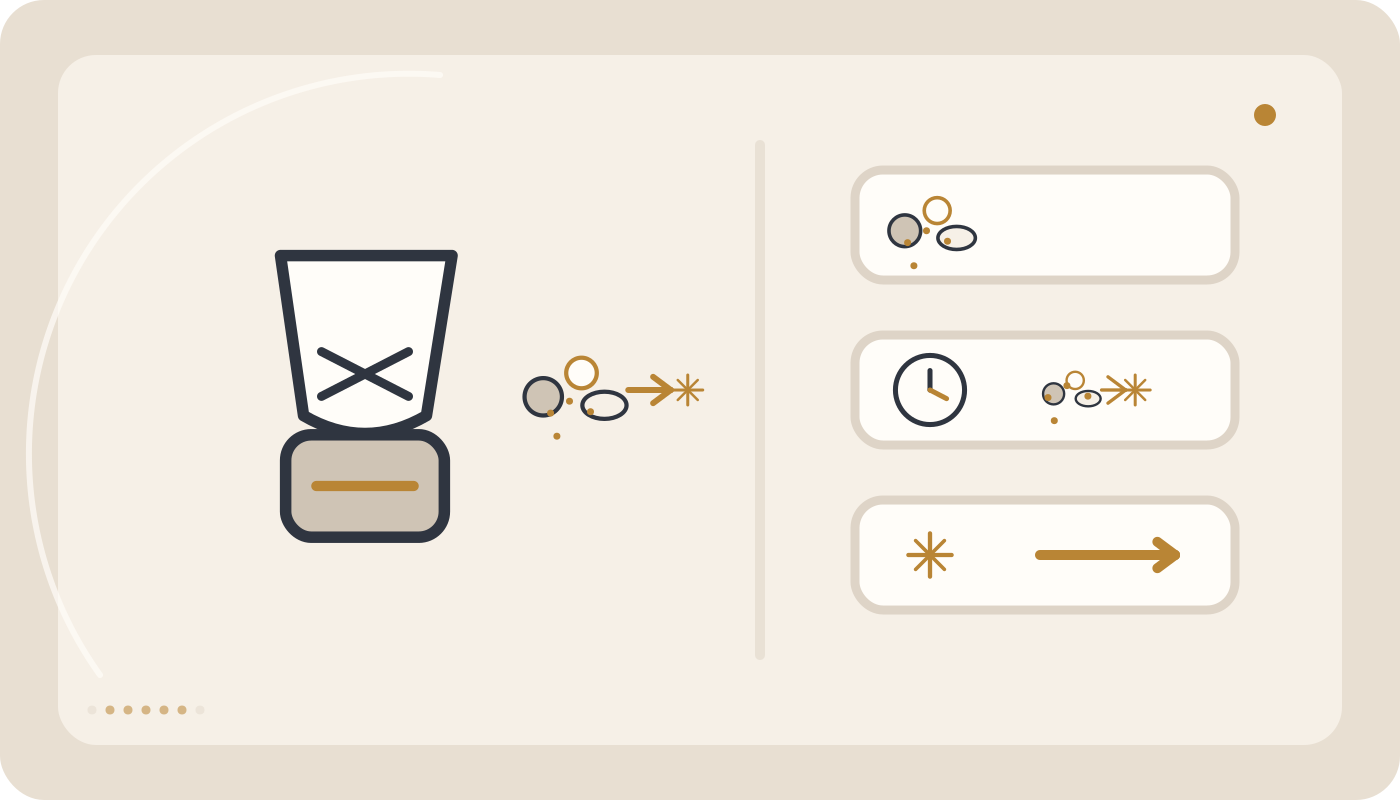
For about two servings, use roughly one cup of liquid, one to one-and-a-half cups of fruit, half a cup of a protein-rich or dairy ingredient, a small amount of leafy greens, and up to half a cup of frozen fruit. In a conventional upright blender, add liquid first, then soft ingredients, greens, fresh fruit, and frozen ingredients or ice last. Start low and increase speed after circulation forms. Follow the exact appliance loading instructions first.
Before you start
Balanced Smoothie in a Blender: Ingredient Loading Order Matters
A good smoothie is not only about choosing fruit. The balance of liquid, fruit, greens, protein, fats, and frozen ingredients, plus the order in which they enter the jar, affects texture and blender load. In many conventional countertop blenders, liquids go near the blades first and heavy frozen ingredients go in last, but the exact appliance instructions always take priority.
Quick answer: For about two servings, use roughly one cup of liquid, one to one-and-a-half cups of fruit, half a cup of a protein-rich or dairy ingredient, a small amount of leafy greens, and up to half a cup of frozen fruit or a few ice cubes. In a conventional upright blender, add liquid first, then soft ingredients, leafy greens, fresh fruit, and frozen ingredients or ice last. Start at low speed and increase gradually. In inverted personal blender cups, the manufacturer may specify a different loading order.
Simple formula for two servings
| Ingredient group | Approximate amount | Purpose |
|---|---|---|
| Liquid | About 1 cup | Creates flow and controls thickness |
| Fresh fruit | 1 to 1.5 cups | Flavor and texture |
| Protein or dairy ingredient | Half a cup | Body and satiety |
| Leafy greens | Half to 1 loosely packed cup | Adds vegetables to the blend |
| Frozen fruit or ice | Up to half a cup | Cold temperature and thickness |
| Seeds or nut butter | 1 to 2 tablespoons | Texture and nutritional balance |
1. Check jar capacity first
Do not exceed the maximum fill line because the blend can expand and foam during circulation.
2. Loading order is not universal
This guide is written for a conventional upright blender. Personal cups that are inverted onto the motor can require a different order.
3. Add liquid first in a conventional blender
Liquid near the blades helps ingredients begin moving instead of forming a dry compact mass.
4. Water is the simplest base
It keeps the flavor neutral when fruit should dominate.
5. Milk or plant beverages create a creamier texture
Choose the liquid based on flavor and dietary preference.
6. Avoid excessive juice
Whole fruit contributes texture and fiber that strained juice does not provide in the same way.
7. Add soft ingredients after liquid
Yogurt, ripe banana, avocado, and very soft fruit fit well in this layer.
8. Soft ingredients help establish circulation
They create a transition between liquid and firmer pieces.
9. Plain yogurt is useful for body and protein
If using yogurt, reduce the starting liquid slightly.
10. Dairy-free options are possible
Plant beverages, nut butter, and other suitable protein sources can replace dairy ingredients.
11. Add leafy greens after soft ingredients
Spinach and tender leaves blend more easily when surrounded by moist ingredients.
12. Do not compact leafy greens excessively
A dense packed mass can reduce circulation.
13. Cut firm stems
Reduce tough stem pieces before blending.
14. Add fresh fruit after the greens
Berries, apple, mango, pear, and similar fruit fit in this layer.
15. Cut large fruit into smaller pieces
Oversized chunks reduce circulation and increase blade load.
16. Remove pits and non-edible hard parts
Hard pits from peaches, dates, plums, and similar fruits must stay out of the blender.
17. Remove tough peels when appropriate
Pineapple, citrus, and other thick peels should be prepared correctly.
18. Place frozen ingredients near the top
In many upright blenders, frozen fruit and ice can gradually move down into softer ingredients.
19. Add ice last
This is a useful rule for many upright blenders, but model instructions are final.
20. Confirm that the blender is designed to crush ice
Not every blender is intended for large hard ice pieces.
21. Frozen fruit can replace some ice
This keeps the smoothie cold and thick without diluting flavor as ice melts.
22. Start with less liquid for a thick smoothie
You can always add more liquid later.
23. Add liquid gradually for a thinner smoothie
It is easier to add liquid than to remove it.
24. Chia and flax absorb liquid
The smoothie can become thicker after standing for a few minutes.
25. Nut butter makes the blend heavier
Use a small amount and expect to need slightly more liquid.
26. Oats can thicken a smoothie
Use a modest quantity for a smoother result.
27. Do not place fine powders dry against the blades
Protein powder or cocoa blends better after some liquid or between moist ingredients.
28. Taste before adding extra sweetener
Ripe banana, dates, or sweet fruit may already provide enough sweetness.
29. A balanced smoothie is more than fruit alone
Combining fruit with a protein source and a small amount of fat or seeds can create a more complete snack or meal component.
30. Avoid stacking too many very sweet fruits
One main fruit and one supporting fruit are often enough for balanced flavor.
31. Simple combination one: banana and strawberry
Milk or yogurt, banana, strawberries, and a small amount of seeds create a creamy blend.
32. Simple combination two: mango and spinach
Water or a plant beverage, mango, spinach, and yogurt or another protein ingredient create a balanced texture.
33. Simple combination three: apple and cinnamon
Milk, chopped apple, yogurt, a little oats, and cinnamon create a thicker smoothie.
34. Simple combination four: banana and peanut butter
Milk, banana, a small amount of peanut butter, and optional cocoa make a more filling blend.
35. Simple combination five: frozen berries and yogurt
Liquid, yogurt, and frozen berries can create a cold thick smoothie without extra ice.
36. Close the lid fully before starting
Never run the blender with an incomplete or loose lid.
37. Start at low speed
A gentle start helps the first ingredients enter circulation.
38. Increase speed over several seconds
Once circulation forms, higher speed can improve smoothness.
39. Long continuous blending is usually unnecessary
For many smoothies, several tens of seconds after circulation begins is enough.
40. If ingredients stop moving, do not keep the motor running indefinitely
Stop the blender safely and correct the ratio with a little liquid or a smaller load.
41. Never use a spoon inside a running blender
Manual repositioning must happen only after the blades stop completely.
42. Use a manufacturer-supplied tamper only as directed
Improvised tools can reach the blades and create serious hazards.
43. If the smoothie is too thick
Add two or three tablespoons of liquid and blend briefly again.
44. If the smoothie is too thin
Add a small amount of frozen fruit, banana, or yogurt.
45. If fruit pieces remain
Review chunk size, loading order, and liquid quantity.
46. If greens remain stringy
The greens may be overloaded, stems may be too firm, or blending time may be insufficient.
47. If ice jams near the blades
Stop the blender and adjust the liquid ratio, then follow the appliance-specific ice-crushing method.
48. If the motor becomes hot, reduce the load
Very thick smoothies with large amounts of frozen ingredients can increase motor load.
49. Stop if an unusual smell appears
Switch off, unplug, allow the appliance to cool, and investigate according to the troubleshooting guidance.
50. Do not blend hot liquid in a sealed jar unless the manufacturer permits it
Steam can create pressure. This article is written for cold or cool smoothies.
51. Wash fresh produce before use
Clean fruit and vegetables appropriately and discard spoiled sections.
52. Do not leave dairy smoothies at room temperature for long periods
Consume promptly or keep them refrigerated.
53. Smoothies usually have their best texture when fresh
Separation, foam, and further thickening can occur during storage.
54. Use a clean covered container for short storage
Refrigerate and shake before drinking again.
55. A repeatable loading method
- Check jar capacity and appliance instructions.
- Add about one cup of liquid.
- Add yogurt, banana, or other soft ingredients.
- Add leafy greens without packing them tightly.
- Add chopped fresh fruit.
- Add small amounts of seeds, oats, or nut butter.
- Add frozen fruit and approved ice last.
- Close the lid completely.
- Start low and increase speed over several seconds.
- Stop when smooth and adjust thickness if needed.
56. Recipe troubleshooting table
| Result | Likely cause | Correction |
|---|---|---|
| Too thick | Too little liquid or too much frozen food | Add liquid gradually |
| Too thin | Too much liquid | Add frozen fruit or yogurt |
| Chunky | Large pieces or weak circulation | Cut smaller and use enough liquid |
| Stringy greens | Tough stems or excessive greens | Cut stems and reduce volume |
| Ingredients do not circulate | Overloading or too little liquid | Stop and adjust the ratio |
| Motor is heavily loaded | Blend is extremely thick | Reduce load and add liquid |
57. This is different from blender troubleshooting
If nearly every recipe blends poorly even with proper loading and liquid, blade condition, coupling, speed, and capacity should be investigated separately.
58. This does not replace ice-crushing guidance
Large amounts of ice or large hard cubes require appliance-specific limits and methods.
59. Change one variable at a time
If thickness is wrong, adjust the liquid first rather than changing fruit, ice, yogurt, and seeds simultaneously.
60. The final smoothie principle
Put liquid low, soft ingredients in the middle, and heavy frozen ingredients near the top, then fine-tune with small changes. This supports circulation in a conventional upright blender, while the exact loading order must still follow the appliance design and manual.
Common mistakes
- Filling above the maximum line
- Placing a large amount of ice at the bottom
- Using very large whole fruit pieces
- Adding too much liquid at the start
- Packing leafy greens too tightly
- Starting immediately at maximum speed
- Running the motor continuously when ingredients are not moving
- Using a spoon in a running blender
- Blending hot liquids without manufacturer approval
- Assuming every blender uses the same loading order
Conclusion
A smooth balanced smoothie begins with the right proportions and loading order. In a conventional upright blender, add liquid first, then soft ingredients and greens, followed by fresh fruit, with frozen ingredients last. Start at low speed and increase only after circulation begins. Adjust thickness in small steps and always prioritize the limits of the exact blender.
Common mistakes
Change only one variable at a time while diagnosing.
- Do not fill the jar above the maximum line.
- Do not place a large amount of ice at the bottom.
- Do not use very large whole fruit pieces.
- Do not add excessive liquid at the start.
- Do not pack leafy greens too tightly.
- Do not start immediately at maximum speed.
- Do not run the motor continuously when ingredients are not moving.
- Do not put a spoon into a running blender.
- Do not blend hot liquids in a sealed jar without manufacturer approval.
- Do not assume every blender uses the same loading order.
Frequently asked questions
What order should ingredients go into a blender?
In a conventional upright blender, start with liquid, then soft ingredients, leafy greens, fresh fruit, and frozen ingredients or ice last; follow the exact appliance manual first.
Why is my smoothie too thick?
Too little liquid, too much frozen fruit, or liquid-absorbing seeds are common causes.
How do I thin a thick smoothie?
Add two or three tablespoons of liquid at a time and blend briefly again.
How do I thicken a thin smoothie?
Add a small amount of banana, yogurt, or frozen fruit.
Should ice go in first?
In many conventional upright blenders, ice works better near the top, but the blender design can change the correct order.
Can I blend hot liquid?
Only if the appliance manufacturer explicitly allows it; this recipe is intended for cold or cool smoothies.