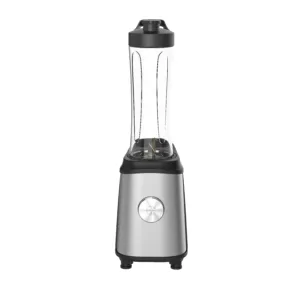
Smooth Sauces and Soups with a Blender: How to Get an Even Texture
For smooth sauces and soups, fully soften ingredients, start with limited liquid, begin at low speed, and adjust consistency gradually.
Cook ingredients until very soft and cut them into small pieces. In a conventional countertop blender, add some liquid first and then the soft cooked ingredients. Start at low speed and increase gradually. If the sauce is too thick, add liquid a few spoonfuls at a time. Blend warm or hot mixtures only when the exact appliance manufacturer explicitly allows it.
Before you start
Smooth Sauces and Soups with a Blender: How to Get an Even Texture
A smooth sauce or soup depends on more than motor power. Ingredient softness, liquid level, loading order, blending time, and temperature determine whether the final texture becomes velvety, grainy, too thin, or too thick. In a conventional countertop blender, enough liquid near the blades and staged loading usually improve circulation.
Quick answer: Cook ingredients until soft and cut them into small similar pieces. Add some liquid first, then softer ingredients, followed by thicker ingredients. Stay below the maximum fill line. Start at low speed and increase gradually. If the sauce is too thick, add liquid a few spoonfuls at a time. Blend hot soup only when the appliance manufacturer explicitly permits hot liquids; otherwise cool the mixture to a suitable temperature or use another approved method.
Basic formula for a smooth texture
| Ingredient group | Purpose | Note |
|---|---|---|
| Base liquid | Creates circulation | Start with less and add gradually |
| Cooked vegetables or solids | Main body | Use small soft pieces |
| Fat | Softens mouthfeel | A small amount is enough |
| Dairy or alternative | Adds creaminess | Add near the end |
| Seasoning | Final flavor | Adjust after texture is set |
1. Decide whether you are making sauce or soup
Sauce needs less liquid, while soup generally needs more.
2. Ingredients should be properly softened first
A blender should not be expected to compensate for undercooked vegetables or legumes.
3. Cook firm ingredients longer
Carrots, potatoes, squash, and root vegetables create grainy texture when still firm.
4. Cut ingredients before blending
Smaller pieces move more easily and reduce blade load.
5. Stay below the maximum fill line
Food rises during circulation and needs free space.
6. Use even less volume for warm mixtures
If hot blending is approved, use a more conservative fill level.
7. Add base liquid first
In an upright blender, this helps circulation form near the blades.
8. Do not add all liquid immediately
For thick sauce, reserve some liquid for later adjustment.
9. Add soft ingredients after liquid
Cooked onion, tomato, squash, and potato can follow.
10. Add denser ingredients higher in the jar
This allows lighter material to begin moving first.
11. Do not overuse fat
Oil, butter, and cream should finish the texture rather than dominate it.
12. Add dairy near the end
This makes thickness easier to control.
13. Add cheese gradually
Too much cheese can make a sauce heavy and sticky.
14. Start vegetable soup with less liquid
Add stock or water later if the texture is too thick.
15. Limit added water in tomato sauce
Cooked tomatoes and onions already release moisture.
16. Fibrous vegetables need special preparation
For a very smooth result, tough skins and fibrous sections need sufficient cooking or removal.
17. Lentils should be completely tender
Undercooked lentils remain grainy even after prolonged blending.
18. Do not overblend potato soup
Potato starch can create a gluey texture when blended too long.
19. Stop once potato soup becomes smooth
Extended blending is unnecessary.
20. Carrot and squash tolerate longer blending better
They are less prone to gluey texture than potato.
21. Start at low speed
This reduces sudden splashing and load.
22. Increase speed gradually
Once circulation forms, more speed improves smoothness.
23. Do not blend for several minutes without reason
Many soups and sauces need only tens of seconds after circulation begins.
24. Stop if ingredients do not circulate
Switch off and adjust with a little liquid or a smaller load.
25. Never use a spoon in a running blender
Manual repositioning must happen only after the blades stop completely.
26. Use a supplied tamper only as directed
Improvised tools can contact the blades.
27. Check texture after the first blending cycle
The sauce may already be at the correct consistency.
28. Thin a thick sauce gradually
Add two or three spoonfuls of liquid at a time.
29. Fix thin soup by starting with less liquid next time
Adding dry ingredients to a finished soup is usually not ideal.
30. Use cooked ingredients themselves to thicken
Potato, squash, carrot, or soft legumes can add body without extra flour.
31. Adjust salt at the end
Blending distributes flavors and makes final seasoning easier.
32. Add lemon or other acids near the end
Acidity is easier to balance after the texture is finished.
33. Add fresh herbs late
Parsley, basil, and cilantro retain more aroma.
34. Blend green herbs briefly for brighter color
Long warm blending can dull the color.
35. Keep green sauces cooler
Excess heat can reduce fresh green color.
36. Nut-based sauces need enough liquid
Nut butter, sesame, and seeds thicken mixtures quickly.
37. Avoid large amounts of dry seeds unless the blender is designed for dry grinding
Follow the exact appliance capability.
38. Let nut-based sauces rest briefly
Some ingredients continue absorbing liquid after blending.
39. Hot liquid is the main safety concern
Steam inside a closed jar can build pressure.
40. Blend hot food only when explicitly approved
The appliance manual must clearly allow hot liquids.
41. If hot blending is not approved, cool first
Allow the soup or sauce to reach a suitable temperature for the appliance.
42. Do not force the lid closed to trap steam
Any venting system must work as designed.
43. Avoid sudden thermal shock to the jar
Do not move a very hot jar abruptly onto a very cold surface.
44. Use smaller batches for warm soup
Multiple batches are safer than filling near maximum capacity.
45. Reheat soup after blending when needed
If the mixture cools during processing, return it to suitable cookware and heat again.
46. Simple carrot soup
| Ingredient | Approximate amount |
|---|---|
| Cooked carrots | 2 cups |
| Cooked onion | Half a cup |
| Water or stock | 1 to 2 cups |
| Salt and pepper | To taste |
| Cream or alternative | Optional and small amount |
47. Carrot soup method
- Cook carrot and onion until fully soft.
- Let the temperature match appliance limits.
- Add some liquid to the jar.
- Add the cooked ingredients.
- Start low and increase speed.
- Check texture and add liquid gradually.
- Adjust salt and pepper.
- Add a small amount of cream at the end if desired.
48. Simple tomato sauce
| Ingredient | Approximate amount |
|---|---|
| Cooked tomatoes | 2 cups |
| Cooked onion | Half a cup |
| Oil | 1 tablespoon |
| Water | As needed |
| Salt and spices | To taste |
49. Tomato sauce method
- Cook tomato and onion until soft.
- Reserve some released liquid.
- Add ingredients with limited liquid.
- Blend until smooth.
- Add a little liquid only if too thick.
- Adjust salt, spice, and oil at the end.
50. Simple cold yogurt-herb sauce
Blend yogurt, fresh herbs, lemon juice, and a small amount of oil in a cool jar. This sauce needs no hot ingredients and only brief blending.
51. If sauce becomes foamy
High speed, small volume, or dairy ingredients can create foam.
52. If many bubbles remain
Let the sauce stand for a few minutes.
53. If texture remains grainy
Ingredients may be undercooked, liquid may be low, or blending time may be insufficient.
54. If texture becomes gluey
Starchy ingredients such as potato were blended too long.
55. If sauce sits at the bottom without circulating
The volume may be too small or the mixture too thick.
56. Quick troubleshooting table
| Result | Likely cause | Correction |
|---|---|---|
| Grainy | Firm ingredients or too little liquid | Cook softer and add a little liquid |
| Too thick | Too little liquid | Add liquid gradually |
| Too thin | Too much liquid | Start with less next time |
| Too foamy | High speed or dairy | Use less speed and brief standing |
| Gluey | Overblended starch | Blend for less time |
| No circulation | Too thick or unsuitable volume | Stop and adjust the ratio |
57. This is not a replacement for blender troubleshooting
If nearly every recipe stays uneven even with correct ratios, blade condition, coupling, speed, and capacity should be checked separately.
58. This differs from an immersion blender
An immersion blender can process soup directly in the pot, while a countertop jar blender uses a different loading method and has different temperature limits.
59. Rinse the jar soon after use
Thick and dairy sauces become harder to clean after drying; full jar-cleaning guidance belongs in the dedicated care article.
60. The final smooth-texture principle
Cook ingredients until soft, start with limited liquid, begin at low speed, and adjust thickness gradually. When ingredients are warm, the exact blender temperature limit is more important than any recipe.
Common mistakes
- Loading firm undercooked ingredients
- Filling above the maximum line
- Adding all liquid at the beginning
- Starting immediately at maximum speed
- Running the blender continuously when ingredients do not move
- Using a spoon in a running blender
- Overblending potato
- Adding excessive cream or cheese
- Blending hot liquid without manufacturer approval
- Assuming every blender has the same temperature limit
Conclusion
Smooth sauces and soups come from balancing ingredient softness, liquid, and blending time. In a conventional countertop blender, start with limited liquid, add soft cooked ingredients, and begin at low speed. Adjust consistency a few spoonfuls at a time, and handle warm ingredients only within the exact appliance limits.
Common mistakes
Change only one variable at a time while diagnosing.
- Do not load firm undercooked ingredients.
- Do not fill above the maximum line.
- Do not add all liquid at the beginning.
- Do not start immediately at maximum speed.
- Do not keep the blender running when ingredients are not moving.
- Do not put a spoon into a running blender.
- Do not overblend potato.
- Do not add excessive cream or cheese.
- Do not blend hot liquid without manufacturer approval.
- Do not assume every blender has the same temperature limit.
Frequently asked questions
Why is my blender sauce grainy?
Ingredients may not be soft enough, liquid may be too low, or blending time may be insufficient.
How do I thin a thick sauce?
Add two or three spoonfuls of liquid at a time and blend briefly again.
Why does potato soup become gluey?
Extended blending releases too much potato starch, so stop once the texture becomes smooth.
Can I blend hot soup?
Only when the exact appliance manufacturer explicitly permits blending hot liquids.
When should cream be added?
Usually near the end, which makes thickness easier to control.
Why do ingredients stop circulating?
Excess thickness, too little liquid, or unsuitable volume are common causes; stop the blender and correct the ratio.