Blender, Chopper, Immersion Blender, or Food Processor: Which Do You Need?
Compare a blender, chopper, immersion blender, and food processor by task, batch size, cleanup, storage, and accessories to choose the right food-prep appliance.
Choose a blender for smooth drinks and liquid mixtures, a chopper for small-batch chopping, an immersion blender for soup and puree directly in the vessel, and a food processor for slicing, shredding, and broader preparation tasks. Verify the actual attachments and food limits of each model.
Blender, Chopper, Immersion Blender, or Food Processor: Which Do You Need?
These four appliances overlap in some tasks, but they are not designed around the same workflow. A countertop blender is strongest when ingredients need continuous liquid circulation; a chopper is convenient for small batches of solid ingredients; an immersion blender excels when you want to puree or blend directly in a suitable vessel; and a food processor becomes more valuable when you need slicing, shredding, chopping, and other preparation tasks from one platform. The right choice therefore starts with what you cook every week, not simply wattage or the number of accessories in the box.
Quick answer: Start with a blender if smooth drinks and liquid mixtures are your priority. Choose a chopper for frequent small-batch chopping of onion, herbs, and nuts. An immersion blender is usually the simplest option for soup, puree, and sauce directly in a pot or container. Consider a food processor when you also need slicing, shredding, larger preparation batches, or multiple food-prep functions. Always verify the actual attachments and food limits of the model you are considering.
Quick comparison
| Main need | Usually the better first choice | Why |
|---|---|---|
| Smooth drinks and liquid mixtures | Blender | Tall jar geometry supports continuous ingredient circulation |
| Onion, herbs, nuts, small solid batches | Chopper | Compact bowl and chopping blade offer direct control |
| Soup, puree, sauce in the vessel | Immersion blender | Reduces the need to transfer food into a separate jar |
| Slicing, shredding, multi-purpose preparation | Food processor | Compatible discs and attachments can broaden the workflow |
| Minimal storage space | Immersion blender or chopper | Usually smaller and simpler to store |
| Larger, varied preparation jobs | Food processor | A larger bowl and multiple tools can handle more stages |
1. Start with your most frequent tasks
Write down the three preparation jobs you perform most often. If two of them involve drinks or smooth liquid mixtures, a blender is a logical priority. If you mostly chop onion and herbs, a compact chopper may deliver more everyday value than a large food processor.
2. What is a countertop blender best at?
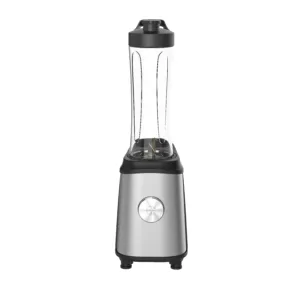
A blender normally uses a relatively tall jar with blades at the bottom. The jar shape encourages liquids and soft ingredients to circulate through the blade zone repeatedly, which is why blenders are well suited to smooth drinks, pourable sauces, and liquid-heavy purees.
3. A blender is not automatically the best dry chopper
Having sharp blades does not mean every blender is approved for dry chopping, spices, nuts, ice, or very hard ingredients. Those tasks should be performed only when the model instructions allow them. For a small amount of onion or herbs, a chopper often gives simpler control.
4. How is a chopper different?
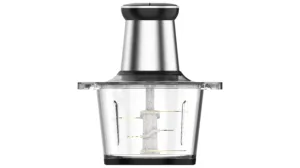
A food chopper normally uses a shorter bowl with a blade designed to cut solid ingredients in a limited batch. Its goal is not to create a liquid vortex. Short controlled runs help you stop at coarse, medium, or finer chopping before the ingredients turn into a paste.
5. When is a chopper enough?
If your main job is everyday chopping and you do not need shredding discs, slicing, or large batches, a chopper can be the more practical tool. It normally has fewer parts, requires less storage space, and may be faster to clean for small jobs.
6. An immersion blender is more than its common nickname suggests
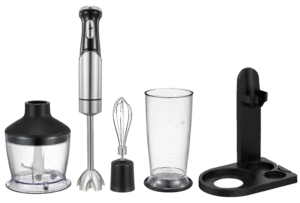
The blending shaft of an immersion blender is primarily useful for blending and pureeing soft ingredients in an appropriate container. Soup, sauce, and puree are common examples. Its practical advantage is that you can often work in the same vessel rather than transferring the food to a countertop blender.
7. The main advantage of an immersion blender
For a modest batch of soup or sauce, direct-in-vessel blending can reduce transfers and cleanup. However, hot-food temperature limits, shaft materials, and vessel compatibility vary by model, so the appliance instructions still matter.
8. When does a food processor make more sense?
A food processor becomes more compelling when you need more than one preparation method. Depending on the supplied tools, it may chop, shred, slice, grate, or perform other tasks. The words “food processor” do not guarantee that every attachment is included, so check the exact package contents.
9. Does a food processor replace a blender?
Not completely. A processor bowl is very useful for many solid and semi-solid tasks, but its geometry may not create the same liquid circulation as a dedicated blender jar. If smooth drinks are a major part of your routine, a dedicated blender function may still matter.
10. Can a blender replace a food processor?
There is some overlap, but a standard blender does not normally shred or slice vegetables with discs, and it may offer less control for dry chopping. Compare the real bowl, blades, attachments, and approved uses instead of assuming that higher wattage creates more functions.
11. Chopper versus food processor
A chopper is generally the simpler, more focused appliance. A food processor often provides a larger bowl and additional preparation tools. Choose the simpler chopper when chopping is the real need; choose the processor when those additional functions will be used regularly.
12. Can an immersion blender also be a chopper?
Some immersion-blender sets include a separate chopper bowl driven by the same motor unit. In that case, chopping is performed by the dedicated bowl and blade, not by the blending shaft itself. Never assume this accessory is included with every model.
13. Which appliance is better for onion?
For small to medium quantities, a chopper is often convenient. Short runs make it easier to control the size. If you process large quantities or also want slicing and shredding, a food processor may be more efficient.
14. Which is better for herbs and nuts?
A chopper works well for smaller batches and a food processor may suit larger preparation jobs, provided the model approves the ingredient. Do not overfill the bowl or run continuously simply to compensate for excessive load.
15. Which is better for soup?
An immersion blender is useful when you want to blend softened soup directly in a suitable pot or vessel. Respect the model’s temperature limit and normally move the pot away from active heat. A countertop blender can also work when its instructions specifically permit the food temperature and batch size.
16. Which is better for sauce?
It depends on the sauce. A countertop blender works well for smooth pourable mixtures, an immersion blender is convenient for smaller in-vessel batches, and a chopper or processor can suit thicker mixtures that include chopped solids.
17. Which is better for dough?
Use a food processor for dough only when the manufacturer supplies an appropriate tool or explicitly approves the task and states a capacity. A standard chopper blade or blender blade is not a substitute for a dough-specific system.
18. What about ice?
Do not choose an appliance for ice solely from motor wattage. Ice crushing must be an approved task for that model. Some blenders are designed for it, while many choppers, processors, and immersion-blender attachments are not.
19. What about raw meat?
Use only a bowl and blade specifically approved for raw meat. Clean all food-contact parts promptly and follow normal raw-food hygiene practices to avoid cross-contamination.
20. What makes sense for a small household?
For small quantities, storage and cleanup can matter more than a large accessory collection. A chopper or a versatile immersion-blender set may be enough. If drinks are a major daily habit, a blender may still be the more valuable appliance.
21. What matters for a high-use household?
Usable capacity, duty-cycle limits, feed opening, and cleaning effort become more important. Frequent slicing and shredding can justify a suitable food processor, while frequent drinks make blender jar performance more important.
22. Measure your storage space
A processor with several discs and bowls needs more storage. A blender can also be tall under wall cabinets. Immersion blenders and compact choppers are smaller, but their accessories still need an organized location.
23. Cleanup can change the best choice
An appliance with many parts may be used less often for a two-minute job. Check how easily the blade comes out, which parts are dishwasher safe, and whether ingredients tend to collect around seals, shafts, or lid channels.
24. Do not confuse stated volume with working capacity
The printed bowl or jar size is not the safe working quantity for every ingredient. Thick, dry, hot, or expanding foods can have different limits. Follow the maximum line and the instructions for the specific task.
25. Wattage alone does not decide performance
Input power is only one specification. Blade geometry, drive design, bowl shape, duty cycle, usable capacity, and suitability for the ingredient all affect real performance. Comparing two appliances by one number can be misleading.
26. More accessories do not always mean more value
If you never use a shredding disc or slicing tool, those parts add storage and cleaning rather than practical value. A smaller set of useful, easy-to-clean tools can be the better purchase.
27. A practical combination for a small kitchen
One space-saving approach is an immersion blender that includes a compatible chopper bowl. This can cover several small jobs, but it still does not automatically replace a dedicated blender or a full food processor for every task.
28. A practical combination for varied cooking
If you make smooth drinks and also shred or slice vegetables frequently, a blender and a food processor may serve two genuinely different roles. The goal is not the fewest appliances; it is to own appliances that actually get used.
29. A one-minute decision method
- List your three most frequent weekly preparation jobs.
- If two are liquid drinks or smooth mixtures, prioritize a blender.
- If two are small chopping jobs, prioritize a chopper.
- If soup, sauce, and puree in the vessel dominate, prioritize an immersion blender.
- If slicing, shredding, chopping, and varied prep dominate, consider a food processor.
- Then compare actual capacity, attachments, cleaning, and food limitations of specific models.
30. When is the bigger appliance the wrong choice?
If you only chop one onion or make a small sauce, a large food processor can create more setup and cleanup than value. Match capacity and complexity to the size of your normal jobs.
31. When is the smaller appliance not enough?
If you repeatedly process large quantities or need slicing and shredding several times a week, a compact chopper can force you into many batches. A suitable food processor may then save meaningful preparation time.
32. If you are still choosing between two options
Replace the question “Which one is more powerful?” with “Which one performs my three main jobs with the fewest compromises, easiest cleanup, and the right batch size?” That usually produces a more useful answer.
Choice by cooking style
| Cooking style | First appliance to consider | Check before buying |
|---|---|---|
| Drinks and liquid mixtures | Blender | Jar capacity, approved foods, cleaning |
| Quick daily chopping | Chopper | Bowl capacity, chop control, blade design |
| Soup and puree in the vessel | Immersion blender | Shaft material, temperature limits, accessories |
| Varied preparation and larger batches | Food processor | Discs, bowl, capacity, purpose of each tool |
| Very limited storage | Chopper or immersion blender | Actual dimensions and accessory storage |
Common buying mistakes
- Choosing only by motor wattage.
- Assuming any blade is suitable for every ingredient.
- Buying a food processor only because it has many attachments.
- Treating bowl volume as working capacity for every food.
- Processing hot food, ice, raw meat, or dough without checking the manual.
- Ignoring cleanup time.
- Ignoring storage space for accessories.
- Forcing one appliance to do a task it was not designed for.
- Buying a very large appliance for tiny everyday jobs.
- Failing to list your three most frequent tasks before comparing models.
Conclusion
There is no universal winner. A blender is strongest for liquids and smooth textures, a chopper for fast small-batch chopping, an immersion blender for direct-in-vessel blending, and a food processor for broader preparation workflows. The best purchase is the appliance that matches your three most frequent tasks, normal batch size, kitchen space, and acceptable cleanup. Once the appliance type is clear, compare model-specific capacity, attachments, approved foods, and safety features.
Common mistakes
Change only one variable at a time while diagnosing.
- Do not choose only by motor wattage.
- Do not assume every blade is suitable for every ingredient.
- Do not buy a food processor only because it includes many attachments.
- Do not treat bowl volume as working capacity for every food.
- Do not process hot food, ice, raw meat, or dough without checking the manual.
- Do not ignore cleanup time.
- Do not forget accessory storage.
- Do not force an appliance to perform a task without the right tool.
- Do not buy an oversized appliance for tiny daily jobs.
- List your three most frequent tasks before comparing models.
Frequently asked questions
Blender or chopper: which is better?
A blender is usually better for liquids and smooth textures, while a chopper is better for small batches of solid ingredients.
Immersion blender or countertop blender?
An immersion blender is convenient for soup and puree in the vessel; a countertop blender is stronger for drinks and jar-based liquid blending.
What is the difference between a chopper and a food processor?
A chopper is simpler and focused on chopping, while an equipped food processor can also slice, shred, and perform other prep tasks.
Can a food processor replace a blender?
Not always; processor bowl geometry does not necessarily create the same liquid circulation as a dedicated blender jar.
Which is better for onion?
A chopper is convenient for small to medium quantities; a food processor can make more sense for larger batches or additional prep tasks.
Which is better for soup?
An immersion blender is convenient for direct-in-vessel blending when the model permits the food temperature.
What works best in a small kitchen?
A compact chopper or versatile immersion-blender set may save space, depending on your three most frequent tasks.
Does higher wattage mean better performance?
No. Blade geometry, drive design, bowl shape, capacity, and task suitability also matter.