
Why Is My Stand Mixer Not Kneading Dough Properly?
Troubleshoot poor stand-mixer dough kneading by checking the dough hook, real dough capacity, hydration, speed, kneading time, bowl clearance, gearbox, and coupling.
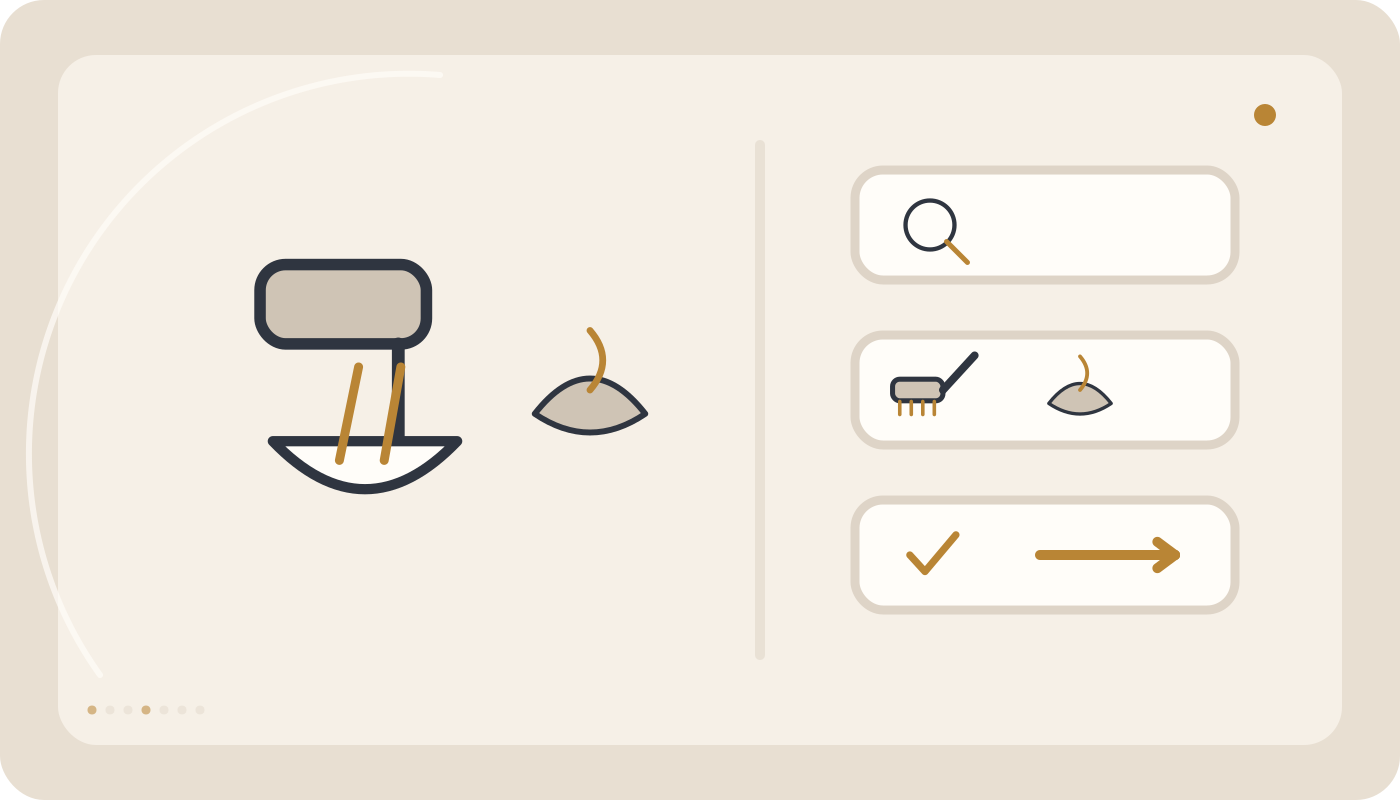
Use the correct dough hook, keep the batch within the mixer's real dough capacity, and follow the recipe hydration accurately. Start at the recommended, usually low, dough speed. If even a light correct dough does not engage properly or mixer speed drops, bowl clearance and the drive system should be assessed.
Where should you start?
Why Is My Stand Mixer Not Kneading Dough Properly?
If a stand mixer runs but the dough does not come together, climbs the hook, sticks to the bowl, or remains rough and poorly developed, the motor is not automatically underpowered. First check attachment choice, flour-to-liquid ratio, batch size, ingredient order, speed, kneading time, bowl clearance, and the normal behavior of that specific recipe.
Quick answer: Use the correct dough hook, keep the batch within the model’s actual dough capacity, and follow the recipe’s flour/liquid ratio. Start kneading at a low recommended speed and allow the dough to develop gradually; high speed on heavy dough can overload gears and the motor. If the hook spins but the dough barely moves, bowl clearance is wrong, the drive is slipping, or the mixer loses speed or makes abnormal gear noise under load, technical assessment may be needed.
Quick diagnosis: what is going wrong?
| Condition | Likely cause | First check |
|---|---|---|
| Dough sticks to bowl and will not gather | Too much liquid/too little flour/small batch | Recipe ratio and batch size |
| Dough climbs the hook | Dense dough/high speed/large batch | Stop, reduce load, adjust speed |
| Hook spins but dough barely moves | Wrong bowl clearance or very small batch | Bowl seating and attachment height |
| Motor speed drops under load | Heavy dough/overload/drive issue | Capacity and gear/coupling |
| Dough becomes tight and tears | Too much flour/over-kneading/recipe issue | Hydration and kneading time |
| Dough stays soft and sticky | High hydration/short kneading/flour type | Recipe, flour absorption, rest time |
1. The wrong attachment is being used
Bread and pizza dough typically require the dough hook. A whisk is designed to aerate light mixtures, while a flat beater is better suited to batters and medium mixtures.
2. Bowl capacity is not the same as dough capacity
An 8-liter bowl does not mean it can process 8 liters of heavy dough. Actual dough capacity depends on power, hydration, flour type, speed, and gearbox design.
3. The batch is too large
A heavy batch can reduce speed, make dough climb the hook, and place excessive load on the gearbox.
4. The batch is too small
A very small quantity may sit below the effective hook path and fail to circulate properly.
5. The flour-to-liquid ratio is wrong
Very wet dough smears around the bowl; very dry dough becomes heavy and wraps tightly around the hook. Follow the recipe hydration.
6. Flour type changes dough behavior
Different flours absorb different amounts of water. Protein content and flour type affect gluten development and texture.
7. Liquid is added all at once
Some recipes benefit from gradual liquid addition. If the recipe specifies it, do not dump all liquid in immediately.
8. Ingredient order is inappropriate
Salt, yeast, fat, sugar, and liquids can be sequenced differently depending on the dough. Follow the intended recipe method.
9. Speed is too high
Heavy dough normally uses low or model-recommended speed. Excess speed can make dough climb, heat the mixture, and stress gears.
10. Speed is too low
Some recipes may call for a modest speed increase after the dough comes together. Follow the manual and recipe rather than a universal rule.
11. Kneading time is too short
Dough can look rough and sticky in the first few minutes and then become smoother as gluten develops.
12. Kneading time is too long
Over-kneading can overheat dough and, in some recipes, weaken the structure. More time is not always better.
13. The recipe needs a rest period
Autolyse or rest allows flour to hydrate and can dramatically improve dough handling. Do not remove the rest step when the recipe depends on it.
14. Ingredients are too cold
Cold ingredients can create a firmer dough and increase motor load.
15. Dough becomes too warm
Friction raises dough temperature during kneading. Long runs and high speed can make some doughs softer and stickier.
16. Dough climbs the hook
Some climbing can occur, but if dough approaches the attachment head or drive area, stop and check batch size, hydration, and speed.
17. Dough only spins around the bowl
The hook may not be engaging the dough, the batch may be too small, or hook-to-bowl clearance may be wrong.
18. Attachment height is incorrect
Some mixers allow bowl-clearance adjustment. Too high leaves ingredients on the bottom; too low risks bowl contact. Adjust only as specified by the manufacturer.
19. The bowl is not locked correctly
A tilted or partially locked bowl changes the hook path and can produce uneven kneading.
20. The dough hook is not fully installed
The attachment should lock completely onto the drive shaft. Partial seating can create play and weak performance.
21. The hook is not compatible with the model
Hook shape, length, and angle are part of the planetary mixing design. A similar-looking attachment may not have correct clearance.
22. The bowl occasionally needs scraping
Some recipes legitimately require stopping the mixer, scraping the bowl with a spatula, and returning ingredients to the center.
23. Never scrape while the mixer is running
A utensil can become trapped between the hook and bowl. Stop fully before scraping.
24. Pulse is not a kneading substitute
Heavy dough generally needs the continuous low-speed mode specified by the manual, not repeated high-impact Pulse operation.
25. Bread dough and cake batter are different
Cake batter generally does not need gluten development, and overmixing can damage texture. Match the attachment to the food.
Why does bread dough climb the hook?
Dense dough, a large batch, or excessive speed can be responsible. Stop, release the dough, and review hydration and speed.
Why does pizza dough stick to the bowl?
Higher-hydration pizza dough can be sticky early in mixing. Respect kneading time and rest periods rather than adding flour too quickly.
Why is brioche dough so soft?
Butter and eggs change dough behavior significantly. Brioche should not be judged by the same texture as lean bread dough.
Should I add more flour until the dough clears the bowl?
Only when the recipe logic supports it. Adding flour too aggressively can make the dough dry and heavy.
Should I add more water?
If the dough is genuinely dry and crumbly, liquid may be low, but add it gradually according to the recipe.
What is the windowpane test?
For some wheat doughs, stretching a small piece into a thin membrane can indicate gluten development. It is not a universal test for every dough or flour.
Why is dough still not elastic after several minutes?
Flour type, hydration, fat, sugar, rest time, and mixing speed all matter. Do not simply extend motor run time indefinitely.
What if the mixer shakes under dough load?
Some movement with dense dough can occur, but severe shaking or walking across the counter is not normal and deserves separate troubleshooting.
What if the mixer gets hot?
Stop and allow cooling according to the manual. Excess batch size and unsuitable speed are common overload causes.
What if I hear clicking or smell rubber?
These signs can indicate belt, gear, or coupling problems. Stop using the mixer until the drive system is checked.
Step-by-step troubleshooting
- Stop and unplug the mixer.
- Confirm the correct dough hook is installed.
- Compare the batch with the model’s dough capacity.
- Check flour and liquid ratios against the recipe.
- Lock the bowl fully.
- Select the recommended dough speed.
- Use the recipe rest period where required.
- Test with a smaller batch.
- Watch for speed loss, gear noise, and hook engagement.
- If performance remains poor with a correct light batch, arrange technical assessment.
A simple test: recipe problem or mixer problem?
Prepare a familiar simple dough using accurately weighed ingredients and moderate hydration, keeping the batch well below maximum capacity. If the mixer kneads it normally, the earlier issue was likely recipe, batch, or speed. If even a light dough does not circulate or the mixer loses speed, the problem is more likely mechanical.
10 common mistakes
- Using a flat beater or whisk for heavy dough.
- Loading by bowl liters instead of actual dough capacity.
- Using high speed on dense dough.
- Adding flour immediately whenever dough is sticky.
- Skipping recipe rest periods.
- Kneading too long without monitoring dough temperature.
- Using a partially locked bowl.
- Using a dough hook from another model.
- Putting a spatula into a running bowl.
- Continuing despite speed loss, rubber smell, or gear noise.
When should you stop using the mixer?
Stop if the hook strikes the bowl, motor speed drops severely, there is a rubber or electrical burning smell, clicking or abnormal gear noise appears, the mixer walks across the counter, or overload protection activates repeatedly.
When is service appropriate?
If the correct dough hook, locked bowl, light batch, suitable hydration, and recommended speed still fail to knead properly, or drive transfer is unstable under load, the gearbox, coupling, planetary drive, or attachment-height adjustment should be assessed.
Conclusion
For good kneading, first correct recipe hydration, actual dough capacity, dough-hook selection, speed, and bowl clearance. Most kneading problems begin with load or technique rather than inadequate motor power. If a light correct dough still causes speed loss or poor hook engagement, the drive and gearbox deserve attention.
Common mistakes
Change only one variable at a time while diagnosing.
- Do not use a whisk or flat beater for heavy dough.
- Do not treat bowl liters as dough capacity.
- Do not use high speed for dense dough.
- Do not immediately add flour to every sticky dough.
- Do not skip recipe rest periods.
- Do not knead for long periods without monitoring dough temperature.
- Do not use a partially locked bowl.
- Do not use a dough hook from another model.
- Do not insert a spatula into a running bowl.
- Do not continue with speed loss, rubber smell, or gear noise.
Frequently asked questions
Why does dough not come together in a stand mixer?
Incorrect hydration, too small or too large a batch, unsuitable speed, wrong hook, or poor bowl clearance are common causes.
Why does dough climb the hook?
Dense dough, a large batch, or excessive speed can cause it; stop and correct the conditions.
What speed should I use for dough?
The exact setting is model-specific, but heavy dough generally uses a low manufacturer-recommended speed.
Does sticky dough always need more flour?
No. Some high-hydration doughs improve with rest and kneading rather than extra flour.
Why does the mixer slow under load?
Overload, excessively stiff dough, or a gear/coupling issue may be involved.
When does it need service?
When the correct hook, light batch, and suitable recipe still produce poor engagement or unstable drive transfer.
Related guides and products


Still having the problem?
If safe user-level checks do not solve the issue, do not open the appliance. Submit a service request for technical inspection.