
Why Won't a Tea Maker or Electric Kettle Turn On?
If an electric kettle or tea maker will not switch on, check the outlet, cord, base seating, water level, and thermal protection before assuming the appliance has failed.
First check wall power, visible condition of the cord and plug, correct kettle seating, and adequate water. If the appliance operated without water, unplug it and allow it to cool completely. Do not dismantle it if the problem continues.
Where should you start?
Why Will an Electric Kettle or Tea Maker Not Turn On?
An electric kettle or tea maker that does not switch on is not necessarily burned out. The cause may be a wall outlet, incorrect seating on the power base, an activated thermal safety device, or another condition that can be checked without opening the appliance. Faults involving the cord, base, switch, thermostat, or internal circuitry require technical service.
Quick answer: first test the wall outlet with a known working appliance, inspect the plug and cord for visible damage, seat the kettle correctly on its base, and confirm that it contains an appropriate amount of water. If it was operated empty or overheated, unplug it and allow it to cool completely. If it still does not operate, do not open the appliance; arrange technical inspection.
1. Confirm that the wall outlet has power
Check the simplest cause first. Connect a known working, suitable appliance to the same outlet. If that appliance also fails to operate, the problem is likely related to the outlet or building electrical supply rather than the kettle.
2. Inspect the plug and power cord
The cord should not show cuts, crushing, scorching, discoloration, or melted areas. The plug should not be loose or show signs of abnormal overheating. If visible damage is present, do not reconnect the appliance to power.
3. Is the kettle seated correctly on its base?
On cordless models, electrical power passes through the connection between the kettle and its base. Lift the kettle and place it back correctly without applying unusual force. Foreign material or contamination around the seating area can prevent correct positioning. Do not wet the base or electrical contacts.
4. Check the power switch again
On some models, the switch remains engaged only when the kettle is correctly seated and safety conditions are satisfied. If the switch immediately returns or refuses to remain in the operating position, do not force it.
5. Was the kettle switched on without enough water?
Many electric kettles include boil-dry or over-temperature protection. If the appliance was operated empty or with too little water, a thermal safety device may interrupt power to the heating element.
What should you do? unplug the appliance, allow it to cool completely, and then add an appropriate amount of water according to the model instructions. Reset behavior and cooling time vary between designs, so the product manual remains the primary reference.
6. It will not restart immediately after boiling
If you try to restart the appliance immediately after automatic shutoff, the thermostat or safety system may not yet permit another heating cycle. Allow the kettle to cool for a short period. Repeated rapid switching is not recommended.
7. Heavy scale can affect operation
Severe mineral scale on water-contact surfaces can interfere with heat transfer and normal operation and may contribute to localized overheating. If significant scale is visible, descale according to manufacturer instructions. Do not scrape deposits with sharp or abrasive tools.
8. The indicator does not illuminate; does that mean there is no power?
Not always. On some models, an indicator can fail independently of the heating circuit. If the water heats normally while the light remains off, the appliance is receiving power and the indicator may be the problem. If neither the indicator nor heating works, complete the basic power and safety checks.
9. The tea maker has power but the kettle does not heat
On tea makers with multiple functions or circuits, an illuminated display or another working section does not prove that the kettle heating circuit is operating correctly. If controls work but the water remains cold, check correct kettle placement and permitted settings. Continued failure requires technical inspection.
10. The outlet works but the appliance remains completely unresponsive
If the outlet is working, the cord and plug show no visible damage, the kettle is correctly seated, and cooling does not restore operation, a fault may involve the switch, base connection, thermostat, thermal fuse, heating element, or internal circuitry. Diagnosing these components requires opening the appliance and electrical testing and is not appropriate for normal household troubleshooting.
Quick troubleshooting table
| Symptom | Possible cause | Safe user action |
|---|---|---|
| No light or response | Outlet, plug, cord, base seating, or internal circuit | Test the outlet and check correct seating; do not open the appliance |
| Stopped after operating without water | Thermal protection activated | Unplug, allow complete cooling, and follow the manual before restarting |
| Power switch will not stay engaged | Safety condition, incorrect seating, or switch/thermostat fault | Do not force the switch; check seating and allow the appliance to cool |
| Display works but water remains cold | Setting issue or heating-circuit fault | Check settings and kettle seating; arrange service if the problem continues |
| Plug or cord is hot, scorched, or damaged | Electrical fault or poor connection | Stop use immediately and disconnect the appliance |
What should you not do?
- Do not immerse the power base or electrical sections in water.
- Do not bypass or short electrical contacts to test the appliance.
- Do not force the power switch to remain engaged.
- Do not bypass a thermal fuse or safety thermostat.
- Do not reconnect an appliance with a burned plug, cord, or base.
- Do not open the housing at home to inspect the heating element or wiring.
When should you stop using the appliance immediately?
If you notice a burning smell, smoke, sparks, unusual electrical sounds, melted material, abnormal heating at the plug or base, water entering an electrical area, or repeated tripping of the household electrical circuit, disconnect the appliance when safe to do so and do not switch it on again.
What information should you prepare before contacting service?
- The exact appliance model.
- Whether the appliance is completely dead or any light or display still operates.
- Whether the problem appeared suddenly or followed boil-dry operation, descaling, or movement.
- The visible condition of the cord, plug, and base.
- Any unusual smell, sound, leakage, or other symptom.
Summary
When an electric kettle or tea maker will not turn on, begin with simple, safe checks: wall power, plug and cord condition, correct seating on the base, adequate water, and possible thermal-protection activation. If the appliance remains unresponsive after cooling and these checks, or shows any sign of an electrical fault, do not dismantle it. Use qualified technical service.
Start with the external power path
Test the outlet, inspect the plug and cord, and confirm that the kettle is seated correctly on its base. Boil-dry protection may also require complete cooling before the appliance will restart.
Common mistakes
Change only one variable at a time while diagnosing.
- Do not assume the appliance has failed before checking the outlet and plug adapter.
- Do not use a loose, scorched, melted, or underrated adapter.
- Do not modify the pins of the British Standard plug.
- Do not force the power switch to remain engaged.
- Do not bypass thermal protection or the safety thermostat.
- Do not wet the power base or electrical contacts.
- Do not open the appliance at home to inspect wiring or the heating element.
Frequently asked questions
What should I check first if a kettle with a British Standard plug is completely dead?
After confirming that the outlet works, check the local plug adapter. A loose or failed adapter can make a working appliance appear completely dead.
Is every plug adapter suitable for an electric kettle?
No. A kettle is a relatively high-power appliance, so the adapter must be certified, undamaged, and properly rated for the appliance load.
What should I do if the adapter becomes hot?
Stop using it immediately. Abnormal heat, looseness, discoloration, scorching, or melting should not be ignored.
What if the kettle stopped after operating without water?
Unplug it, allow it to cool completely, and follow the instructions for the specific model before restarting it.
Related guides and products
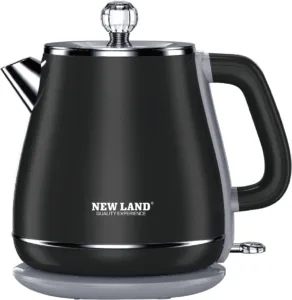
Still having the problem?
If safe user-level checks do not solve the issue, do not open the appliance. Submit a service request for technical inspection.