
Why Does a Tea Maker Boil Slowly or Fail to Reach a Full Boil?
Slow boiling can result from mineral scale, excessive water volume, low voltage, a poor plug adapter, lid issues, or thermostat behavior. Troubleshoot the cause step by step.
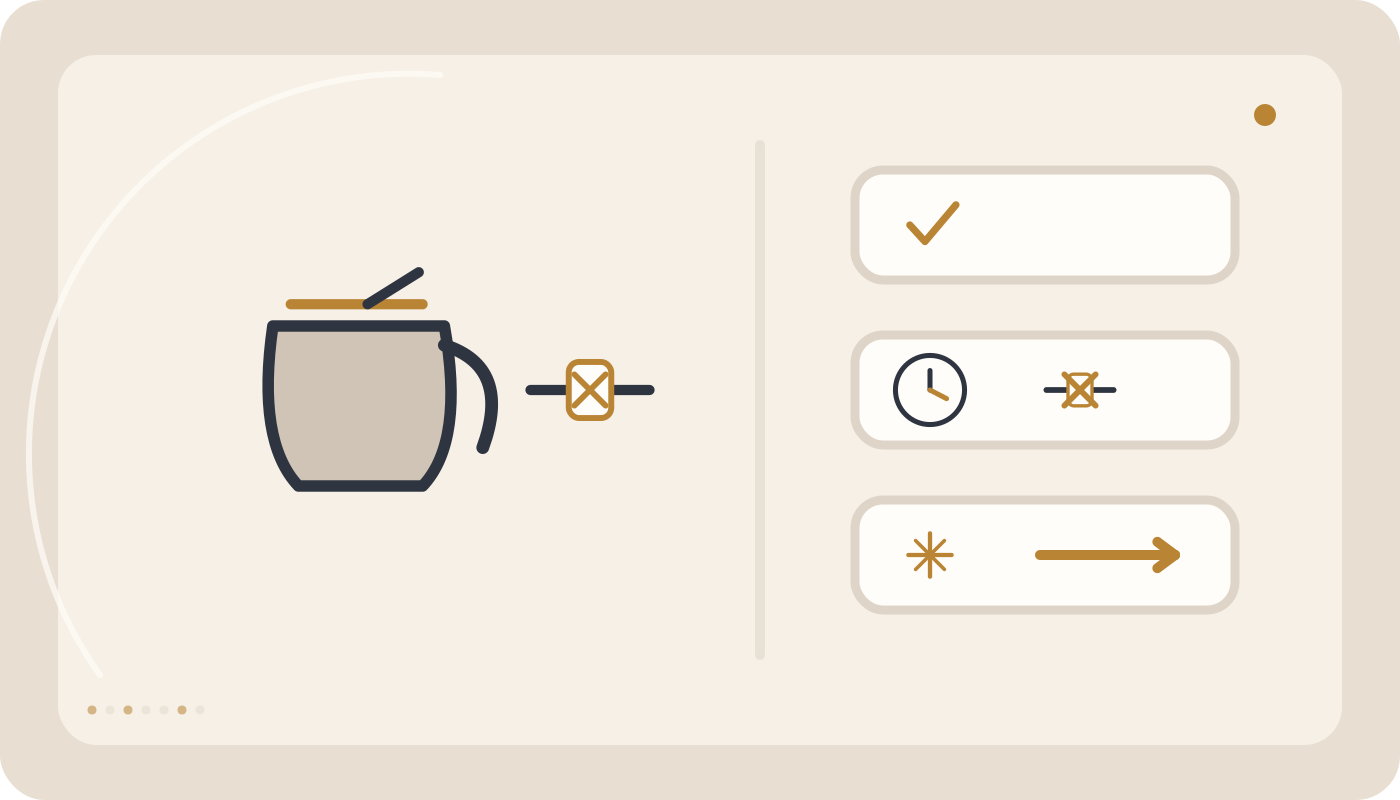
Check water quantity, mineral scale, lid closure, base seating, and power quality first. On appliances with a British Standard plug, a weak local adapter can cause voltage drop and reduce heating power.
Where should you start?
Why Does Water Take Too Long to Boil or Fail to Reach a Full Boil in a Tea Maker?
Slow boiling or automatic shutoff before the water reaches a proper boil does not always mean the heating element has failed. Mineral scale, excessive water volume, low supply voltage, an unsuitable plug adapter, poor kettle-to-base contact, an open lid, or premature thermostat operation are common causes.
Quick answer: first check water volume, lid closure, mineral scale, and the electrical connection. If the appliance uses a British Standard plug with a local adapter, a weak or faulty adapter can cause voltage drop and reduce heating power. If the appliance shuts off too early or the water genuinely fails to reach boiling temperature, the thermostat, heating element, or internal heating circuit may require inspection.
1. There is too much water in the kettle
A larger volume of water naturally requires more time to heat. A kettle filled close to its maximum level will take longer than one containing only one or two cups of water.
Check: test the appliance with a moderate water volume while staying within the minimum and maximum levels specified for the model.
2. Mineral scale has formed on the heated surface
Scale can reduce heat transfer and make the appliance take longer to bring water to a high temperature. This is especially common in hard-water areas.
Check: inspect the kettle interior for white or hard mineral deposits and descale according to the manufacturer instructions.
3. The adapter used with the British Standard plug is weak or faulty
On models supplied with a three-pin British Standard plug, an unsuitable adapter can cause more than a complete loss of power. A poor-quality, loose, or underrated adapter may introduce voltage drop and reduce the actual heating power delivered to the element. The appliance may still switch on while heating unusually slowly.
- The adapter should not become hot.
- The connection should not be loose.
- The adapter must be rated for the kettle’s current and power demand.
- For testing, use a known-good certified adapter with an appropriate rating.
4. Supply voltage is low
Heating power depends on the incoming voltage. If the mains voltage is lower than normal, the kettle may take longer to boil. This can be more noticeable during peak-demand periods or in some buildings.
Check: if other high-power heating appliances also seem weaker than usual, low supply voltage may be involved. Electrical measurement should be performed by a qualified person.
5. The lid is not fully closed
On some kettles, automatic shutoff depends on steam being directed toward the thermostat. An incorrectly closed lid can also increase heat loss and change shutoff behavior.
Check: close the lid completely according to the model design and test again.
6. The kettle is not seated correctly on the base
On cordless models, electrical power passes through the base connection. Poor contact can cause unstable operation or reduced power transfer.
Check: lift the kettle, confirm that the seating area is clean and dry, and place it back correctly without excessive force.
7. The appliance shuts off before the water fully boils
If the water is still clearly below boiling temperature when the appliance switches off, the thermostat or steam-sensing path may be operating too early. Scale or contamination can also affect thermostat behavior on some designs.
Check: review descaling and lid closure first. If the problem continues, arrange technical inspection.
8. Does a full boil require prolonged vigorous bubbling?
Not necessarily. Many kettles switch off automatically near the boiling point and are not designed to continue boiling vigorously for a long period. If the water has reached an appropriate boiling condition and the appliance shuts off, that may be normal behavior.
9. How does altitude affect boiling?
At higher elevations, water boils at a lower temperature. It may begin boiling sooner while reaching a lower final temperature than at sea level. This is an environmental effect rather than an appliance fault.
10. The heating element or thermostat may be deteriorating
If the appliance used to boil the same amount of water faster under the same electrical conditions and now takes substantially longer, a weakened heating element, thermostat issue, or internal connection fault may be involved. These conditions require technical service.
Quick troubleshooting table
| Symptom | Likely cause | Recommended action |
|---|---|---|
| Water heats very slowly | High water volume, scale, low voltage, or weak adapter | Check water quantity, scale, and electrical connection |
| The appliance runs but boiling time has become unusually long | Reduced input power or weakened heating element | Check adapter and supply conditions; arrange service if it continues |
| It shuts off before a proper boil | Lid, scale, or thermostat issue | Check lid closure and descaling; arrange service if needed |
| The plug adapter becomes hot | Poor adapter quality or insufficient rating | Stop use immediately |
What should you not do?
- Do not overfill the kettle in an attempt to improve performance.
- Do not use a hot, loose, or poor-quality plug adapter.
- Do not scrape scale with sharp metal tools.
- Do not bypass the thermostat or automatic shutoff system.
- Do not open the base or appliance housing at home to inspect the heating element.
Summary
If a tea maker or kettle boils slowly, begin with simple factors: water quantity, scale, lid closure, correct base seating, and power quality. On appliances supplied with a British Standard plug, an unsuitable local adapter can reduce power and cause slow boiling. If the problem remains under consistent conditions or the appliance shuts off before a proper boil, the thermostat and heating element should be inspected by technical service.
Compare with the same water quantity
Boiling time depends on water volume and starting temperature. Visible scale, weak electrical connections, and real heater faults should be separated with controlled checks.
Common mistakes
Change only one variable at a time while diagnosing.
- Do not use a hot, loose, or underrated plug adapter.
- Do not overfill the kettle.
- Do not scrape scale with sharp tools.
- Do not bypass the thermostat.
- Do not open the base or appliance housing at home to inspect the heating element.
Frequently asked questions
Can mineral scale make a kettle boil more slowly?
Yes. Scale can reduce heat transfer and increase heating time.
Can a plug adapter affect boiling speed?
Yes. A weak or underrated adapter can introduce voltage drop and reduce heating power.
Is automatic shutoff near boiling normal?
Yes. Many kettles switch off near the boiling point and are not designed to boil vigorously for a long period.
What if the appliance switches off before the water reaches a proper boil?
Check lid closure and scale first. If the problem continues, the thermostat and heating circuit require technical inspection.
Related guides and products
Still having the problem?
If safe user-level checks do not solve the issue, do not open the appliance. Submit a service request for technical inspection.