
Why Does an Espresso Machine Drain Water Into the Drip Tray After Brewing?
Some water in the drip tray after extraction can be completely normal. Timing, volume, and whether water continues collecting while idle help distinguish normal pressure release from a fault.
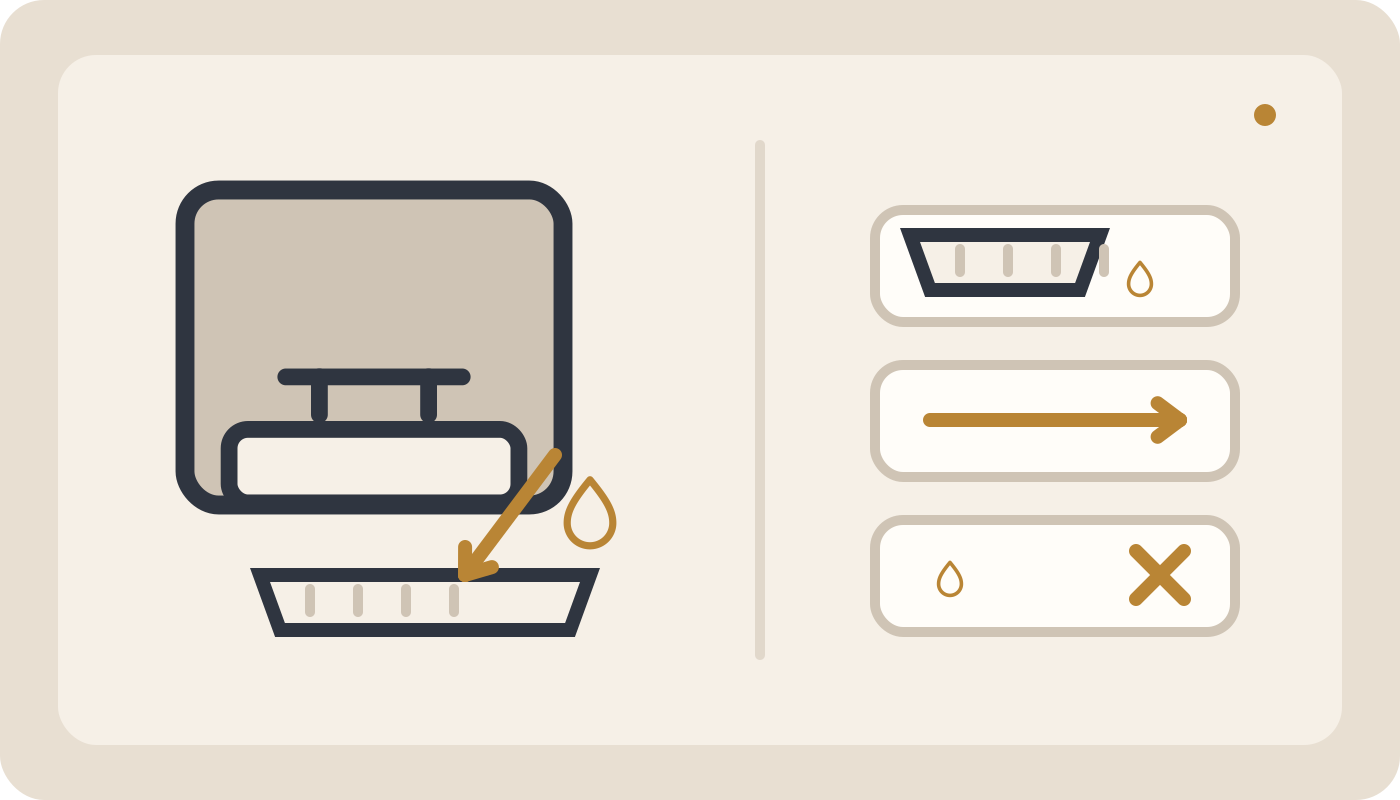
A small discharge immediately after a shot can be normal pressure release. If drainage is continuous, suddenly much greater, or occurs while the machine is idle, inspect the water path and valves.
Before you start
Why does my espresso machine drain water into the drip tray after brewing?
Finding some water in the drip tray after making espresso does not automatically indicate a leak or fault. Many machines release residual pressure after extraction and direct a small amount of water through an internal drain path. The amount, timing, and source of the water determine whether the behavior is normal.
Quick test: empty and dry the drip tray, prepare one normal shot, and observe exactly when water enters the tray. A brief discharge immediately after extraction can be normal; continuous flow or a sudden increase deserves investigation.
1. Post-extraction pressure release can be normal
Some espresso machines release group pressure through a valve after the pump stops. A limited amount of water then reaches the drip tray, which can also make portafilter removal cleaner and safer.
2. Steam-wand purging can add water to the tray
Purging the steam wand or changing operating modes can send additional water toward the tray. If the extra water appears only around steaming, consider the operating sequence before assuming an internal leak.
3. Group-head flushing increases tray volume
If you flush the group before or after brewing, the tray naturally fills faster. Count those flushes when evaluating how much water the machine is actually discharging automatically.
4. A small tray can appear to fill very quickly
Drip-tray capacity varies by model. A modest amount of water can look substantial in a shallow tray. Regular emptying is part of normal espresso-machine maintenance.
5. The drain valve or return path may be dirty
If post-shot discharge lasts longer than it used to or becomes irregular, coffee residue or mineral buildup may be affecting the drain path. Follow the cleaning procedure specified for the machine.
6. Excessive coffee resistance may increase system pressure
An overly fine grind, excessive dose, or blocked basket can increase resistance during extraction. If high pressure and dripping coffee occur at the same time, correct the brewing conditions first.
7. Water enters the tray even when the machine is not being used
If water continues collecting while no shot or steam cycle is running, the behavior is no longer simply normal post-extraction drainage. The tank, seals, and internal water path may need inspection.
8. A valve or internal seal may require service
Continuous drainage, a major increase in water volume, simultaneous pressure loss, or leakage beneath the machine can indicate a valve or sealing problem. Qualified inspection is appropriate in these cases.
How much water is normal?
There is no single volume that applies to every model. The machine’s normal pattern is more useful than an arbitrary number. A sudden large increase, a tray filling while idle, or a change in extraction performance deserves further investigation.
Best way to test it
Dry the tray and run one controlled cycle: one shot without extra flushing and without using steam. Then observe the timing and amount of discharge. This helps separate normal operating water from a leak or abnormal drainage.
Use timing to judge normal drainage
Water that enters the drip tray immediately after brewing can be normal pressure relief. Continuous water entry while the machine is idle is more suspicious. Empty and dry the tray, run one controlled brew, and observe exactly when drainage occurs.
Common mistakes
Change only one variable at a time while diagnosing.
- Do not assume every amount of tray water is a leak.
- Do not confuse flushing and purging water with automatic drainage.
- Do not allow the drip tray to overflow.
- Do not ignore a sudden major increase in discharge volume.
- Do not continue using the machine if water leaks from beneath the housing.
- Do not open internal valves without appropriate technical knowledge.
Frequently asked questions
Is water in the drip tray after every shot normal?
On many machines, yes. Some water may come from pressure release after extraction.
Why is there more tray water after steaming?
Purging and mode changes can add water to the tray.
How much water is normal?
The exact amount depends on the model; a major change from the usual pattern matters more.
What if the tray fills while the machine is idle?
The tank, seals, and internal water path should be inspected.
When is service appropriate?
When drainage is continuous or excessive, or occurs together with pressure loss or leakage from the housing.
Related guides and products
Still having the problem?
If safe user-level checks do not solve the issue, do not open the appliance. Submit a service request for technical inspection.