

Recipesاسپرسوساز
Homemade Cappuccino: Coffee-to-Milk Ratio for a Balanced Cup
For a balanced homemade cappuccino, combine a double espresso with about 100 to 120 milliliters of cold milk textured into a fine glossy microfoam.
11 min read
Troubleshooting & FAQ
How to Use
Home Care
Recipes
Buying Guides
Compare & Learn
For a balanced homemade cappuccino, combine a double espresso with about 100 to 120 milliliters of cold milk textured into a fine glossy microfoam.
For balanced homemade iced coffee, combine a double espresso with fully cold milk or water, medium ice cubes, and only a small amount of sweetener when desired.
From incorrect grinding and changing several variables at once to insufficient warm-up and poor water management, learn ten common beginner espresso mistakes and how to prevent them.
Pressurized baskets are more forgiving for beginners and pre-ground coffee, while non-pressurized baskets require more precise grinding but provide greater extraction control.

How do thermoblocks, single boilers, dual heating, and dual boilers differ? Compare their effects on warm-up time, temperature stability, steaming, and consecutive drinks.
A 15-bar or 20-bar rating usually describes maximum pump capability, not constant brewing pressure. Learn why controlled extraction around 9 bar, temperature, and grinding matter more than the larger number.
Do not choose a home espresso machine by pump-pressure numbers alone. Compare temperature stability, heating design, steam performance, grinder needs, portafilter system, maintenance, and service.

A leak around the portafilter does not always mean the gasket has failed. Learn the practical signs of gasket wear and when espresso-machine service parts should be inspected or replaced.

A practical espresso-machine maintenance routine covering daily after-use cleaning, weekly inspection, and monthly checks for water, scale, filters, and performance.
Water affects both espresso flavor and mineral buildup inside the machine. Learn what water hardness means, how filtration matters, and how water quality relates to descaling.

Espresso is the foundation, Americano adds water, and latte and cappuccino add milk. Learn the structural, flavor, and texture differences between these four popular drinks.
Weighing both the dry coffee and the beverage in the cup gives you a simple way to record and repeat an espresso recipe without unnecessary complexity.
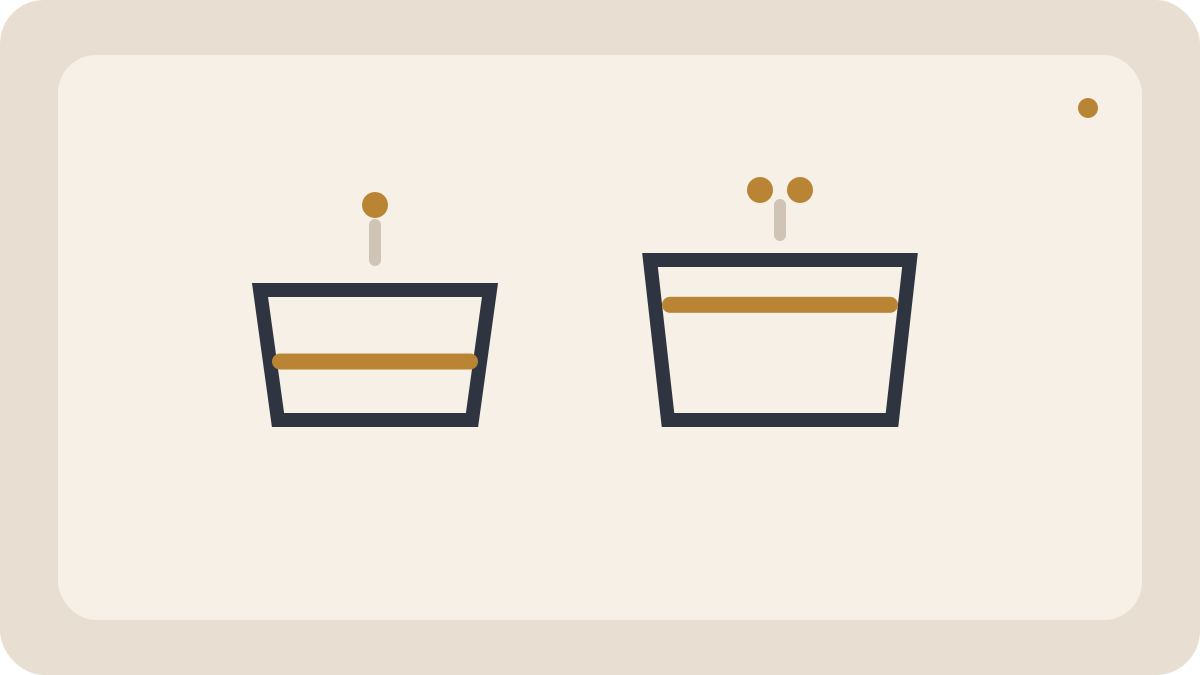
There is no universal coffee dose for every single or double basket. Use basket capacity, a scale, and consistent preparation to find a repeatable starting point.

The correct espresso grind is not one universal grinder number. Keep the coffee dose consistent and use small grind adjustments to improve flow, flavor, and repeatability.

Before brewing the first cup, an espresso machine should be cleaned, filled, and prepared correctly. This guide covers initial setup, water-path preparation, and common first-use mistakes.
Coffee particles and oils can build up on the portafilter, basket, and accessible water outlet screen. Learn a practical routine for daily and periodic cleaning.

Mineral deposits can gradually build up inside an espresso machine. Learn when descaling may be needed, how to approach it safely, and how it differs from routine cleaning.

A wet espresso puck is not always a fault. Dose, basket size, headspace, grind, puck preparation, removal timing, and machine design all affect puck appearance.