
Why Is My Espresso Machine Leaking Water? 8 Common Causes and Fixes
If your espresso machine is leaking, identify the exact source first. Common causes include the portafilter seal, group gasket, water tank, drip tray, steam valve, and internal fittings.
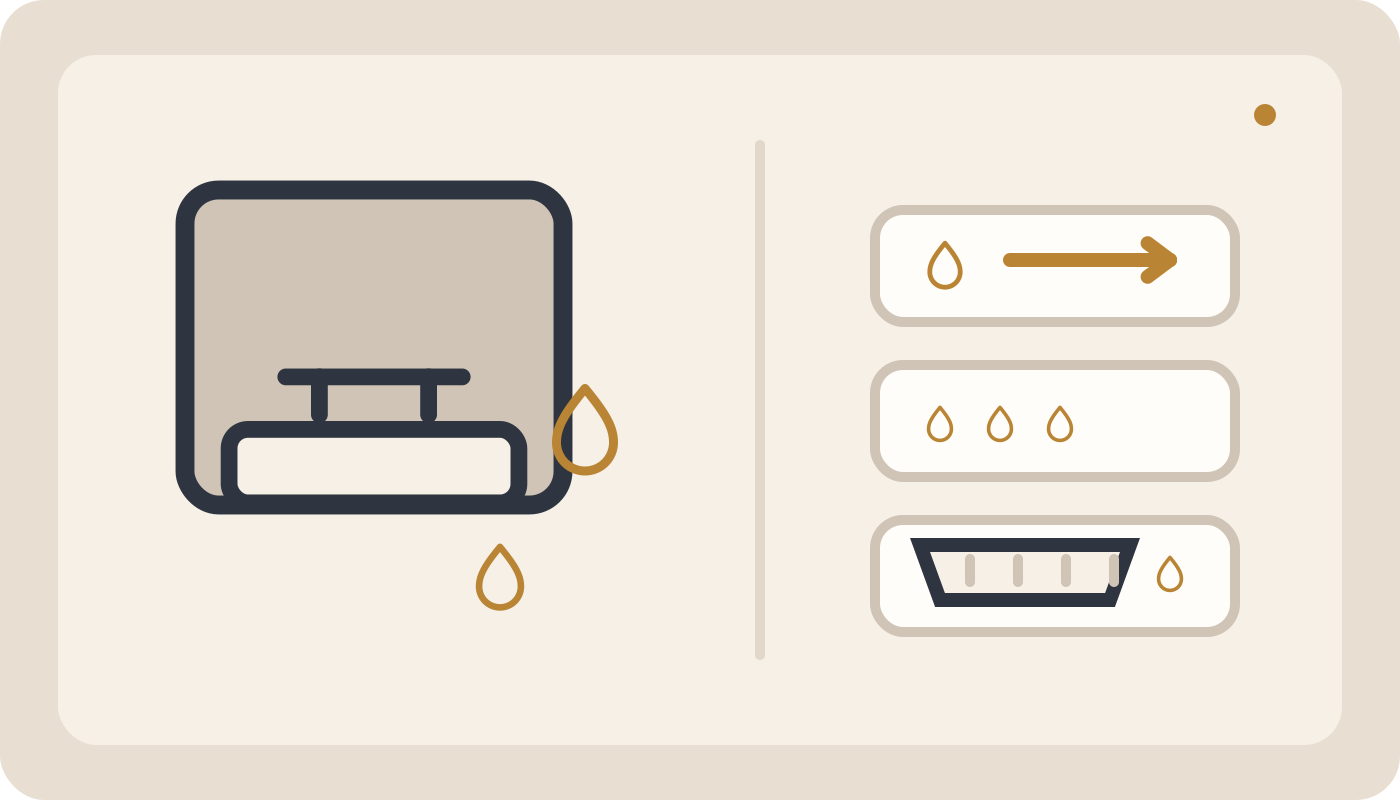
Identify where the first drop appears. Check the drip tray, water tank, portafilter lock, basket rim, and group gasket. If water comes from beneath the housing or near electrical components, stop using the machine.
Where should you start?
Why is my espresso machine leaking water?
A water leak does not always indicate a major failure. The location of the first visible water is the most useful clue. Leaks around the portafilter, under the machine, near the water tank, at the steam wand, or around the drip tray usually have different causes. Switch the machine off, allow it to cool, and identify the leak location without opening the housing.
Quick test: dry the machine and the surface underneath it, fill the tank normally, and run a short cycle. Watch carefully for the exact point where the first drop appears.
1. The portafilter is not fully locked
If water escapes around the group head during extraction, the portafilter may not be fully seated. After the machine cools, clean the basket rim and mating surface, then lock the portafilter according to the machine instructions.
2. Coffee residue is preventing a proper seal
Ground coffee on the basket rim or group gasket can interfere with sealing. Remove residue with the cleaning method recommended for the machine.
3. The basket is overfilled
An excessive dose can make the coffee puck contact the shower area and interfere with proper sealing. Match the dose to the basket capacity and verify adequate headspace.
4. The group gasket is worn or deformed
If leakage around the portafilter continues after cleaning and correcting the dose, the gasket may be hardened, cracked, or deformed. Replacement should use a compatible part and an appropriate service procedure.
5. The water tank is not seated correctly
If water appears behind or beneath the machine, inspect the tank. A poorly seated tank, damaged tank valve, worn seal, or small crack can cause leakage. Remove and dry the tank, then inspect it for visible damage.
6. The drip tray is full or incorrectly positioned
What looks like a machine leak can simply be an overflowing drip tray. Empty and clean the tray and make sure it is fully seated.
7. The steam wand or valve is dripping
A few drops after use may be normal, but continuous dripping can indicate incomplete valve closure, scale, or an internal sealing issue. Do not force the control knob beyond its normal stop.
8. There is an internal hose, fitting, or pump leak
If water emerges from beneath the housing and no external source is visible, stop using the machine. Internal leakage near electrical components should be inspected by qualified service personnel.
When should you stop using the machine?
Disconnect the machine from power if water is coming from beneath the housing, near the power cord or electrical areas, if there is an unusual smell, or if the leak is rapid and continuous. Do not use it again until it has been inspected.
Recommended inspection order
Start with simple external causes: drip tray, water tank, portafilter locking, basket rim cleanliness, and coffee dose. If the leak continues or appears to originate inside the housing, professional inspection is safer than opening the machine at home.
Find the first drop
Dry the machine and counter, run one short cycle, and identify where water first appears. Group-head leakage, tank leakage, steam-valve drips, tray discharge, and water from beneath the housing require different responses.
Water emerging from the housing or approaching electrical parts is a stop-use condition.
Common mistakes
Change only one variable at a time while diagnosing.
- Do not keep operating a machine with an internal leak.
- Do not use excessive force to lock the portafilter.
- Do not overfill the basket.
- Do not ignore coffee residue on sealing surfaces.
- Do not overtighten the steam control.
- Do not open the housing at home when water is near electrical components.
Frequently asked questions
Why does water leak around the portafilter?
Common causes include incomplete locking, coffee residue, an excessive dose, or a worn group gasket.
Can a full drip tray look like a leak?
Yes. Drip tray overflow is one of the simplest causes to check.
What should I do if water comes from under the machine?
Switch it off, disconnect power, and inspect the tank. If no external source is visible, arrange technical service.
Are a few drops from the steam wand normal?
A few drops after use may be normal, but continuous dripping should be investigated.
When should I avoid turning the machine on again?
When water is emerging from inside the housing or near the power cord or electrical components.
Related guides and products
Still having the problem?
If safe user-level checks do not solve the issue, do not open the appliance. Submit a service request for technical inspection.