How to Use a Tea Maker Keep-Warm Function Correctly
Keep-warm is designed to maintain tea and water temperature rather than continue boiling. Use sensible holding times and monitor the water level for better beverage quality.
After boiling the water and brewing the tea, activate keep-warm according to the model instructions. It is designed to maintain heat rather than boil continuously, and extended holding can make tea bitter or astringent.
Before you start
How to Use the Keep-Warm Function on a Tea Maker Correctly
The keep-warm function is designed to maintain a suitable temperature after the water or tea is ready, not to continue vigorous boiling. Used correctly, it keeps the drink warm without repeatedly bringing the water to a full boil.
Quick answer: boil the water normally and brew the tea first. Then activate the keep-warm function according to the instructions for your model. The appliance should maintain heat below continuous full boiling. Keeping brewed tea hot for too long can make it darker, more bitter, and more astringent.
What does keep-warm actually do?
In keep-warm mode, the control system manages heating continuously or intermittently so that the temperature does not fall too far. The appliance may therefore reheat briefly, make a short operating sound, or change an indicator light. Exact behavior varies by model.
How is keep-warm different from boiling?
During boiling, the objective is to bring water to its boiling point and the heater operates at higher output. During keep-warm, the objective is only to maintain heat. Continuous vigorous boiling is therefore not the expected purpose of this mode.
Suggested operating method
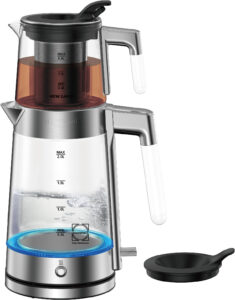
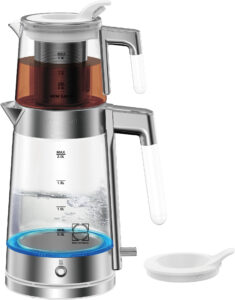
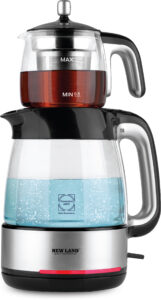
- Fill the kettle with fresh water between the MIN and MAX levels.
- Bring the water to a boil using the normal operating mode.
- Brew the tea in the teapot using an appropriate quantity and steeping time.
- Once ready, activate or select keep-warm according to the controls of that model.
- Position the kettle and teapot lids correctly to reduce unnecessary heat loss.
- If the drink has been held for a long time, assess its freshness and quality before consumption.
Why should tea not be kept hot for hours?
Keeping tea hot for a long time does not mean it is brewing better. Prolonged contact with the leaves and extended exposure to heat can darken the color and increase bitterness or astringency. Brew an appropriate amount and avoid unnecessarily long holding times when flavor quality matters.
If the tea becomes bitter, is keep-warm the problem?
Long holding time may contribute, but tea quantity, initial steeping time, tea type, and water quality also matter. If the tea tastes good initially but becomes bitter after extended holding, reduce the keep-warm duration.
Should the water bubble continuously in keep-warm mode?
Normally, continuous boiling is not the purpose of keep-warm. Exact behavior depends on the model. If the appliance boils vigorously without stopping, compare its behavior with the operating instructions. Continuous boiling is different from ordinary temperature maintenance.
Is periodic heating normal?
On some designs, yes. Temperature control may cycle the heater on and off to compensate for heat loss. This is not the same as an electrical power fault, provided the appliance is behaving as designed and there are no other abnormal symptoms.
Do not forget the water level
Some water is gradually lost through evaporation during extended use. The appliance must not operate below its permitted water level. Observe the level indicator and never use the kettle below the specified minimum or above MAX.
Can cold water be added?
Follow the instructions for the specific model when topping up. Adding a large quantity of cold water significantly lowers the system temperature and causes the appliance to enter another heating cycle. For better beverage quality, it is generally preferable to begin with a sensible amount of water.
Why does the lid matter?
Correct lid placement helps reduce heat loss and manage steam. A lid that is misaligned, incomplete, or damaged can alter thermal behavior. Keep lids correctly positioned during operation as intended by the product design.
Do not leave an empty teapot on the warming surface
Once the teapot is empty, avoid leaving it unnecessarily on a warm surface. This is particularly important with glass teapots, where the model instructions and avoidance of unnecessary heating should be observed.
Quick diagnosis table
| Behavior | Likely meaning | Action |
|---|---|---|
| Water stays warm without continuous boiling | Normal keep-warm behavior | Expected; compare with model specifications |
| Heating cycles on and off | Temperature control cycling | Normal on many models |
| Tea becomes bitter after a long time | Extended holding and extraction | Reduce holding time |
| Water boils vigorously without stopping | Different from ordinary keep-warm operation | Check settings and model instructions |
| Water level becomes very low | Evaporation during extended use | Keep water within the permitted range |
What is a good everyday routine?
Prepare only as much water and tea as you reasonably need, use keep-warm for a sensible period after brewing, and prepare fresh tea rather than holding the same brew for an excessively long time. This generally produces better aroma and flavor.
What should you avoid?
- Do not confuse keep-warm with continuous boiling.
- Do not leave brewed tea on heat for many unnecessary hours.
- Do not operate the appliance below its permitted water level.
- Do not leave an empty teapot on a warm surface for an extended period.
- Do not obstruct steam paths or the lid with cloth or other objects.
Summary
Keep-warm is intended to maintain heat, not continue full boiling. Prepare an appropriate quantity of water and tea, monitor the water level, and avoid holding the beverage hot for unnecessarily long periods. If the appliance boils continuously and vigorously in keep-warm mode or behaves differently from its model instructions, review the settings and operating guidance.
Keep-warm is for temperature holding, not endless steeping
Once tea reaches the desired strength, prolonged hot contact with the leaves can increase bitterness and astringency. Use fresh water for the next brew and switch keep-warm off when it no longer serves a purpose.
Common mistakes
Change only one variable at a time while diagnosing.
- Do not confuse keep-warm with continuous boiling.
- Do not leave tea on heat for unnecessary hours.
- Do not operate below the permitted water level.
- Do not leave an empty teapot on a warm surface for extended periods.
- Do not obstruct steam paths or lids.
Frequently asked questions
Should water boil continuously in keep-warm mode?
No. Its primary purpose is temperature maintenance, and exact behavior varies by model.
Is periodic heater cycling normal?
Yes on many models; temperature control may switch the heater on and off periodically.
Why does tea become bitter while being kept warm?
Extended heat exposure and prolonged contact with tea leaves can increase bitterness and astringency.
Can tea be kept warm all day?
For better beverage quality, prepare an appropriate quantity and avoid unnecessarily long holding periods.