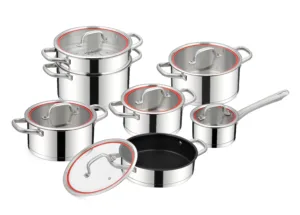
How to Prevent Scratches on Nonstick Cookware
Prevent nonstick scratches by using compatible utensils, gentle cleaning, clean soft separators, and avoiding hard particles or direct cookware-to-cookware contact.
Use coating-compatible utensils without sharp edges, never cut food inside the pan, soften dried residue instead of scraping, and clean with a soft sponge. During storage, use a soft separator between cookware and lift the upper pan instead of sliding it. Remove coarse salt, bone fragments, and other hard particles before dragging utensils across the surface.
Before you start
How to Prevent Scratches on Nonstick Cookware
Scratches on nonstick cookware often develop through repeated contact rather than one dramatic event. Common causes include hard utensils, abrasive cleaning, stacking cookware directly together, dragging another pan across the coating, and hard particles trapped between a tool and the surface. A few simple habits greatly reduce unnecessary wear.
Quick answer: Use coating-compatible utensils without sharp edges, never cut food inside the pan, soften dried residue instead of scraping it, wash with a soft sponge, and always place a soft separator between stacked cookware. Before use and cleaning, check that hard particles such as coarse salt, bone fragments, or dried food are not trapped between tools and the coating.
Where scratches usually come from
| Source | Example | Prevention |
|---|---|---|
| Cooking utensils | Knife, fork, or damaged spatula edge | Use soft-edged compatible utensils |
| Cleaning | Steel wool or coarse pads | Use soft sponges and soaking |
| Storage | Stacking pots directly on a pan | Use soft separators |
| Hard particles | Coarse salt or dried fragments | Inspect before dragging tools across the surface |
| Movement | Sliding one pan over another | Lift instead of dragging |
1. Compatible utensils are the first defense
Use utensils approved for the coating. Wood, silicone, and some heat-resistant polymer tools are often gentler choices.
2. Inspect utensil edges
An old plastic or silicone spatula can develop a sharp broken edge. Replace damaged utensils before using them on coated cookware.
3. Do not cut food inside the cookware
Move food to a cutting board before using a knife.
4. Do not use a fork to pry food from the base
Fork tines concentrate pressure on very small points and can damage the coating.
5. Avoid heavy scraping pressure
Use gentle controlled movement rather than repeatedly pressing and dragging utensils across the cooking surface.
6. Do not scrape dried residue
Soften stuck food with warm water before attempting removal.
7. Use soaking for burnt residue
Warm water, mild detergent, and time are safer than increasing physical force.
8. Steel wool is not appropriate for nonstick coatings
Metal scouring pads can quickly scratch the cooking surface.
9. Very coarse nonmetal pads can also damage coatings
Abrasive cleaning tools are not safe just because they contain no metal.
10. Do not use abrasive powders without checking instructions
Coarse powders used with pressure can create surface wear.
11. Do not rub coarse salt over a dry coating
Hard salt crystals can become abrasive when trapped under a utensil.
12. Bone fragments and hard seeds can also scratch
Sharp food particles can score the surface when pressed and dragged.
13. Do not transport the pan with hard tools inside
A utensil bouncing inside the cookware can scrape the surface during movement.
14. Let the cookware cool somewhat before washing
This helps avoid thermal shock and allows stuck residue to be softened rather than scraped.
15. Do not use severe empty heating to remove residue
Burning residue off an empty coated pan is not a scratch-prevention method and can harm the coating.
16. Check the underside of the sponge
A soft sponge can still drag a hard particle across the surface if food fragments are trapped under it.
17. Avoid placing coated cookware in a sink full of metal utensils
Loose forks, knives, and spoons can contact the cooking surface during washing.
18. Use the dishwasher only when the model allows it
Besides detergents, movement and contact with other items can matter. Follow manufacturer guidance.
19. Dry the cookware before storage
A clean, dry surface is easier to protect and less likely to trap debris under a separator.
20. Do not stack cookware directly together
The exterior base of one pan is much harder than the coating of another and can scratch it during movement.
21. Use a soft separator
Place a clean cookware protector, soft cloth, or suitable pad between each stacked item.
22. Keep separators clean
Sand, salt, or dried food trapped in a protector can turn it into an abrasive surface.
23. Lift the upper pan instead of sliding it
Vertical lifting prevents the hard base from dragging across the coating below.
24. Do not store a hard-edged lid directly against the coating
Metal lid rims can rub against the surface during movement.
25. Avoid loose crowded storage
Cookware that shifts every time a drawer opens is more likely to contact and scratch other items.
26. Protect surfaces during moving or transport
Use soft clean separators and pack cookware tightly enough to prevent rubbing.
27. Exterior scratches are different from coating scratches
A mark on the outer base is mainly cosmetic and cooktop-related. The food-contact coating should be evaluated separately.
28. Do not test a suspected scratch with a fingernail
Avoid picking at or probing the surface to see whether a mark becomes deeper.
29. Clean before deciding that a mark is a scratch
Grease streaks, mineral marks, and utensil transfer can look like scratches. Clean gently and inspect the dry surface.
30. Deep scratching or peeling is no longer a prevention issue
If the coating is genuinely deeply scratched, cracked, or peeling, the next question is how to assess the damage and whether continued use is appropriate.
Simple routine before and after each use
- Check the surface and utensils for hard particles or damaged edges.
- Use only coating-compatible utensils.
- Do not cut food inside the cookware.
- Do not scrape stuck residue.
- Let the pan cool somewhat after cooking.
- Wash with a soft sponge and mild detergent.
- Dry completely.
- Use a soft separator during storage.
Daily scratch-risk guide
| Situation | Risk | Better action |
|---|---|---|
| Intact soft-edged spatula | Low | Use with normal pressure |
| Damaged sharp-edged spatula | High | Replace it |
| Clean soft sponge | Low | Check for trapped debris |
| Steel wool | Very high | Do not use |
| Directly stacked pans | High | Use a separator |
| Sliding one pan over another | High | Lift instead |
Common mistakes
- Cutting food with a knife inside the pan
- Using a fork to release stuck food
- Using damaged utensils with sharp edges
- Scraping dried residue
- Cleaning with steel wool or very coarse pads
- Dragging hard particles under a sponge
- Putting coated cookware in a sink full of metal utensils
- Stacking cookware without protection
- Sliding the upper pan instead of lifting it
- Picking at suspected scratches with nails or sharp tools
Conclusion
The best way to prevent scratches on nonstick cookware is to remove hard and abrasive contact. Compatible utensils, gentle cleaning, softening residue before removal, and protected storage provide the greatest benefit. Once there is genuine deep scratching or peeling, the issue changes from prevention to condition assessment and should be handled separately.
Common mistakes
Change only one variable at a time while diagnosing.
- Do not cut food inside the pan.
- Do not use a fork to release stuck food.
- Do not use cracked or sharp-edged utensils.
- Do not scrape dried residue.
- Do not use steel wool or very coarse pads.
- Do not let hard particles stay trapped under a sponge.
- Do not leave coated cookware in a sink full of metal utensils.
- Do not stack cookware directly without protection.
- Do not slide the upper pan across the coating below.
- Do not test suspected scratches with nails or sharp tools.
Frequently asked questions
What utensils are best for preventing nonstick scratches?
Use coating-compatible tools with soft edges, such as wood, silicone, or any utensil approved by the cookware manufacturer.
Can I cut food inside a nonstick pan?
No. Transfer food to a cutting board before using a knife.
Why can scratches appear during washing?
A coarse pad or hard debris trapped under a soft sponge can drag across the coating.
Can I stack nonstick pans?
Yes, but use a clean soft separator between every cooking surface and the cookware above it.
Does every visible line mean the coating is damaged?
No. Grease, mineral marks, and utensil transfer can resemble scratches. Clean and dry the surface before judging.
What if I see a deep scratch or peeling?
That is no longer a prevention issue and the coating condition should be assessed separately.