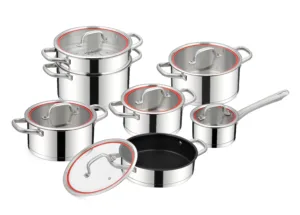
How to Clean Burnt Cookware Without Damaging It
Soften burnt residue before removing it. This guide explains safe cleaning methods for bare stainless, nonstick, and ceramic cookware without aggressive scraping.
Let the cookware cool from extremely hot conditions, remove loose food, and soften burnt residue with warm water and mild detergent. On bare stainless steel, gently heat the water for a short period if needed. Then use a wooden or silicone utensil and a soft sponge. On nonstick and ceramic surfaces, avoid steel wool, sharp tools, abrasive powders, and severe heat used to burn residue away.
Before you start
How to Clean Burnt Cookware Without Damaging It
When food or grease burns onto a pot or pan, the worst response is to immediately attack it with steel wool, a knife, or heavy scraping. A safer method is to identify the cooking surface, soften the burnt residue with water and time, and only then use a suitable tool. Bare stainless steel tolerates more cleaning options, while nonstick and ceramic coatings need a gentler approach.
Quick answer: Let the cookware cool from extremely hot conditions. Remove loose food, add warm water and a small amount of mild detergent, and allow the burnt layer to soak. On bare stainless steel, the water can be gently heated for a short period when needed to soften stubborn residue. Then use a wooden or silicone utensil and a soft sponge. On nonstick or ceramic cookware, avoid steel wool, sharp tools, abrasive powders, and severe empty heating to remove burnt food.
Identify the surface first
| Surface | Suitable first method | Avoid |
|---|---|---|
| Bare stainless steel | Soaking, warm water, mild detergent, controlled gentle heating | Aggressive scraping with sharp tools |
| Nonstick | Soaking and a very soft sponge | Steel wool, abrasive powders, severe empty heat |
| Ceramic coated | Warm water and mild detergent | Heavy abrasion and metal tools |
| Unknown surface | Use only a gentle method until identified | Strong chemicals and aggressive abrasion |
1. Do not put a very hot pan directly under cold water
Abrupt temperature change can stress bonded bases, metal joints, and some coatings. Allow the cookware to cool somewhat first.
2. Remove loose material without scraping
Use a wooden, silicone, or surface-compatible utensil. Leave firmly stuck material in place until it has softened.
3. Warm water is the first real cleaning tool
Add enough warm water to cover the burnt area. Water penetrates and softens dried food layers.
4. Add a small amount of mild detergent
Detergent helps loosen burnt grease. Excessive quantity is unnecessary.
5. Give the residue time to soften
Reasonable soaking often reduces the force needed later and protects the cookware surface.
6. On bare stainless steel, water can be gently heated
For stubborn residue, add sufficient water and warm it gently for a short period. The goal is softening, not violent boiling or drying the pan again.
7. Do not leave the pan unattended while heating
Keep enough water in the cookware and control the heat so the liquid does not evaporate away.
8. Use a suitable utensil after softening
A wooden or silicone tool can lift softened deposits without deep scratching.
9. Follow with a soft sponge
Once most residue is removed, wash with mild detergent and a soft sponge.
10. Clean remaining stainless residue in stages
Repeated gentle soaking is better than one aggressive scrubbing session.
11. Baking soda may help on some bare stainless cookware
When the manufacturer does not prohibit it, a small amount dissolved in water can help with certain burnt deposits.
12. Do not scour with dry baking soda under heavy pressure
Dry powder can become abrasive and mark polished finishes.
13. Do not assume baking soda is suitable for every nonstick coating
Coatings differ, so the product instructions take priority over bare-stainless methods.
14. Vinegar is not always the first tool for burnt grease
Mild acids are more useful for some mineral deposits or discoloration. Burnt food and fat usually respond first to water, detergent, and softening.
15. Never mix vinegar with bleach
Acidic cleaners and bleach can release dangerous gas when combined.
16. Strong bleach is not necessary for burnt food
Aggressive bleaching chemicals are generally unnecessary and may be unsuitable for metals or coatings.
17. Oven cleaner is not a universal cookware cleaner
Oven-cleaning products can be very strong and should only be used if both the cookware and cleaner instructions explicitly permit that application.
18. Steel wool should not be used on nonstick coatings
It can scratch the coating and shorten service life.
19. Steel wool is not the first choice for stainless either
Stainless steel is more durable, but its finish can still be scratched. Soaking and gentle cleaning preserve appearance better.
20. Do not scrape with knives or metal spoons
Sharp tools can scratch bare metal, remove coatings, or injure the user.
21. A thin brown film may not be thick burnt food
It may be heat-related grease discoloration. Reassess after ordinary cleaning.
22. Blue or purple marks are usually not burnt food
Those colors on stainless steel are often heat tint and require a different cleaning approach.
23. White marks may be mineral deposits
Water minerals can remain after boiling or drying and should be diagnosed separately.
24. Black transfer to a cloth is another issue
Transferable black residue can be polishing compound, soot, or contamination rather than burnt food alone.
25. Burnt sugar can be particularly hard and sticky
Caramelized and burnt sugar forms a hard layer. Longer warm-water soaking is safer than dry scraping.
26. Add water again to dissolve burnt sugar
On bare stainless steel, controlled gentle heating with water can help dissolve and soften hardened sugar.
27. Burnt milk adheres strongly
Milk proteins and sugars can create a resistant layer. Start with warm water and detergent, then lift the softened residue gently.
28. Do not dry-scrape burnt rice or starch
Warm water softens dried starch and allows safer removal.
29. Burnt oil can leave a brown polymerized film
Repeated gentle washing on bare stainless steel is preferable to aggressive force.
30. Clean exterior burning separately
Soot and baked-on exterior grease can require a different method. Protect the food-contact surface and identify any exterior coating first.
31. Correct the cause of gas-burner soot
If the outside bottom repeatedly turns black, check for a yellow flame or incomplete combustion.
32. Do not use severe heat to clean a burnt nonstick pan
Heating an empty coated pan aggressively to burn residue away can damage the coating.
33. A scratched or peeling coating is no longer just a cleaning problem
If a nonstick surface is deeply scratched, cracked, or peeling after a burn incident, the coating condition needs separate assessment.
34. Burnt odor should disappear after proper cleaning
If strong odor remains, inspect rims, lids, handle joints, and other areas where residue may be trapped.
35. Do not immerse special handles or lids in strong chemicals unless approved
Plastic, silicone, wood, painted finishes, and composite parts can have different chemical limits.
36. Rinse thoroughly after cleaning
Remove all detergent or cleaning aids from food-contact surfaces.
37. Dry after washing
Prompt drying reduces new mineral spotting and makes it easier to see whether burnt residue remains.
38. If discoloration remains but the surface is smooth
The remaining mark may be cosmetic. Do not damage the surface trying to restore a factory-new appearance.
39. If the surface is rough, pitted, or flaking
The issue goes beyond routine cleaning and the cookware surface should be inspected.
40. If the base has warped
Severe overheating can contribute to deformation in some cookware. A pot or pan that rocks on a flat surface deserves inspection.
41. Step-by-step method for bare stainless steel
- Allow the cookware to cool to a safe temperature.
- Remove loose material with a soft utensil.
- Add warm water and a small amount of mild detergent.
- Let the residue soak.
- If needed, gently heat the water for a short time.
- Lift softened residue with a wooden or silicone tool.
- Wash with a soft sponge.
- Repeat soaking if necessary.
- Rinse several times and dry completely.
42. Step-by-step method for nonstick and ceramic cookware
- Remove the cookware from heat and let it cool.
- Add warm water and mild detergent.
- Allow the residue to soften.
- Use only a soft sponge and compatible utensil.
- Avoid steel wool, sharp tools, and abrasive powder.
- If the coating is damaged, assess the coating separately.
43. Method by burnt residue type
| Residue | Suggested method |
|---|---|
| Ordinary dried food | Warm-water and detergent soak |
| Burnt sugar | Water and gradual softening; gentle warming on bare stainless |
| Burnt milk | Soak and clean in stages |
| Rice and starch | Warm water and longer soaking |
| Brown baked-on grease | Mild detergent and repeated gentle cleaning |
| Residue on nonstick coating | Gentle methods and non-abrasive tools only |
44. How to reduce future burning
- Do not leave empty cookware over high heat for long periods.
- Match burner size to the base.
- Do not overheat oil to unnecessary smoking.
- Do not leave cooking food unattended.
- Use more controlled heat for sweet and milk-based foods.
- Act before cooking liquid evaporates completely.
Common mistakes
- Quenching a very hot pot with cold water
- Scraping dry residue with a knife or metal spoon
- Using steel wool on nonstick coating
- Using oven cleaner without cookware approval
- Mixing vinegar with bleach
- Using strong bleach for burnt food
- Scrubbing polished surfaces hard with dry baking soda
- Severely heating an empty nonstick pan to burn residue away
- Continuing aggressive cleaning when a coating is flaking or deeply scratched
- Confusing heat tint or mineral deposits with burnt food
Conclusion
The safest way to clean burnt cookware is to soften the residue before removing it. Warm water, mild detergent, time, and soft tools are usually safer and more effective than aggressive abrasion. Bare stainless steel allows more controlled heating options, while nonstick and ceramic surfaces need gentler treatment. If the surface is flaking, deeply scratched, pitted, or warped, the issue is no longer just cleaning and the cookware itself should be inspected.
Common mistakes
Change only one variable at a time while diagnosing.
- Do not quench a very hot pot with cold water.
- Do not scrape dry residue with knives or metal spoons.
- Do not use steel wool on nonstick coatings.
- Do not use oven cleaner without cookware approval.
- Do not mix vinegar with bleach.
- Do not use strong bleach for burnt food.
- Do not scrub polished surfaces hard with dry baking soda.
- Do not severely heat an empty nonstick pan to burn residue away.
- Do not continue aggressive cleaning when coating is flaking or deeply scratched.
- Do not confuse heat tint or mineral deposits with burnt food.
Frequently asked questions
How should I start cleaning a burnt stainless-steel pot?
Let it cool somewhat, soften residue with warm water and mild detergent, and if needed gently warm the water for a short period on bare stainless steel.
Can I use steel wool on burnt cookware?
Not on nonstick or ceramic coatings. Even on stainless steel, steel wool is not the first choice because it can scratch the finish.
Is baking soda useful?
A mild solution can help on some bare stainless cookware when permitted by the manufacturer, but avoid heavy dry scouring.
How do I clean a burnt nonstick pan?
Use warm water, mild detergent, time, a soft sponge, and compatible utensils. Avoid metal tools, abrasive powder, and severe heat.
What if a brown stain remains after cleaning?
It may be cosmetic discoloration or baked-on grease. If the surface is smooth, aggressive abrasion is not necessary just to restore a factory-new look.
When should I stop using the cookware?
If a coating is peeling, the surface is deeply scratched or pitted, or the base has visibly warped, the cookware itself should be inspected.