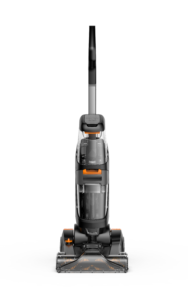
Why Does Carpet Stay Too Wet After Washing?
If carpet stays excessively wet after extraction, check solution application, dry-pass technique, travel speed, dirty-water recovery, detergent foam, and room ventilation.

Some dampness is normal, but carpet should not remain saturated. Reduce solution application, make several slow dry passes without spraying, verify dirty-water recovery, and increase room airflow.
Where should you start?
Why Does Carpet Stay Too Wet After Washing?
Some residual moisture after carpet extraction is normal; a carpet washer is not expected to leave the carpet instantly dry. However, if the carpet remains saturated, heavy with water, or unusually wet for a long time, the usual causes fall into three groups: too much solution was applied, water recovery was insufficient, or drying conditions are poor.
Quick answer: Reduce solution application, release the spray trigger after each wet pass and make several slow dry passes, verify dirty-water recovery and suction, and increase room airflow after cleaning. Repeated wet passes without extraction are a common cause of over-wetting.
First distinguish damp from excessively wet
| Condition | Meaning | Action |
|---|---|---|
| Uniformly damp carpet | Often normal after extraction | Allow ventilation and drying time |
| Water can be pressed from the carpet | Over-application or weak recovery | Add dry passes |
| Isolated very wet areas | Too much spray or pausing in one place | Local dry passes |
| Recovery tank remains almost empty | Possible extraction problem | Check suction, float, and sealing |
| Damp odor develops after prolonged drying | Drying is too slow | Check airflow, humidity, and saturation |
1. Too much cleaning solution was applied
The more liquid driven into the carpet, the more the machine must recover. Holding the spray trigger continuously on every forward and backward movement can wet the carpet faster than the extractor removes water.
2. Too few dry passes were made
A dry pass means moving the machine without spraying. This gives the floor head an opportunity to extract residual moisture. One wet pass often benefits from one or more following dry passes.
3. The machine is being moved too quickly
Extraction requires contact time. Slow, steady dry passes generally recover more moisture than several fast passes.
4. Too much solution was applied to stains
Repeated spraying over a stubborn stain can push water deeper into the carpet and backing. Pretreat stains according to the applicable instructions rather than repeatedly saturating them.
5. The dirty-water tank is full
When the recovery tank fills, a safety float in many models closes the suction airflow. The machine may continue moving across the carpet while recovering very little water.
6. The recovery float is stuck
Foam or residue can hold the float closed even when the tank is not completely full. Empty the tank and check free float movement.
7. The recovery tank or lid is leaking air
Effective extraction requires a substantially sealed airflow path. A partially latched lid, twisted gasket, or incorrectly seated tank can reduce water pickup.
8. Hair or lint is blocking the suction inlet
Hair, thread, carpet lint, and wet debris can restrict the front suction opening. Dry-vacuuming the carpet before washing reduces the amount of this material entering the extractor.
9. The brush and front nozzle were not cleaned after previous use
Dried lint and residue can interfere with floor-head contact and recovery airflow. Clean user-serviceable components after each use.
10. The detergent produces excessive foam
Excess foam does not mean better cleaning. It can occupy recovery-tank volume and activate the safety float prematurely. Use the correct low-foam detergent at the specified concentration.
11. Thick carpet retains more water
Dense or deep pile can hold more moisture. Apply solution conservatively and perform additional dry passes instead of saturating the carpet.
12. Some carpets are not suitable for deep wet cleaning
Natural fibres, sensitive dyes, special backing, handmade rugs, or products marked for dry cleaning may have restrictions. Check the carpet-care instructions and test an inconspicuous area first.
13. Can wetting the carpet backing be a problem?
Yes. Excess water in the backing or underlay dramatically increases drying time and can affect some flooring systems. The objective is controlled fibre cleaning, not saturation of the entire carpet structure.
14. Room ventilation is poor
Even good extraction cannot overcome a completely closed room indefinitely. After cleaning, increase safe airflow with ventilation or fans where appropriate.
15. Relative humidity is high
Evaporation slows in humid air. In humid climates, air conditioning or a dehumidifier can help drying when appropriate.
16. Room temperature is low
Cold conditions generally slow evaporation. Avoid leaving wet carpet in a cold, sealed room, but also avoid intense direct heat that could damage fibres or backing.
17. Furniture was replaced too early
Furniture feet can restrict airflow over damp carpet and, in some cases, transfer colour or leave marks. Wait until the carpet is suitably dry or follow the appropriate furniture-protection guidance.
18. Why do some areas dry more slowly?
Areas that received more wet passes, locations with poor airflow, edges, thicker carpet, and zones near walls can retain moisture longer. Targeted dry passes and improved circulation can help.
19. Can the washer be used again just for drying?
Yes, if suction is functioning normally. Make several slow passes without pressing the spray trigger. Adding more water or detergent will have the opposite effect.
20. How much water should return to the dirty tank?
Recovered volume will not exactly equal solution used because some moisture remains in the carpet and machine. But if the clean tank is nearly empty while very little reaches the recovery tank, inspect the extraction system.
Correct wet-pass and dry-pass technique
- Dry-vacuum the carpet before washing.
- Prepare the correct solution at the specified concentration.
- Make a slow, controlled wet pass.
- Release the spray trigger at the end of the pass.
- Make one or more slow dry passes over the same path.
- Observe whether recovered water decreases with each pass.
- Move to the next section when little additional water is being extracted.
A simple test: technique or suction problem?
On a small area, make one short wet pass followed by three slow dry passes. If visible water returns on each pass and progressively decreases, the recovery system is probably functioning and the issue is more likely excessive solution or technique. If almost no water is recovered, troubleshoot the suction and recovery system.
What should you avoid?
- Do not flood the carpet in an attempt to clean better.
- Do not hold the spray trigger on every pass.
- Do not remain stationary while spraying a stain for a long time.
- Do not continue with a full dirty-water tank.
- Do not use highly foaming detergent.
- Do not immediately cover damp carpet with heavy furniture.
- Do not use extreme direct heat to force drying.
When does excessive wetness indicate a machine problem?
If limited wet passes, several slow dry passes, an empty recovery tank, and a clear suction path still produce almost no dirty-water recovery—or the suction sound has changed significantly—the issue is probably not technique alone. Check the tank, float, seals, blockages, and ultimately the suction assembly.
What if the carpet remains very wet for a long time?
Stop adding water, perform additional dry passes if suction is healthy, and improve airflow. If water has penetrated below the carpet, inspect the underlay and floor condition as well. Persistent damp odor or prolonged moisture deserves prompt attention.
Summary
Excessively wet carpet usually results from a combination of too much spray, insufficient dry passes, weak water recovery, or poor ventilation. Apply solution in a controlled way, extract slowly without spraying, and verify that the recovery tank, float, seals, and suction path are functioning correctly. Damp is expected; saturation is not.
Dry passes are a major part of carpet washing
After applying solution, make slow passes without spraying so the machine can recover more water. Ventilation, room temperature and humidity then determine how quickly the remaining moisture leaves the carpet.
Common mistakes
Change only one variable at a time while diagnosing.
- Do not saturate carpet with cleaning solution.
- Do not hold the spray trigger on every pass.
- Do not skip dry passes.
- Do not move too quickly during extraction.
- Do not continue with a full recovery tank.
- Do not use high-foam or over-concentrated detergent.
- Do not immediately replace heavy furniture on damp carpet.
- Do not use extreme direct heat for drying.
Frequently asked questions
Is damp carpet normal after extraction?
Yes. Some residual moisture is normal, but the carpet should not remain saturated.
What is a dry pass?
A slow pass without pressing the spray trigger, used to recover additional moisture.
How many dry passes are needed?
There is no fixed number; continue until the amount of recovered water clearly decreases.
Why does the clean tank empty while little reaches the dirty tank?
Excess spraying, poor recovery, or insufficient dry passes can cause this.
Can a fan help drying?
Improved air circulation generally helps, especially in an enclosed room.
Can I use the carpet washer again just to dry the carpet?
Yes, if suction is functioning properly; perform dry passes without adding more solution.