
How to Use a Dough Hook for Bread and Pizza Dough
Learn correct dough-hook technique for bread and pizza dough, including real dough capacity, hydration, low-speed kneading, rest, windowpane checks, and overload warning signs.
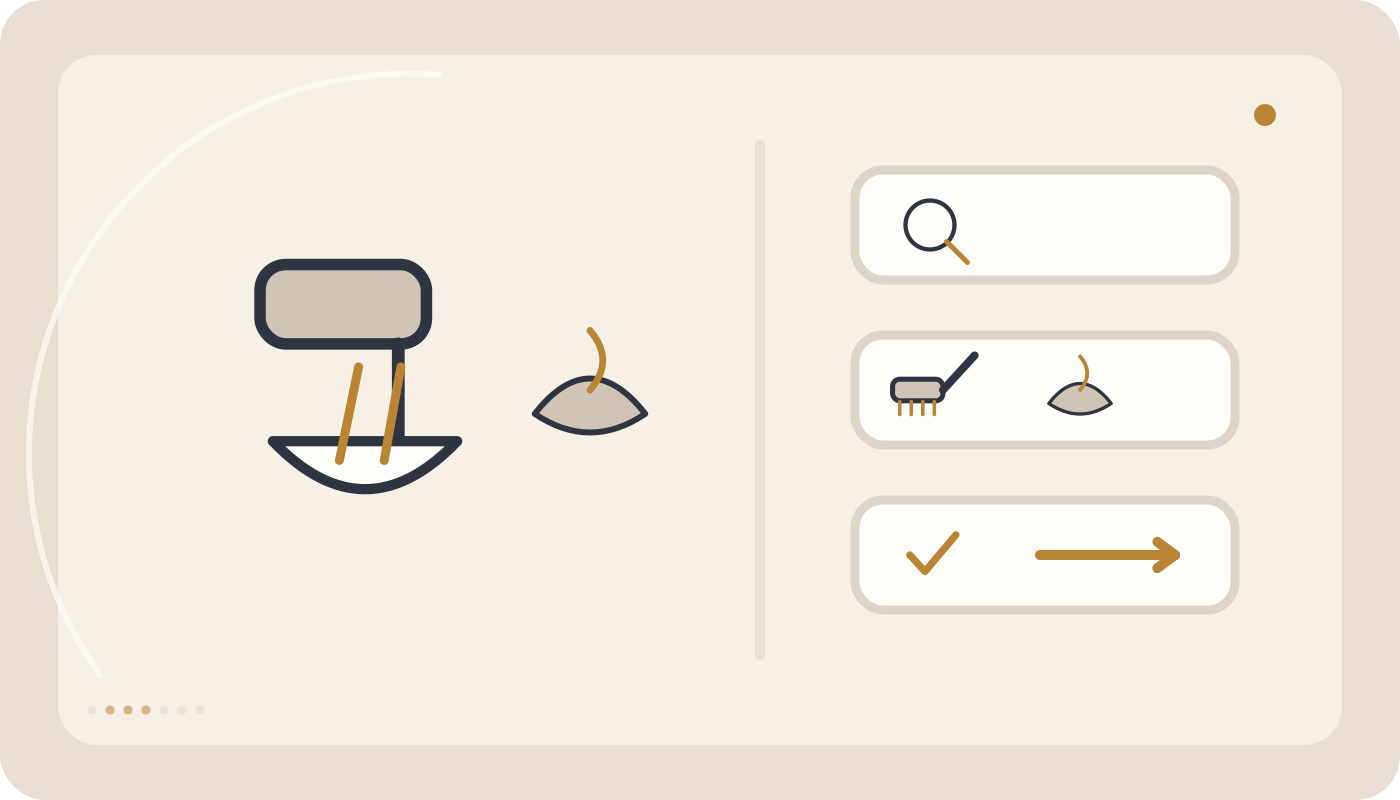
Install the dough hook with the mixer off, lock the bowl fully, and weigh ingredients accurately. Start at low speed and knead only within the model's recommended range. Do not use high speed for heavy dough, and stop for major speed loss, gear noise, rubber odor, or overload.
Before you start
How to Use a Dough Hook Correctly for Bread and Pizza Dough
A dough hook is designed to stretch, fold, and knead dough—not to run heavy mixtures at maximum speed. Good results depend on correct attachment installation, keeping the batch within real dough capacity, following recipe hydration, and kneading at a low controlled speed.
Quick answer: Install the dough hook with the mixer switched off, lock the bowl fully, and weigh ingredients accurately. Start at low speed until flour and liquid come together, then continue only within the model’s recommended dough-speed range. Do not knead heavy dough at high speed. Stop if the mixer shows severe speed loss, unusual vibration, gear noise, rubber odor, or overload.
Before you start
| Step or goal | Recommended method | Important note |
|---|---|---|
| Choose attachment | Model-compatible dough hook | Whisk and flat beater are not for heavy kneading |
| Prepare ingredients | Weigh accurately to recipe | Hydration directly changes mixer load |
| Initial mixing | Low speed | Bring flour and liquid together gradually |
| Kneading | Low / model-specified speed | High speed is inappropriate for heavy dough |
| Monitor dough | Check texture, temperature, and hook behavior | More time is not always better |
| Finish | Stop and wait for full attachment stop | Before scraping or removing the hook |
1. Check the mixer’s real dough capacity
Bowl volume is not the same as dough capacity. Actual capacity depends on motor design, gearbox strength, hook geometry, dough hydration, and recipe type.
2. Install the correct dough hook
The hook must seat and lock fully on the drive shaft. Partial engagement can cause play, noise, vibration, or poor dough movement.
3. Lock the bowl fully
A partially seated bowl can alter the hook path and reduce kneading quality.
4. Weigh ingredients
Weight measurements give far more consistent hydration than cup-based flour measurements.
5. Understand hydration
Hydration is the ratio of water or primary liquid to flour weight. Lower hydration creates stiffer dough and higher mechanical load; higher hydration creates softer and stickier dough.
6. Very dry dough is harder on the mixer
If dough is crumbly and extremely stiff, do not compensate with extra speed. Check the recipe and liquid quantity.
7. Very wet dough may not gather on the hook
High-hydration dough can spread across the bowl. Consider recipe rest time, flour type, and hydration before adding more flour.
8. Follow the recipe ingredient order
Salt, yeast, fats, sugar, and liquid may be added at different stages depending on the dough.
9. Start at low speed
A slow start controls flour dust and introduces load smoothly.
10. Do not knead heavy dough at maximum speed
High speed increases mechanical impact, heat, vibration, and gearbox load.
11. The first stage is only to bring ingredients together
Dough may look rough during the first minutes. Do not judge final structure too early.
12. Kneading begins after initial formation
Once a rough mass forms, the hook stretches and folds it repeatedly.
13. Do not skip a recipe rest or autolyse
Rest can improve flour hydration and make gluten development easier.
14. Why does dough climb the hook?
Some climbing can be normal, but dough approaching the drive area indicates a need to stop and check batch size, hydration, and speed.
15. Does dough need to clean the bowl completely?
Not always. High-hydration dough can legitimately remain slightly attached to the bowl.
16. When should you scrape the bowl?
Stop the mixer completely and wait for the hook to stop before using a spatula. Never scrape a running bowl.
17. Monitor dough temperature
Mechanical kneading creates friction and heat. Excessively warm dough can change yeast activity and soften enriched dough.
18. What does cold dough do?
Very cold ingredients can make dough stiffer and increase mixer load.
Step-by-step bread dough method
- Weigh ingredients accurately.
- Install and lock the bowl and dough hook.
- Add ingredients in recipe order.
- Begin at low speed to combine.
- Knead within the recommended speed range.
- Use recipe rest periods when required.
- Assess texture and gluten development.
- Stop when the recipe target is reached.
Step-by-step pizza dough method
Pizza dough can vary widely in hydration. Use the hook at low speed, allow time for the dough to develop, and avoid adding large amounts of flour simply because the dough is sticky early in the process.
High-hydration pizza dough can be sticky
Stickiness alone does not mean the recipe has failed. Extra flour changes hydration and final texture.
What about stiffer bread dough?
Bagel-style and other low-hydration doughs create more load and may require a smaller batch.
Brioche behaves differently
Butter, eggs, and sugar change dough structure and mixing stages. Follow the specific recipe.
When should butter be added?
In enriched doughs, butter is often added at a specific later stage. Very cold butter can interfere with dough development and increase load.
Can all ingredients go in at once?
Only when the recipe is designed that way. Many doughs depend on staged addition.
What is the windowpane test?
For some wheat doughs, gently stretching a small piece into a thin translucent membrane can indicate gluten development. It is not a universal standard for every dough.
What if the dough tears during the windowpane test?
It may need more development, but rest time and hydration also matter. Do not extend mixing indefinitely.
What is over-kneading?
Excess mechanical work can overheat dough and, in some conditions, weaken its structure.
Why does the mixer shake during kneading?
Dense dough creates uneven load. Mild rhythmic movement can occur, but walking across the counter, severe head bounce, or bowl contact is not normal.
Why does mixer speed drop?
A batch that is too large, overly stiff dough, unsuitable speed, or a drive-system issue can reduce RPM. Reduce load rather than increasing speed.
What if overload protection activates?
Stop and allow cooling as directed. Correct the cause before restarting.
What if there is a rubber smell?
Stop use. Coupling, belt, or overload may be involved.
What if I hear gear noise?
Clicking or tooth-like impact sounds under load should be taken seriously. Continued use can worsen gearbox damage.
What if the hook hits the bowl?
Stop. Check bowl seating, hook compatibility, and bowl clearance.
Can I increase speed to finish sooner?
No. Proper kneading depends on time, hydration, and suitable hook motion—not maximum RPM.
Is Pulse suitable for kneading?
Usually not as a replacement for steady kneading. Use Pulse only as described in the model manual.
How should I choose batch size?
Start with the model’s stated dough capacity and be more conservative with very stiff doughs.
What if the recipe was written for hand kneading?
Hand-kneading time and mixer time are not necessarily equal. Judge dough structure rather than copying time exactly.
Is kneading time fixed?
No. Flour, hydration, temperature, fats, sugar, and speed all affect development time.
What happens after kneading?
Stop the mixer, wait for the hook to stop completely, remove the dough, and continue with the recipe’s rest, fermentation, or shaping stage.
Simple test: recipe issue or mixer issue?
Prepare a familiar moderate-hydration dough with a batch well below the mixer’s capacity. If the mixer handles it smoothly at low speed, the earlier problem was probably related to recipe, hydration, or batch size. If a light dough still causes major speed loss or gear noise, technical inspection is appropriate.
Bread-dough checklist
- Correct healthy dough hook.
- Bowl fully locked.
- Ingredients weighed accurately.
- Recipe hydration respected.
- Start at low speed.
- Batch below real dough capacity.
- Monitor dough temperature.
- Stop based on dough development, not time alone.
Pizza-dough checklist
- Appropriate pizza flour.
- Recipe hydration.
- Rest or autolyse when required.
- Dough hook.
- Low speed.
- Avoid adding flour too quickly.
- Monitor elasticity and stickiness.
- Use the required rest before shaping.
10 common mistakes
- Using a whisk or flat beater for heavy kneading.
- Loading according to bowl volume instead of dough capacity.
- Starting at high speed.
- Increasing speed to compensate for stiff dough.
- Adding flour too quickly to sticky dough.
- Skipping recipe rests.
- Continuing while dough becomes excessively warm.
- Scraping the bowl while the mixer is running.
- Ignoring attachment-to-bowl contact.
- Continuing with gear noise, rubber smell, or repeated overload.
When should you stop using the mixer?
Stop and unplug if the mixer walks significantly across the counter, the hook strikes the bowl, the head bounces severely, RPM drops dramatically, gear noise develops, a rubber or electrical burning smell appears, or overload protection repeatedly activates.
When is service appropriate?
If the correct hook, locked bowl, light batch, moderate hydration, and appropriate speed still produce poor hook engagement, unstable drive transfer, or gear noise, the planetary drive, coupling, gearbox, and bowl-clearance system should be assessed.
Conclusion
Correct dough-hook use comes down to the right batch, proper hydration, low controlled speed, appropriate kneading time, and respecting the recipe’s dough behavior. Bread and pizza dough do not improve because the mixer spins faster; they improve when the hook stretches and folds the dough consistently within the mixer’s safe working range.
Common mistakes
Change only one variable at a time while diagnosing.
- Do not use a whisk or flat beater for heavy kneading.
- Do not treat bowl volume as dough capacity.
- Do not start at high speed.
- Do not increase speed to compensate for stiff dough.
- Do not add flour too quickly to sticky dough.
- Do not skip recipe rest periods.
- Do not continue while dough becomes excessively warm.
- Do not scrape the bowl while the mixer is running.
- Do not ignore attachment-to-bowl contact.
- Do not continue with gear noise, rubber smell, or repeated overload.
Frequently asked questions
Which mixer attachment should I use for bread dough?
Use the model-compatible dough hook because it is designed to stretch and knead dough.
What speed should I use for bread dough?
Usually the low manufacturer-recommended range; exact numbers are model-specific.
Why does dough climb the hook?
A large batch, stiff dough, or excessive speed are common causes; stop and correct the conditions.
Should pizza dough completely clean the bowl?
Not always. High-hydration dough can remain slightly attached to the bowl and still be normal.
What is the windowpane test?
It is a rough gluten-development check where some wheat doughs can be stretched into a thin membrane without tearing immediately.
When does the mixer need service?
When a correct hook, light batch, and appropriate speed still produce major speed loss, gear noise, or poor hook engagement.
Related guides and products


Still having the problem?
If safe user-level checks do not solve the issue, do not open the appliance. Submit a service request for technical inspection.