
Why Is My Steam Cleaner Not Producing Steam?
If a steam cleaner powers on but produces no steam, check the water supply, tank installation, heat-up time, steam controls, nozzle condition, scale, and outlet path.
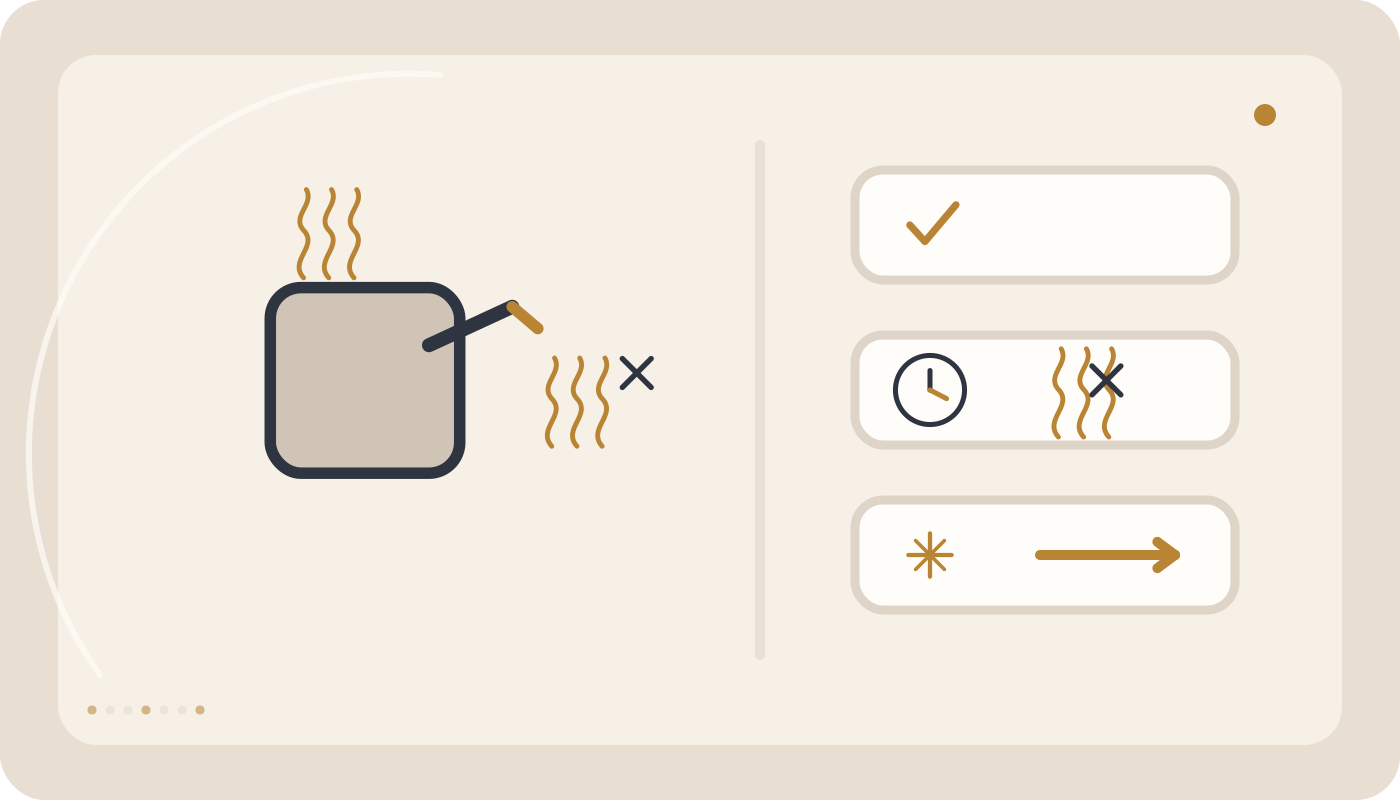
Check the water level and tank installation, allow the full heat-up time, verify the steam lock and output setting, and inspect user-serviceable outlets for scale after the unit cools. If it does not heat or still has no steam, arrange service.
Where should you start?
Why Is My Steam Cleaner Not Producing Steam?
If a steam cleaner powers on but no steam exits the nozzle, a failed heater is only one possibility. Steam production depends on a complete chain: adequate water supply, correct heating, steam pressure or flow, an open control path, and an unobstructed outlet. A problem at any stage can stop or severely reduce steam.
Quick answer: Check the water level and tank installation, allow the full heat-up time, verify the steam lock and output setting, and inspect user-serviceable nozzles for mineral buildup. If the unit does not heat, leaks steam, smells burnt, or still produces no steam after these checks, stop using it and arrange technical inspection.
Identify the exact symptom first
| Symptom | Likely area | First check |
|---|---|---|
| Powered but no steam at all | Water, heating, trigger lock, or blockage | Tank and ready indicator |
| Steam starts then stops | Low water, temperature recovery, or deposits | Water level and recovery time |
| Steam is very weak | Scale, partial nozzle blockage, or low setting | Steam setting and nozzle |
| Water exits but little steam | Unit not ready or temperature too low | Heat-up time |
| Unit does not become warm | Power, control, or heating circuit | Power supply, then service |
1. There is not enough water
Low water is the simplest cause. Some machines stop steam generation at a minimum level, while others gradually weaken. Fill only to the permitted level and never above MAX.
2. The water tank is not fully seated
On removable-tank models, the tank valve must open correctly when installed. A partially seated tank can leave the machine powered and warm but starved of water.
3. The cleaner has not reached operating temperature
Heat-up time varies by model. Pulling the steam trigger immediately after power-on may produce water droplets or nothing at all. Use the Ready indicator where provided.
4. Continuous steaming may require temperature recovery
Some machines temporarily lose output after prolonged maximum steam use. A short pause allows the heater or boiler to recover. This can be normal within the product’s design limits.
5. The trigger safety lock is engaged
Many steam cleaners include a trigger lock to prevent accidental discharge. If the machine is hot and ready but the trigger does nothing, verify the lock position.
6. The steam setting is too low or inactive
Models with variable steam may have several levels or surface modes. Confirm that steam output is actually enabled before assuming a technical fault.
7. Mineral scale is blocking the nozzle
Minerals can accumulate in narrow steam outlets. The problem often begins as irregular or weak steam and can progress toward near-complete blockage.
Important: Never probe a hot or pressurized nozzle with a needle or metal tool. Follow the model-specific descaling procedure.
8. The accessory connection or steam path is obstructed
Deposits are not always at the final nozzle. They may collect in an accessory coupling, tube, or removable passage. Inspect only after the unit has cooled completely.
9. Unsuitable water has accelerated scale formation
Very hard water can increase mineral buildup. Water recommendations vary by model. Use tap, filtered, distilled, or other water only as permitted by the manufacturer.
10. Detergent or fragrance was added to the water tank
Many steam cleaners are designed for water only. Detergent, fragrance, essential oils, vinegar, or other additives can create deposits or damage internal components unless the machine has a dedicated approved system.
11. Incorrect descaling can make the problem worse
Strong acids, kettle descaler, or concentrated vinegar can damage seals, valves, and metals if the manufacturer has not approved them. Descaling must match the machine design.
12. The steam hose is kinked
On hose-equipped models, sharp bends or compression can restrict steam flow. Route the hose naturally and keep it from being trapped under objects.
13. An accessory is not fully connected
Some couplings complete the steam path as well as mechanically retaining the tool. A partially engaged accessory can restrict flow or allow steam to leak at the connection.
14. A floor pad is saturated or heavily soiled
On steam mops, an excessively wet or dirty pad can make steam distribution feel weak. Replace or clean the pad according to the instructions.
15. Steam is leaking somewhere else
If steam can be heard but little reaches the main nozzle, inspect visible connections and seals. Steam leaks can cause burns; never search for a leak with your hand.
16. The safety cap or pressurized tank is not sealing correctly
On boiler-style cleaners, the cap is part of the pressure-safety system. Never open a hot or pressurized cap. A damaged cap or seal requires proper inspection before further use.
17. Why does water come out with the steam?
A small amount of initial moisture may be normal, but continuous water discharge can indicate insufficient heat, temperature drop, overfilling, or a heating-system problem. Allow the unit to reach Ready status.
18. Why does steam weaken after several minutes?
Check water level, scale buildup, continuous maximum output, and heat recovery time. If a short pause restores strong steam, heater recovery may be the reason. If not, blockage or a technical fault becomes more likely.
19. Should a steam cleaner make a pump sound?
Some designs use an audible water pump while others operate differently. A major change from the machine’s normal sound is more useful diagnostically than expecting one particular noise.
20. What if the machine does not heat at all?
Verify the outlet and power connection. If power is correct but the unit does not heat, do not open the housing. The heater or electrical control system requires qualified inspection.
Recommended troubleshooting sequence
- Switch the machine off and allow it to cool when required.
- Check water level and correct tank installation.
- Power it on and allow the full specified heat-up time.
- Check the Ready indicator, trigger lock, and steam setting.
- Verify correct hose and accessory installation.
- After cooling, inspect user-serviceable outlets for scale.
- Perform only the manufacturer-approved descaling procedure.
- If steam is still absent, stop use and arrange service.
A simple blockage-versus-heating test
After correct filling and full heat-up, test only an outlet configuration that the manufacturer permits. If steam is strong at the main outlet but weak with one accessory, that accessory or connection may be restricted. If there is no steam at the primary outlet either, the fault is farther upstream.
What should you avoid?
- Never open a hot or pressurized safety cap.
- Do not probe a hot nozzle with needles or metal tools.
- Do not fill above the MAX line.
- Do not add unapproved detergent, fragrance, oil, or descaler.
- Do not use strong acid for descaling unless specifically instructed.
- Never direct steam toward hands, faces, people, or animals.
- Do not continue using a machine with steam leaks, burning odor, or electrical damage.
How can the problem be prevented?
Follow the approved water recommendation, keep nozzles and accessories clean, manage residual water after use as instructed, and perform periodic descaling only by the specified method. Avoid storing the machine dirty or wet for long periods.
When is technical service required?
If water supply, tank installation, heat-up time, controls, and the accessible steam path are all correct but steam is still absent, possible faults include the heater, thermostat or temperature sensor, pump, solenoid valve, thermal fuse, boiler, or control circuit. These are not normal user-service items.
Stop-use warning signs
Disconnect the machine and stop testing if there is a burning smell, smoke, sparks, abnormal heating of the cord or plug, steam leaking from the housing, severe abnormal noise, or water entering electrical sections.
Summary
When a steam cleaner produces no steam, begin with the basic chain: water, tank installation, heat-up time, steam controls, nozzle condition, and scale. Many causes can be identified without opening the appliance. If the unit does not heat or still produces no steam with a clear outlet, further disassembly is not appropriate and technical inspection is required.
Separate no-heat from no-steam symptoms
A unit that never heats needs a different diagnostic path from one that heats normally but has a blocked or locked steam outlet. Let the machine cool fully before inspecting steam paths.
Common mistakes
Change only one variable at a time while diagnosing.
- Do not open a hot or pressurized safety cap.
- Do not probe a hot nozzle with a needle.
- Do not fill above MAX.
- Do not add unapproved detergent, fragrance, or oil.
- Do not use strong descaler or acid without instructions.
- Do not direct steam toward people or animals.
- Do not ignore steam leaking from the housing.
- Do not reuse a unit with burning odor or electrical damage.
Frequently asked questions
Why does my steam cleaner power on but produce no steam?
Low water, incorrect tank installation, incomplete heat-up, a steam lock, or nozzle blockage are common causes.
How long should I wait for heat-up?
It depends on the model; use the Ready indicator or manual specification.
Can I put vinegar in the tank?
Only if the manufacturer explicitly permits it for that model.
Why does steam weaken after a few minutes?
Low water, temporary temperature drop, continuous use, or scale can cause it.
Why does water come out with the steam?
The machine may not yet be hot enough or its temperature may have dropped.
When is service required?
When water, tank installation, controls, and the outlet are correct but the unit does not heat or produce steam.
Related guides and products
Still having the problem?
If safe user-level checks do not solve the issue, do not open the appliance. Submit a service request for technical inspection.