
Why Is My Steam Cleaner Spitting Water Instead of Steam?
A few startup droplets may be condensation, but persistent water after full heat-up requires checks of temperature, fill level, scale, nozzle condition, hose routing, and steam flow.
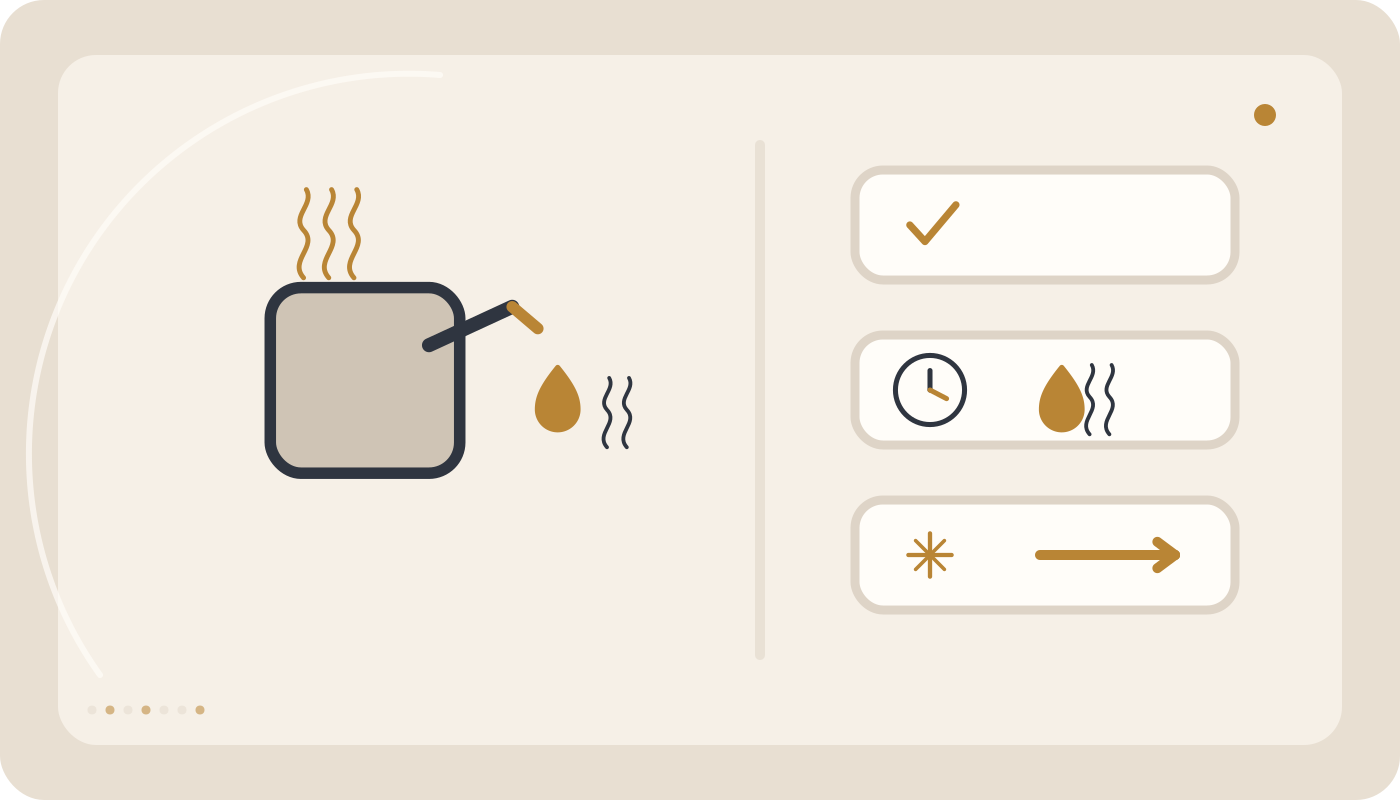
A few startup droplets may be normal condensation. If heavy water continues after Ready status, check the water level, heat-up time, continuous steam use, hose, nozzle, and scale; persistent wet output may involve heating or flow control.
Where should you start?
Why Is My Steam Cleaner Spitting Water Instead of Steam?
A few droplets at startup can be normal on some steam cleaners, but continuous water discharge after full heat-up is different. Proper steam requires water to enter the heating system at the correct rate, reach operating temperature, and travel through the steam path without excessive cooling.
Quick answer: Allow the unit to reach Ready status fully, never overfill the tank, use the cleaner in its specified operating position, avoid continuous steaming beyond its recovery capacity, and check the nozzle, hose, and scale condition. Persistent water discharge after full heat-up may indicate a heating, temperature-control, or flow problem.
Normal condensation or abnormal water discharge?
| Behavior | Initial assessment | Action |
|---|---|---|
| A few drops only at startup | Condensation may be normal | Purge briefly on an approved surface |
| Water before Ready status | Unit is not fully heated | Wait for complete heat-up |
| Heavy water after Ready | More likely abnormal | Check fill level, heat, scale, and path |
| Water after prolonged steaming | Temporary temperature drop possible | Pause for heat recovery |
| Water or steam leaks from housing | Seal or safety concern | Stop use and inspect |
1. The machine is not fully heated
This is the most common cause. A power light does not necessarily mean steam is ready. If the cleaner has a Ready indicator, wait for it before sustained trigger use.
2. Condensed water remains in the hose and nozzle
When the cleaner cools, residual steam condenses into water. At the next startup, that water may exit before fresh steam. Hose-equipped machines can show this more noticeably.
3. The tank is overfilled
Filling above MAX can interfere with the intended operating space or water feed. Keep the level within the marked range.
4. Continuous steam use has reduced temperature
Holding the trigger continuously can consume water faster than some heaters can recover. Output may become wetter or begin to spit droplets. Pause briefly to allow temperature recovery.
5. Steam output is set too high
Maximum steam is not always necessary. On variable-output models, a lower setting may provide more stable output under some conditions.
6. The cleaner is being used at an incorrect angle
Some steam cleaners are designed for a defined operating orientation. Excessive tilting can affect water delivery. Follow the model’s orientation limits.
7. Scale is reducing heat transfer
Mineral buildup can insulate heating surfaces. Water may enter normally but fail to convert to steam quickly enough. Use only the manufacturer-approved descaling procedure.
8. The nozzle is partially blocked
A partial restriction can disturb steam flow and allow moisture to collect behind the outlet. Inspect only after the machine has cooled completely.
9. A cold hose is condensing steam
Steam loses energy as it travels through a cold hose, and some may condense. A few startup droplets can therefore be normal, but continuous water is not explained by initial condensation alone.
10. A kinked hose is collecting condensate
A sharp bend or low loop can collect condensed water. Moving the hose may then send that water toward the nozzle suddenly. Keep the hose naturally routed.
11. An accessory is not fully seated
An incomplete coupling can disturb steam flow or promote condensation at the connection. Install accessories only when safe and according to their locking mechanism.
12. The cleaning pad is saturated
Sometimes the nozzle is functioning correctly but an oversaturated floor pad makes the appliance appear to be leaking water. Replace or clean the pad as directed.
13. The cleaning surface is very cold
Steam can condense rapidly on a cold surface, leaving visible water. This is different from liquid water being discharged directly from the nozzle.
14. Unsuitable water has contributed to scale
Hard water can accelerate mineral buildup, but water recommendations vary. Use distilled or other special water only when approved for the specific model.
15. Detergent or fragrance has been added to the tank
On water-only machines, additives can affect foaming, deposits, valves, and heating behavior. Do not add vinegar, detergent, fragrance, or oils unless explicitly permitted.
16. Does water discharge mean the heater has failed?
Not necessarily. Insufficient heat-up or temporary temperature drop can occur with a healthy heater. Persistent mostly-liquid output after full Ready status makes a heating or control fault more plausible.
17. What can a thermostat or temperature-sensor fault do?
If heating stops too early, water may reach the outlet before it is converted properly to steam. Diagnosis of thermostats, sensors, and control circuits requires technical service.
18. Pump or water-control faults
If water enters the heater faster than intended, the system may not vaporize all of it. Pumps, solenoid valves, and flow controls are not normal user-service components.
19. Do not confuse a seal leak with nozzle spitting
Water or steam escaping around a cap, tank connection, or housing is a separate issue. Never open a hot pressurized system or use your hand to locate a steam leak.
20. Can the machine be tested without an accessory?
Only if the model instructions explicitly permit it. Never remove a component to bypass a lock or safety mechanism.
Recommended step-by-step check
- Switch off and allow the machine to cool if it is hot or pressurized.
- Verify the water level and correct any overfilling.
- Install the tank and accessories correctly.
- Power on and wait for full Ready status.
- Purge the first few seconds only on a surface permitted by the instructions.
- If output stabilizes, startup condensation was likely.
- If water continues, pause and try an appropriate steam setting.
- After cooling, inspect the nozzle, hose, and serviceable parts for scale or blockage.
- If the problem remains, arrange technical service.
If only a few drops appear at startup
This can be condensed water in the steam path. The key is whether output becomes stable steam after warm-up and a brief purge. If it does not, do not assume the behavior is normal.
If water appears again after every pause
A long pause can cool the hose and nozzle enough to create fresh condensation. Large amounts of water after only short pauses suggest heat recovery, scale, or flow-control issues.
If water collects on the floor
Determine whether liquid is actually leaving the nozzle or the pad is oversaturated. Follow both the floor manufacturer’s and steam-cleaner manufacturer’s instructions on moisture-sensitive surfaces.
What should you avoid?
- Do not hold the trigger continuously before Ready status.
- Do not fill above MAX.
- Do not use the machine outside its permitted orientation.
- Never open a hot pressurized boiler cap.
- Do not probe a hot nozzle with metal tools.
- Do not add unapproved detergent, fragrance, oil, or descaler.
- Do not ignore water or steam leaking from the housing.
- Do not continue abnormal wet operation on moisture-sensitive surfaces.
When should use stop immediately?
Disconnect the machine if water reaches electrical sections, steam leaks from the housing or safety cap, there is a burning smell, severe abnormal noise occurs, or the cord or plug becomes unusually hot.
When is technical service needed?
If the fill level is correct, the unit is fully heated, the nozzle and steam path are clear, and proper pauses do not restore dry steam, the heater or boiler, thermostat or sensor, pump, flow-control valve, and control electronics may require inspection.
Summary
A few startup droplets can result from normal condensation, but continuous water discharge after Ready status is not normal. Check heat-up time, water level, operating technique, continuous steam use, hose routing, nozzle condition, and scale. Persistent wet output should be professionally assessed, especially before using the machine on moisture-sensitive surfaces.
A few startup droplets can be condensation
Steam left in a cool hose can condense into water. Continuous water discharge after full warm-up is different and can point to overfilling, heat recovery, scale or flow-control issues.
Common mistakes
Change only one variable at a time while diagnosing.
- Do not hold the trigger continuously before Ready status.
- Do not fill above MAX.
- Do not use the cleaner outside its permitted orientation.
- Do not open a hot pressurized cap.
- Do not probe a hot nozzle with metal tools.
- Do not add unapproved chemicals or descaler.
- Do not ignore water or steam leaking from the housing.
- Do not continue abnormal wet operation on sensitive surfaces.
Frequently asked questions
Are a few drops at startup normal?
On some models, yes; residual steam can condense in the path as the machine cools.
Why does the cleaner spit water after several minutes?
Continuous steaming can temporarily reduce temperature, while scale or a fault may also contribute.
Can overfilling cause water discharge?
Yes, on some designs it can interfere with correct operation.
Why can a hose cause water at the nozzle?
Steam can condense in a cold hose and collect in low bends.
Can scale cause this problem?
Yes. Scale can reduce heat transfer or restrict the steam path.
When is service required?
When the unit is fully Ready and the path is clear but output remains mostly liquid.
Related guides and products
Still having the problem?
If safe user-level checks do not solve the issue, do not open the appliance. Submit a service request for technical inspection.