
Why Has My Steam Cleaner's Steam Pressure or Output Become Weak?
If steam output has become weaker, first check water supply, full heat-up, steam setting, and heat recovery; then inspect scale, the nozzle, accessories, hose, and steam path.
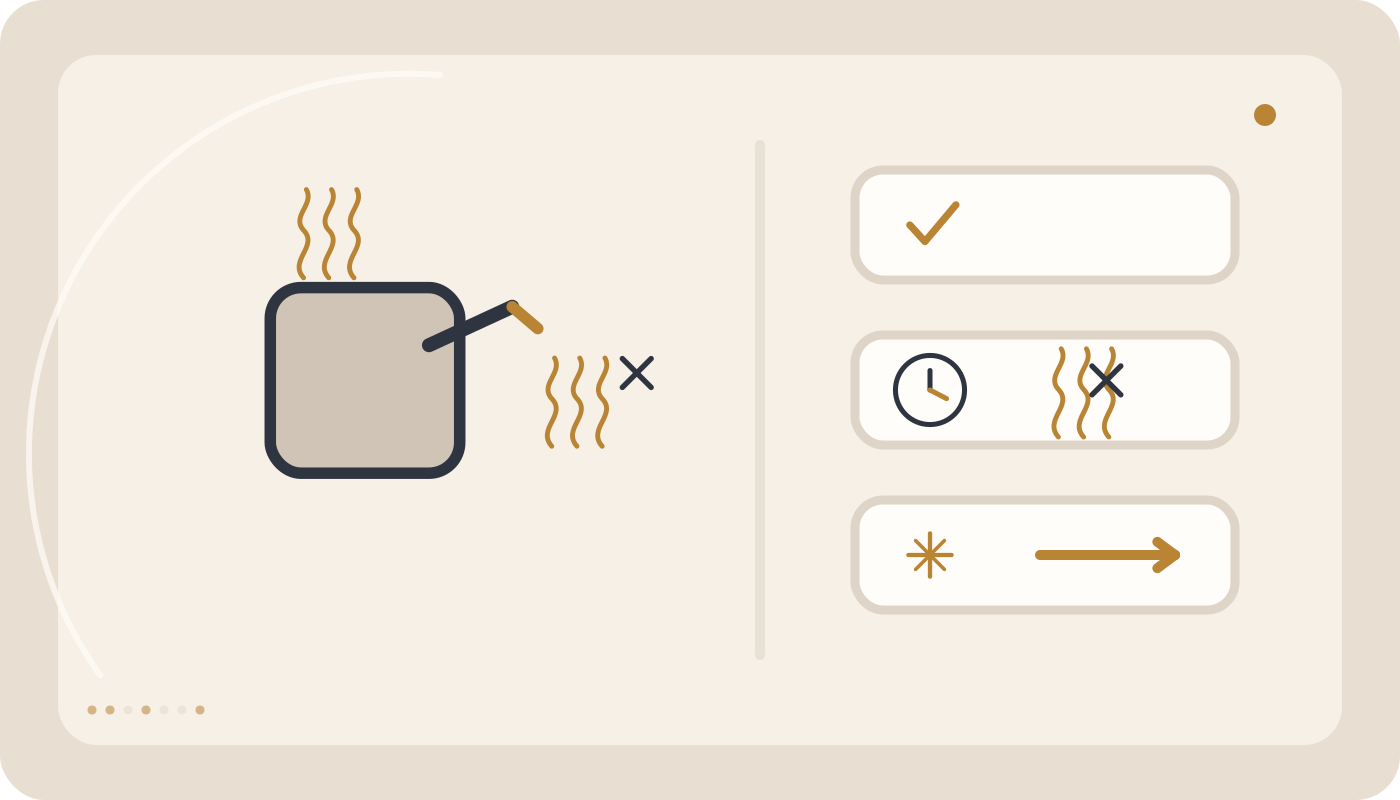
Check water level and tank seating, wait for full Ready status, verify the steam setting, and allow heat recovery after prolonged use. Once cool, inspect the nozzle, accessories, and hose for scale or restriction. Persistent weakness with a clear path needs service.
Where should you start?
Why Has My Steam Cleaner’s Steam Pressure or Output Become Weak?
Weak steam does not automatically mean a major failure. Effective output depends on water supply, sufficient heating, correct flow control, an unrestricted steam path, and a clean nozzle. A restriction at any point can make steam weak, intermittent, wetter than normal, or slower to develop.
Quick answer: Check the water level and tank installation, wait for full Ready status, and allow heat recovery after prolonged steaming. Once the unit is switched off and fully cool, inspect user-serviceable nozzles, accessories, and hoses for scale or restriction. If output used to be strong but remains weak despite full heat-up and a clear path, the heating, pump, or steam-control system may need service.
Define what “weak steam” looks like
| Behavior | Likely area | First check |
|---|---|---|
| Weak from startup | Incomplete heat-up, low setting, or limited water feed | Ready status and tank |
| Strong initially, then weak | Heat recovery, low water, or duty cycle | Pause and water level |
| Intermittent or pulsing steam | Scale, air, or unstable water delivery | Nozzle and tank seating |
| Weak only with one accessory | Accessory restriction or poor connection | Tool and coupling |
| Weak steam with excessive droplets | Insufficient heat or poor heat transfer | Ready status, scale, heating |
1. The machine has not fully reached operating temperature
A Power light only confirms that the unit is on. If a Ready indicator is provided, wait for it before judging steam performance.
2. Prolonged steaming may require heat recovery
Continuous trigger use can temporarily consume energy faster than some heaters recover. Pause briefly. If strong steam returns, the behavior may relate to the normal recovery cycle.
3. The water level is low
Insufficient water can make delivery unstable. Fill within the permitted range and never above MAX.
4. The removable tank is not fully seated
Many removable tanks open a feed valve when correctly installed. Partial seating can restrict water delivery and cause weak or pulsing steam.
5. Steam output is set low
Check the output control before deeper troubleshooting. Some machines have multiple steam levels or surface-specific modes.
6. Mineral scale is partially blocking the nozzle
Scale is a common cause of gradual output loss. Unlike a complete blockage, steam still exits but with reduced volume or an uneven pattern.
7. Steam holes in the floor head or accessory are restricted
If the primary outlet is strong but output drops with one tool, inspect that tool’s distribution holes and passages after everything has cooled.
8. The hose is kinked or compressed
Sharp bends and compression reduce the effective steam path. Route the hose naturally without tension.
9. Condensate is collecting in the hose
Steam can condense in a long, cool hose. A low loop may collect water and cause temporarily weak or pulsing output.
10. Internal scale is reducing heat transfer
Mineral deposits can form on heating surfaces as well as at the nozzle. The unit may then take longer to become ready or lose output sooner during continuous use.
11. The water type does not match manufacturer guidance
Very hard water can accelerate scale. Recommendations differ by model, so follow the specified water type rather than applying one rule to every steam cleaner.
12. Detergent or fragrance has been used in a water-only tank
Unapproved detergent, fragrance, oil, or other additives can foul valves and passages or create sticky deposits.
13. The pad is saturated or heavily soiled
An overloaded pad can interfere with steam distribution at the surface and make output seem weaker. Replace or clean it as instructed.
14. An accessory coupling is not fully locked
An incomplete connection may restrict flow as well as leak steam. Refit accessories only when the machine is safe and cool.
15. Steam is leaking before it reaches the main nozzle
A hiss around a hose or coupling can indicate loss upstream. Never use your hand to locate a steam leak.
16. Why can an older cleaner gradually lose steam strength?
Gradual decline over months points toward scale, path contamination, seal wear, or reduced water-delivery performance more than a simple setting change.
17. What if steam periodically becomes strong again?
Cycling output can correspond to heater recovery, unstable water feed, or partial restriction. Observe whether the pattern follows the heating indicator.
18. Can air in the water path cause temporary weakness?
After the tank has run completely dry or been refitted, some systems need a short priming period. Follow only the model-specific priming instructions.
19. What can a pump problem look like?
On pump-fed models, reduced delivery can cause weak steam, delayed output, or pulsing. A major change in pump sound can be a clue, but diagnosis requires service.
20. What do the solenoid valve and flow control do?
They regulate water or steam delivery. Scale or failure can restrict output. These components are not normal user-service items.
21. How can reduced heater performance appear?
A longer heat-up time, initially acceptable steam that fades quickly, or wetter output can be consistent with reduced heating performance, although these signs do not identify a specific failed part by themselves.
22. A thermostat or sensor may interrupt heating too early
If temperature control stops heating prematurely, the system may not store enough thermal energy for stable output. Technical testing may be required.
A simple accessory-versus-machine test
Only where the manual permits, compare output using the simplest approved configuration. Strong primary output but weak steam with one accessory suggests a restriction in that accessory. Weak primary output points farther upstream.
Recommended troubleshooting order
- Check water level and correct tank seating.
- Wait for full Ready status.
- Select an appropriate steam setting.
- Pause briefly after sustained steam use for heat recovery.
- Check the hose for kinks, compression, or trapped condensate.
- After cooling, inspect serviceable nozzles and accessories.
- Perform only the model-approved descaling procedure.
- Replace or clean an oversaturated pad.
- If output remains clearly weaker than before, arrange service.
What should you avoid?
- Do not open a hot or pressurized steam system.
- Do not use inappropriate needles or drill bits on the nozzle.
- Do not pour kettle descaler, strong acid, or concentrated vinegar into the unit without approval.
- Do not fill above MAX.
- Do not add unapproved detergent or fragrance.
- Do not kink or block the hose in an attempt to increase pressure.
- Do not bypass trigger locks or safety systems.
- Do not ignore steam leaking from the housing or connections.
How can weak steam be prevented?
Use the water type specified by the manufacturer, keep accessories and pads clean, store hoses without sharp bends, manage residual water as instructed, and follow the recommended descaling schedule.
When should use stop immediately?
Disconnect the cleaner if weak output is accompanied by a burning smell, smoke, sparks, unusually hot cord or plug, steam leaking from the housing or cap, severe abnormal noise, or water entering electrical areas.
When is technical service required?
If water level, tank seating, full heat-up, steam setting, nozzle condition, and approved descaling are all correct but output remains substantially weak, the heater or boiler, pump, solenoid valve, thermostat or sensor, seals, and control circuit may need inspection.
Summary
Start with the simple chain: water, Ready status, steam setting, heat recovery, hose, accessories, and scale. Weakness only after prolonged use may relate to heat recovery; a permanent decline from previous performance makes scale or a technical fault more likely. Good troubleshooting separates operating conditions from faults without unnecessary disassembly.
The pattern of weak steam is diagnostic
Steam that is weak from startup, fades after continuous use, pulses, or is weak only through one attachment points to different causes. Check water, warm-up, scale, restrictions and leaks in that order.
Common mistakes
Change only one variable at a time while diagnosing.
- Do not open a hot or pressurized unit.
- Do not drill or probe the nozzle with unsuitable tools.
- Do not add unapproved acid or descaler.
- Do not fill above MAX.
- Do not add unapproved detergent or fragrance.
- Do not kink the hose to increase pressure.
- Do not bypass safety locks.
- Do not ignore steam leaks from the housing.
Frequently asked questions
Why is steam strong at first and then weak?
The heater may need recovery time, or the water level may be low.
Can scale reduce steam pressure?
Yes. Scale can restrict the nozzle and reduce heat transfer internally.
Why is steam weak only with one accessory?
That accessory may be blocked or incorrectly connected.
Can hard water affect steam output?
Over time it can increase scale; follow the model's water guidance.
Can a wet pad make steam seem weak?
Yes. A saturated pad can reduce effective steam distribution.
When is service needed?
When the unit fully heats and the path is clear but output remains substantially weaker than before.
Related guides and products
Still having the problem?
If safe user-level checks do not solve the issue, do not open the appliance. Submit a service request for technical inspection.