After Ironing, How Should You Empty, Clean, and Store the Appliance?
A complete post-ironing care guide covering reservoir draining, soleplate cleaning, cord and hose storage, anti-calc maintenance, descaling, and safe storage for irons and garment steamers.
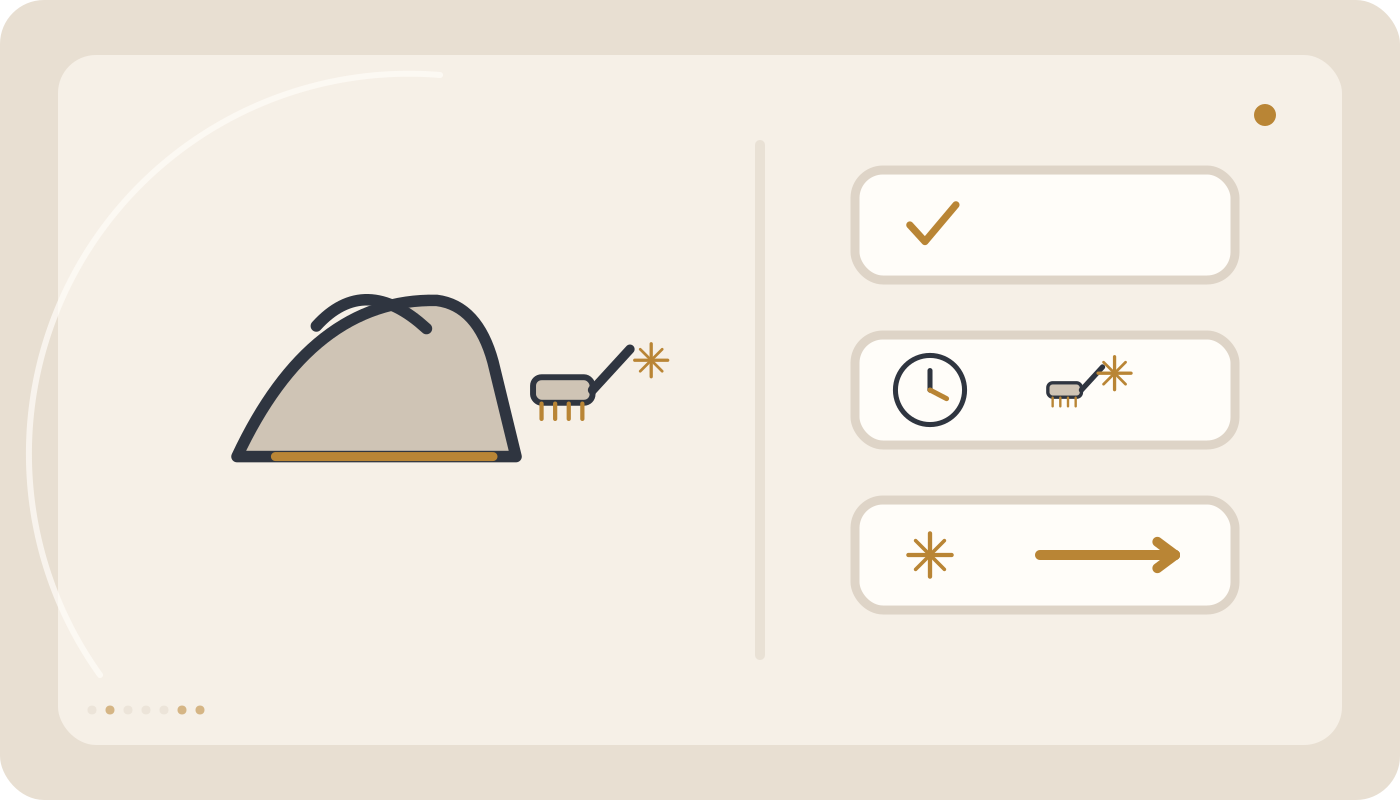
Switch off and unplug the appliance, allow it to cool completely, empty remaining water according to the manual, clean the soleplate without abrasives, coil cords and hoses without tight bends, and store the appliance only when cool and dry.
Before you start
After Ironing, How Should You Empty, Clean, and Store the Appliance?
Finishing an ironing session involves more than switching the appliance off. A few minutes of correct after-use care can reduce scale buildup, soleplate staining, stale reservoir odors, water leakage, cord damage, and gradual steam-performance loss. Exact procedures vary between steam irons, handheld steamers, upright garment steamers, and steam stations, but the core safety principles are shared.
Quick answer: Switch the appliance off and unplug it, allow it to cool completely, empty remaining water according to the manual, clean the soleplate and exterior without abrasives, store hoses and cords without tight bends, and put the appliance away only when it is cool and dry.
Why after-use care matters
Water and heat can promote mineral deposits and contamination when moisture remains in the system for long periods. Residue left on the soleplate can also transfer to clothing during the next session.
Step 1: stop steam output
Return steam controls to the off position when applicable and follow any model-specific shutdown procedure.
Step 2: switch off and unplug
Disconnect the appliance before emptying, cleaning, or storage. Pull the plug itself rather than the power cord.
Step 3: allow complete cooling
The soleplate, steam head, boiler, hose, and internal water can remain dangerously hot after shutdown. Never open or clean hot pressurized components.
Should the reservoir be emptied after every use?
For many household irons and steamers, emptying remaining water is a sensible conservative practice, particularly before storage. Some models have different manufacturer instructions, and the manual always takes priority.
Why standing water can be a problem
Long-term standing water can contribute to mineral deposits, odors, or leakage during movement. For extended storage, a clean, empty, dry reservoir is generally preferable.
Emptying a steam iron
- Switch off and unplug.
- Allow sufficient cooling.
- Open the fill cover as designed.
- Hold the iron safely over a sink.
- Drain without aggressive shaking.
- Allow residual moisture to dry.
Do not store a water-filled iron flat unless instructed
Horizontal storage with water inside can increase leakage risk on some designs. Use the heel-rest storage position when the manufacturer specifies it.
Handheld steamer
Once cool, remove a detachable reservoir and empty it. For fixed tanks, use only the procedure described in the manual. Do not violently shake the appliance to force water out.
Upright garment steamer
Empty the tank, let the hose cool, and store it without tight loops or kinks. Secure the steam head in its holder.
Condensate in an upright-steamer hose
Some condensate can remain after use. Follow the manual for drainage; do not detach hoses or invert the machine unless the manufacturer instructs you to do so.
Steam station shutdown
Switch off, unplug, and wait the required cooling and depressurization time before opening any anti-calc or boiler component. Never open a hot pressurized boiler cap.
Steam-station reservoir
Empty a removable tank after cooling when instructed. If the manufacturer permits short-term water storage, follow that guidance; emptying is generally preferable before extended storage.
Cleaning the soleplate
When the soleplate is fully cool—or at the temperature specifically recommended by the manufacturer—wipe it with a soft lint-free cloth. Removing fibers and sizing before the next heating cycle helps prevent baked-on residue.
Never use harsh abrasives
- Steel wool.
- Sandpaper.
- Knives or razor blades.
- Abrasive powders.
- Rough scouring pads.
- Unknown chemicals.
What about vinegar?
Vinegar is not a universal iron-cleaning solution. Acids may be incompatible with some coatings, seals, or internal components. Use it only when the appliance manual explicitly permits it.
What about baking soda?
Abrasive pastes can scratch some soleplates or clog steam holes. Cleaning methods must match the soleplate material and manufacturer guidance.
Steam holes
Do not scrape mineral deposits with metal tools. Use the appliance’s Self-Clean or Descale procedure for internal scale when provided.
When should Self-Clean be used?
There is no universal interval. Water hardness and usage determine frequency. Follow the appliance’s Calc indicator and maintenance schedule.
Anti-calc collector
Remove it only after shutdown, cooling, and depressurization according to the manual. Clean and reinstall it correctly.
Anti-scale cartridges
Some systems use replaceable cartridges whose life depends on water hardness and usage. Replace them according to the indicator or maintenance schedule.
Should you descale after every use?
No. Excessive descaling and unnecessary chemicals can be harmful. Descale only at the recommended interval and with an approved method.
Cleaning the water tank
If the tank is removable and washable, rinse it only as instructed. Residual scented detergent or soap can cause foam, odor, or contamination during the next cycle.
Do not add fragrance or essential oils
Unless the appliance has a manufacturer-designed compartment for them, oils and fragrance can contaminate steam passages, pumps, seals, and garments.
Exterior cleaning
Use a soft slightly damp cloth followed by a dry cloth. Keep water away from switches, electrical connections, and vents.
Inspect the power cord
Look for cuts, crushing, discoloration, loose strain relief, or abnormal heating. Do not patch a damaged power cord with ordinary tape and continue using the appliance.
Do not wrap the cord around a hot appliance
Residual heat can damage insulation. Wait for complete cooling, then coil the cord loosely without tension.
Do not kink the steam hose
Sharp folds and tight loops can stress the hose and interfere with steam and condensate flow during future use.
Best storage environment
Store in a cool, dry place away from direct sunlight, children, and fall hazards. Very humid areas or locations next to sinks are poor choices.
Can it be stored in a cabinet?
Yes, once completely cool and dry and provided there is adequate space and ventilation. Do not immediately seal a hot, damp appliance inside a closed cabinet.
Long-term storage
For weeks or months without use, empty the reservoir, clean and dry the appliance, coil cords and hoses loosely, and engage the storage lock when provided.
Steam-station storage locks
A transport lock can secure the iron to its base, but lift the complete station by the iron handle only when the manufacturer explicitly permits that carrying method.
Do not box the appliance while hot
Residual heat and moisture can damage components, cables, or packaging. Complete cooling and drying come first.
If the soleplate is stained
Clean it before the next session. Burned residue can become harder with repeated heating and may transfer to light-colored garments.
If reservoir water smells stale
Empty it and clean the tank according to the manual. Adding perfume to mask the odor is not a solution.
If white particles appear
Mineral scale is possible. Review the anti-calc or descaling procedure rather than inserting tools into steam passages.
If brown particles come from the steam holes
Stop using the appliance and check the water, soleplate, scale condition, and Self-Clean instructions. Persistent contamination warrants service.
If the appliance leaks after storage
Overfilling, incorrect storage orientation, standing water, or scale may contribute. Prepare the appliance according to the manual and seek service if leakage persists.
After-use maintenance schedule
| Task | Every session | Periodic |
|---|---|---|
| Switch off and unplug | Yes | — |
| Allow complete cooling | Yes | — |
| Empty water per manual | Preferably/model-dependent | Before long storage |
| Wipe soleplate | If dirty | Yes |
| Inspect cord and hose | Quick check | Detailed check |
| Self-Clean / Descale | No | Per indicator/manual |
| Collector / Cartridge | No | Per appliance schedule |
A practical five-minute routine
- Stop steam, switch off, and unplug.
- Leave the appliance safely positioned to cool.
- Once cool, empty water according to the manual.
- Inspect and wipe the soleplate and exterior if needed.
- Store the dry appliance with cord and hose loosely arranged.
10 common after-ironing mistakes
- Putting a hot appliance into a cabinet.
- Wrapping the cord around a hot soleplate.
- Long-term storage with a full reservoir.
- Using vinegar without manufacturer approval.
- Scraping the soleplate with metal tools.
- Kinking the steam hose.
- Opening a hot collector or boiler.
- Adding fragrance to the water tank.
- Ignoring scale and soleplate stains.
- Continuing to use a damaged cord.
When is service required?
Stop using the appliance and arrange technical inspection if it continues to leak despite correct storage, produces a burning smell, has an overheating cord, suffers severe steam loss, develops abnormal pump noise, or repeatedly ejects brown contamination.
Conclusion
A good post-ironing routine is straightforward: switch off, unplug, cool, drain appropriately, clean without abrasives, inspect the cord, and store dry. Descaling should be neither ignored nor overdone; follow the appliance’s own anti-calc system and maintenance schedule. These habits help preserve steam performance, garment cleanliness, and appliance life.
Common mistakes
Change only one variable at a time while diagnosing.
- Do not put a hot appliance into a cabinet.
- Do not wrap the cord around a hot soleplate.
- Do not store long-term with a full reservoir.
- Do not use vinegar without manufacturer approval.
- Do not scrape the soleplate with metal tools.
- Do not kink the steam hose.
- Do not open a hot collector or boiler.
- Do not add fragrance to the water tank.
- Do not ignore scale or soleplate stains.
- Do not continue using a damaged cord.
Frequently asked questions
Should I empty the tank after every use?
It is useful for many appliances, especially before storage, but the model manual takes priority.
Can I use vinegar for descaling?
Only when the manufacturer explicitly permits it; it is not a universal recommendation.
How should I clean the soleplate?
Use a soft cloth and the manufacturer's approved method; avoid blades, steel wool, and abrasives.
Should Self-Clean be run after every session?
No. Follow the Calc indicator, water hardness, and maintenance schedule.
Can fragrance be added to the tank?
Only if the appliance has a manufacturer-approved fragrance system or compartment.
When does the appliance need service?
Persistent leakage, burning odor, overheating cord, severe steam loss, abnormal pump noise, or repeated brown contamination warrant inspection.