Steam Iron, Handheld Steamer, Upright Steamer, or Steam Station: Which Is Better?
A practical comparison of steam irons, handheld garment steamers, upright steamers, and steam stations by workload, steam performance, pressing precision, storage, and use case.
Choose a steam iron for balanced everyday home use, a handheld steamer for travel and quick touch-ups, an upright steamer for hanging garments and curtains, and a steam station for large loads and long ironing sessions.
Steam Iron, Handheld Steamer, Upright Steamer, or Steam Station: Which Is Better?
There is no single best system for every household. The right choice depends on laundry volume, fabric types, required precision, speed, storage space, and ironing habits. A steam iron offers precise general-purpose control; a handheld steamer prioritizes speed and portability; an upright steamer is convenient for hanging garments and larger steaming sessions; and a steam station is designed for sustained, high-volume ironing.
Quick answer: Choose a steam iron for balanced everyday home use, a handheld steamer for quick touch-ups and travel, an upright steamer for coats, long garments and curtains, and a steam station for large households and long ironing sessions.
Ironing versus steaming
An iron combines a heated soleplate, pressure, and steam, giving strong control over collars, cuffs, sharp creases, and flat finishes. A garment steamer primarily uses steam and natural fabric tension, applying less mechanical pressure.
Steam iron
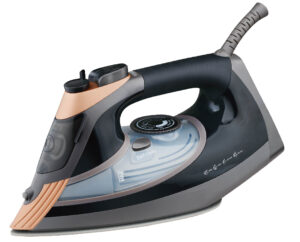
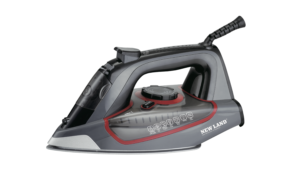
A conventional steam iron stores water in the iron body and is a versatile choice for shirts, trousers, cotton, linen, and everyday household ironing.
Steam-iron strengths
- Precise control.
- Sharp creases.
- Good collars and cuffs.
- Moderate storage requirements.
- Simple everyday setup.
Steam-iron limitations
The smaller reservoir means more refilling during large sessions, and the water and heating system remain in the hand-held unit, which can matter during prolonged use.
Handheld garment steamer
A handheld steamer is designed for rapid wrinkle release on hanging garments. It is compact, portable, and less dependent on an ironing board.
Handheld strengths and limitations
It is excellent for travel, quick morning touch-ups, and limited storage, but reservoir capacity and sustained output are typically lower. It is also less suited to razor-sharp trouser creases or precision collar work.
Upright garment steamer
The reservoir and steam generator sit in a floor-standing base, with steam delivered through a hose to the head. It is convenient for multiple hanging garments, coats, long clothing, and permitted curtain steaming.
Upright limitations
It requires more storage space and correct hose management. A contact iron may still provide more precise results for sharp creases and structured details.
Steam station
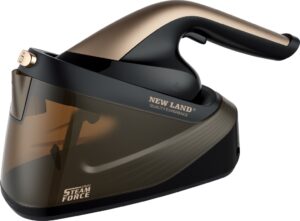
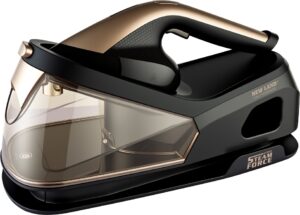
A steam generator iron separates the larger water/steam base from the hand-held iron. This architecture supports longer sessions, larger reservoirs, and—in many designs—stronger sustained steam.
Steam-station strengths and limitations
It is well suited to high laundry volume, thick fabrics, and long sessions, but needs more storage and a stable ironing surface and is less portable.
Quick comparison
| Criterion | Steam iron | Handheld | Upright | Steam station |
|---|---|---|---|---|
| Pressing precision | High | Low–medium | Medium | High |
| Fast vertical steaming | Medium | Excellent | Excellent | Medium |
| Work volume | Medium | Low | Medium–high | High |
| Storage | Low | Very low | High | Medium–high |
| Travel | Poor | Excellent | Unsuitable | Unsuitable |
| Sharp creases | Excellent | Poor | Low–medium | Excellent |
| Curtains/long garments | Medium | Medium | Excellent | Medium |
Shirts and office trousers
If collars, cuffs, and trouser creases matter, a steam iron or steam station offers more precise contact control. A steamer is excellent for rapid wrinkle release but does not always replace pressing.
Coats and long garments
Handheld and upright steamers are useful for surface wrinkles while preserving three-dimensional garment shape. A steam iron with a pressing cloth can complement them for details.
Curtains
An upright steamer is often the most convenient because of its larger reservoir and vertical workflow, provided the curtain care label permits steam and nearby electrical equipment is safe.
Delicate fabrics
The appliance category alone does not guarantee safety. Fiber content and the care label matter more. Steamers apply less pressure, but some delicate fabrics are sensitive to steam or water droplets.
Denim and heavy linen
Sustained steam and controlled contact become more important. A capable steam iron or steam station will generally outperform a small travel steamer on heavy fabrics.
Low-volume households
If ironing volume is small, buying a large system solely for impressive specifications may not make sense. A compact steam iron or handheld steamer may be sufficient.
High-volume households
Reservoir capacity, refill design, continuous steam, ergonomics, and scale management become increasingly important. Steam stations or capable upright systems offer clearer benefits here.
Small apartments and travel
A handheld steamer uses the least storage space. For travel, always verify voltage and frequency compatibility; a plug adapter does not convert appliance voltage.
Boutiques and clothing stores
Fast preparation of hanging garments favors an upright steamer with stable output and a suitable reservoir, although a contact iron may still be needed for precision details.
Does higher wattage always mean better steam?
No. Input power is only one variable. Heater design, continuous steam rate, steam boost, temperature control, steam distribution, and scale management all affect real performance.
What does g/min mean?
When reliably specified, continuous steam output in grams per minute can be more informative than wattage alone. Distribution quality and sustained performance still matter.
What is Steam Boost?
Steam Boost is a short high-output burst intended for stubborn wrinkles. It should not be confused with continuous steam output.
What does Bar mean on a steam station?
System pressure can be one useful specification, but it does not determine ironing quality by itself. Steam rate, soleplate design, and control behavior also matter.
Reservoir capacity
A large reservoir can be unnecessary bulk for short sessions but reduces interruptions during long sessions. Consider your actual workload rather than choosing the largest tank automatically.
Removable versus fixed reservoir
A removable tank often simplifies filling and routine cleaning, but valve quality and sealing are also important. Capacity alone is not enough.
Weight and ergonomics
Heavier is not automatically better. Balance, handle geometry, and soleplate glide determine how tiring the appliance feels during extended use.
Soleplate or steam?
Both matter. The soleplate must distribute heat and glide effectively, while steam should be delivered evenly and consistently. Good ironing performance is a system-level result.
Scale management
In hard-water areas, easy access to anti-calc systems, collectors, or descaling cycles can be a major ownership advantage. Strong initial performance will decline without correct maintenance.
Automatic shut-off
This is a valuable safety feature for contact irons, but it does not replace the habit of switching off and unplugging the appliance after use.
Can one appliance cover everything?
For many households, yes: a good steam iron can perform most tasks. Users who travel frequently and also iron large loads may benefit from two specialized appliances instead.
A practical combination for an average home
Use a steam iron as the primary appliance and add a handheld steamer if rapid garment touch-ups are common.
A practical combination for heavy users
A steam station for large laundry loads plus a handheld or upright steamer for hanging garments can divide the workload effectively.
Questions to ask before buying
- How many garments do I iron per session?
- Do I mostly iron shirts and trousers, or coats and long garments?
- Do I need sharp creases?
- How much storage space is available?
- Will I travel with it?
- Is my local water hard?
- How long are my typical ironing sessions?
- Would frequent reservoir refilling bother me?
Common buying mistakes
- Buying by wattage alone.
- Confusing Steam Boost with continuous output.
- Ignoring actual laundry volume.
- Buying an upright system without storage space.
- Expecting a small steamer to create professional sharp creases.
- Ignoring weight and ergonomics.
- Ignoring scale-management design.
- Assuming the most expensive appliance is automatically the best fit.
Final selection guide
| Your priority | Likely best fit |
|---|---|
| One versatile home appliance | Steam iron |
| Speed, travel, minimal storage | Handheld steamer |
| Hanging garments, coats, curtains | Upright steamer |
| Large loads and long sessions | Steam station |
| Sharp creases and precision | Steam iron / steam station |
Conclusion
The best appliance is not the one with the biggest number on the box; it is the one that matches your real routine. A steam iron is the most balanced general choice, a handheld steamer excels in speed and portability, an upright steamer is strong for vertical garment care, and a steam station shows its greatest advantage in sustained high-volume ironing.
Common mistakes
Change only one variable at a time while diagnosing.
- Do not buy by wattage alone.
- Do not confuse Steam Boost with continuous steam.
- Do not ignore actual laundry volume.
- Do not buy an upright steamer without storage space.
- Do not expect a small steamer to make professional sharp creases.
- Do not ignore weight and ergonomics.
- Check scale-management features.
- Do not assume the most expensive appliance is automatically the best fit.
Frequently asked questions
Which is best for an average home?
A steam iron is usually the most balanced all-purpose choice.
Which is best for travel?
A compact handheld steamer, after checking destination voltage compatibility.
Which is best for curtains?
An upright steamer is often easier for vertical work and longer sessions.
What is best for a high-volume household?
A steam station offers clearer benefits for large loads and long sessions.
Does higher wattage mean better steam?
No. Steam rate, heater design, soleplate, and scale management also matter.
How is Steam Boost different from continuous steam?
Boost is a short high-output burst; continuous steam describes sustained output.