How to Find the Right Espresso Grind Size
The correct espresso grind is not one universal grinder number. Keep the coffee dose consistent and use small grind adjustments to improve flow, flavor, and repeatability.
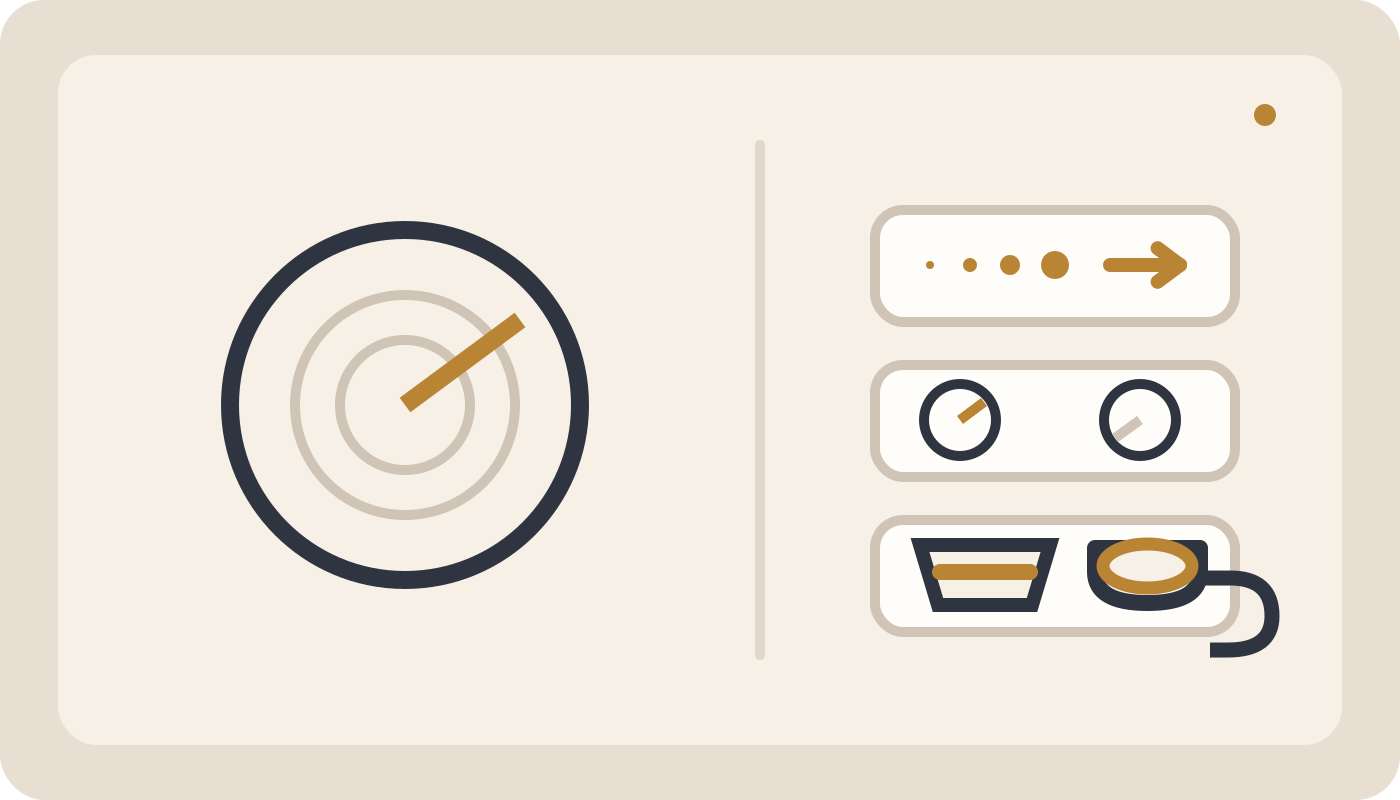
Keep the coffee dose and preparation consistent and adjust only the grind. If espresso flows much too quickly, move slightly finer. If it flows extremely slowly or only drips, move slightly coarser.
Before you start
What does the correct espresso grind size mean?
Particle size is one of the main controls over how quickly water moves through coffee during espresso brewing. A grind that is too coarse generally allows faster flow, while an excessively fine grind can restrict flow. The goal is to find a setting that works with your machine, coffee, basket, and preparation routine to produce a balanced and repeatable result.
Quick answer: start with a relatively fine espresso setting, keep the coffee dose and preparation method consistent, and adjust only the grind. If the espresso flows much too quickly, move slightly finer. If it flows extremely slowly or only drips, move slightly coarser. Make small adjustments and test again.
Why is there no universal grinder number?
Grinder numbers are not standardized. Setting 5 on one grinder can be completely different from setting 5 on another. Coffee variety, freshness, environmental conditions, basket design, and dose also affect the appropriate setting. Use extraction behavior rather than a copied number as your reference.
Step one: keep other variables consistent
Keep the coffee dose, beans, basket, and preparation routine as consistent as possible while adjusting grind size. If you change dose, grind, and tamping at the same time, it becomes difficult to identify what actually improved or worsened the result.
What should you do if espresso flows too quickly?
If flow starts very quickly and the beverage runs fast and thin, grind size is one of the first variables to review. Keep the other variables consistent, move the grinder slightly finer, and test again. Large jumps make it harder to identify the useful range.
What if espresso flows extremely slowly or only drips?
If water is clearly struggling to pass through the coffee and the beverage emerges very slowly, the grind may be too fine. Try a small adjustment toward a coarser setting. An excessive coffee dose or a blocked basket can also restrict flow.
Do not judge by time alone
Extraction time is useful for comparison, but it does not determine quality by itself. Observe flow speed and consistency, beverage amount, aroma, flavor, and texture. The goal is a result that can be repeated with the same preparation.
What can flavor tell you about grind size?
If a fast-running espresso is also thin and weak, gradually grinding finer may help. If flow is extremely slow and the beverage tastes unpleasantly heavy, a slightly coarser setting may be worth testing. Sourness or bitterness is not caused by grind size alone; temperature, coffee, dose, and other variables also matter.
How much should you change the grind each time?
Small changes are more useful than large jumps. After each adjustment, brew again under similar conditions. With a stepless grinder, make a very small movement. With a stepped grinder, one step at a time is usually a practical starting approach.
Should you adjust the grinder when changing coffee beans?
Often, yes. Coffee type, freshness, and storage conditions can change how the coffee behaves during grinding and brewing. A setting that worked well for one bag may not be ideal for the next.
A simple method for finding the right setting
- Choose one coffee and one basket.
- Keep the coffee dose consistent.
- Start within the espresso range of your grinder.
- Brew one shot and observe flow and flavor.
- If it is much too fast, move slightly finer; if it is much too slow, move slightly coarser.
- Change only one small variable at a time.
- When the result is good, record the grinder setting, dose, and outcome.
Common mistakes
- Copying another person’s grinder number without considering the grinder model.
- Changing several brewing variables at the same time.
- Making very large grind changes after every shot.
- Judging only by crema or only by extraction time.
- Ignoring coffee freshness and dose.
Summary
The correct espresso grind is not a universal number. Keep other variables consistent, observe flow and flavor, and move toward the useful range with small adjustments. Very fast flow generally points toward a finer grind, while severely restricted flow generally points toward a coarser grind, but flavor and repeatability should confirm the final setting.
Dial in by flow and taste together
Do not chase a universal time or grinder number. Coffee freshness, roast, basket, and preparation all matter. Make small grind changes, keep other variables stable, and check distribution before blaming grind for uneven flow.
Common mistakes
Change only one variable at a time while diagnosing.
- Do not copy another grinder's number as a universal setting.
- Do not change grind size, coffee dose, and tamping at the same time.
- Do not make very large grind changes after every shot.
- Do not judge the setting only by crema or extraction time.
- Do not ignore coffee freshness and dose.
Frequently asked questions
Is there one correct grinder number for espresso?
No. Grinder scales are not standardized, and the useful setting depends on the grinder, coffee, and brewing conditions.
What should I do if espresso flows too quickly?
Keep other variables consistent and move the grind slightly finer.
What should I do if espresso only drips?
Move the grind slightly coarser and also check the coffee dose and basket cleanliness.
Should I change the grind when I change coffee beans?
You may need to. Coffee type and freshness can change the useful grind setting.