Espresso Brew Ratio Explained Simply
Weighing both the dry coffee and the beverage in the cup gives you a simple way to record and repeat an espresso recipe without unnecessary complexity.
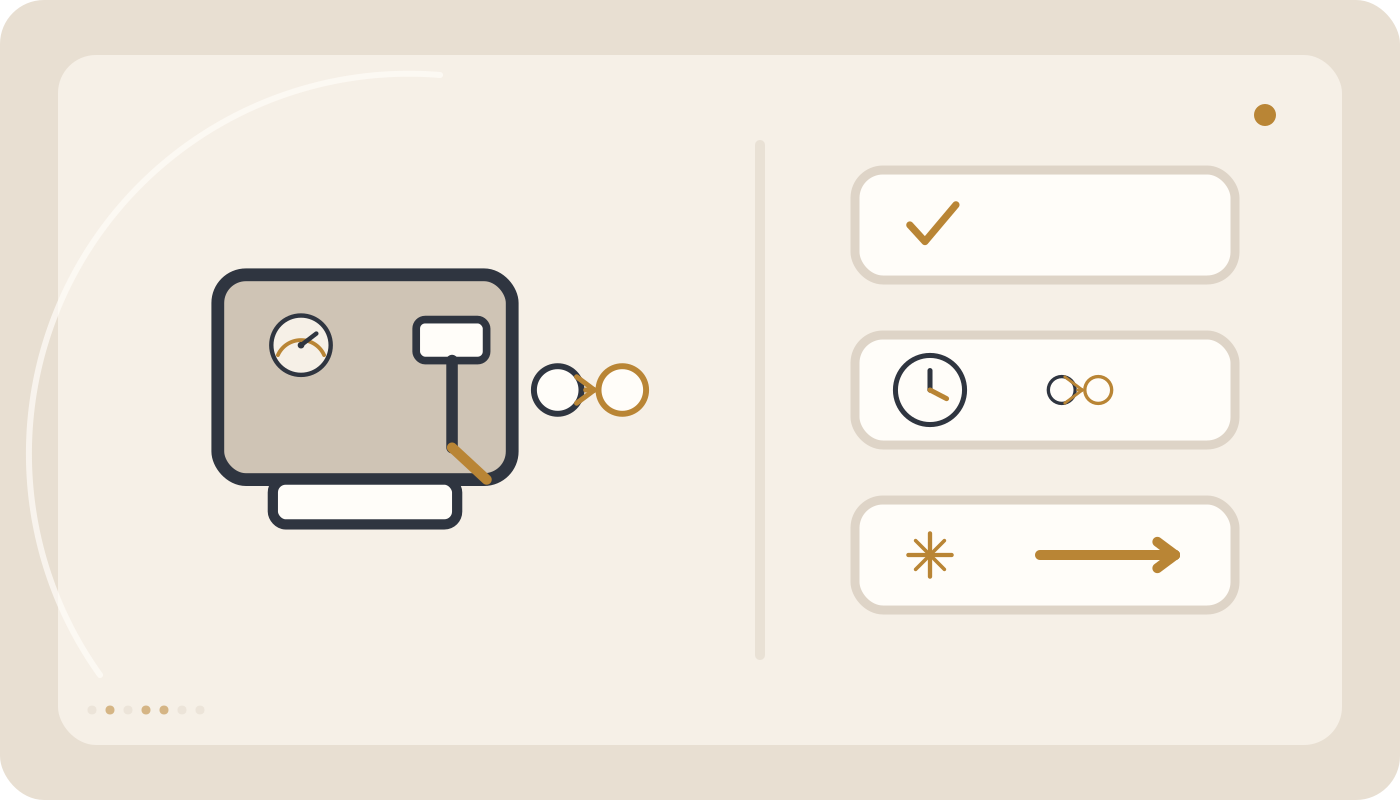
Weigh the dry coffee and the beverage output. For example, 18 grams of coffee producing about 36 grams of beverage gives an output ratio of roughly 2:1. Treat it as a reference, not a mandatory rule.
Before you start
What does espresso brew ratio mean?
Repeatable espresso requires more than knowing how much dry coffee is in the basket. It also helps to know how much beverage was produced in the cup. Comparing these two weights provides a simple way to record and repeat an espresso recipe.
Quick answer: weigh the dry coffee in the basket, then place the cup on a scale and record the beverage weight. For example, 18 grams of coffee producing about 36 grams of beverage gives an output-to-coffee ratio of approximately 2:1. This is not a mandatory rule; it is a useful reference for comparison and repeatability.
Why weigh the beverage instead of judging cup volume?
The foam layer on espresso can change its apparent volume. Two cups that look similar in volume may therefore contain different beverage weights. A scale makes measurement more consistent and easier to compare.
How do you calculate the ratio?
First record the weight of dry coffee in the basket. Then measure the final beverage weight in the cup. If you use 18 grams of coffee and produce 36 grams of beverage, the output weighs twice as much as the dry coffee. You can record the recipe simply as 18 grams in and 36 grams out.
Is a 1:2 ratio always best?
No. An output around twice the coffee weight is a common and easy-to-understand teaching reference, not a universal quality rule. Coffee type, roast level, personal preference, basket design, and machine setup can make another ratio taste better. The objective is to find a useful recipe and then reproduce it consistently.
What should remain consistent while testing?
- Coffee type and dry coffee dose.
- The basket being used.
- Grind setting until you intentionally adjust it.
- Coffee distribution and preparation technique.
- Target beverage weight.
A simple method for a repeatable shot
- Prepare a dry portafilter.
- Weigh the coffee and record the dose.
- Prepare the coffee consistently.
- Place the cup on a scale and zero the scale.
- Start extraction.
- Stop near your target beverage weight.
- Record coffee weight, beverage weight, approximate time, and your impression of the flavor.
What role does extraction time play?
Time is useful for comparison, but it should not be the only measure. If the same coffee dose and beverage weight are reached very quickly on one attempt and very slowly on another, grind size or coffee-bed preparation may need attention. Weight tells you how much coffee and beverage were involved, while time tells you how long it took to reach that output.
What if the target beverage weight is reached too quickly?
If other variables are consistent and the target output is reached much too quickly, the grind may be too coarse. Make a small adjustment toward a finer grind and test again.
What if reaching the target takes too long?
If flow is severely restricted, the grind may be too fine. An excessive coffee dose or a blocked basket can also restrict flow. Avoid changing several variables at once; review one factor at a time.
How can flavor guide ratio adjustments?
Once grind and coffee dose are in a useful range, you can make small changes to beverage weight and compare flavor. A lower output creates a more concentrated beverage, while a higher output can make it more diluted, but the flavor effect depends on the coffee and extraction conditions. Make small, recorded changes.
Why should you record the recipe?
Descriptions such as approximately one scoop or half a cup are not precise enough for repeatability. A simple record such as 18 grams of coffee, 36 grams of beverage, and a specific grinder setting gives you a clear starting point next time.
Common mistakes
- Judging beverage quantity only by visible cup volume and foam.
- Changing coffee dose, grind size, and beverage weight at the same time.
- Treating one ratio as a mandatory rule for every coffee.
- Ignoring flavor and focusing only on numbers.
- Failing to record a setup that produced a good result.
Summary
Espresso brew ratio is a measurement tool, not a rigid rule. Record the dry coffee weight and beverage weight, keep other variables consistent, and refine the result with small changes. Once you find a combination you enjoy, those measurements help you reproduce it more reliably.
Brew ratio is a comparison tool
Record dry coffee weight, beverage weight, approximate time, and taste together. Ratio alone does not define quality. When the cup needs correction, change one variable in a small step rather than dose, grind, and yield at the same time.
Common mistakes
Change only one variable at a time while diagnosing.
- Do not estimate beverage quantity only from visible cup volume.
- Do not change coffee dose, grind size, and beverage weight at the same time.
- Do not treat one ratio as a mandatory rule for every coffee.
- Do not sacrifice flavor simply to hit an exact number.
- Do not leave a successful setup unrecorded.
Frequently asked questions
What does a 1:2 espresso ratio mean?
It means the beverage output weighs approximately twice as much as the dry coffee input, such as 18 grams of coffee producing about 36 grams of beverage.
Is a 1:2 ratio always best?
No. It is a common starting reference, and the preferred ratio can change with coffee and personal taste.
Why should I weigh the beverage?
Weight is less affected by the visible foam layer than cup volume and makes comparison easier.
What should I record for repeatable espresso?
At minimum, record coffee dose, beverage output weight, and grinder setting. Time is also useful for comparison.