How to Iron Jackets, Manteaus, Curtains, and Delicate Fabrics
Professional ironing and steaming techniques for jackets, manteaus, curtains, and delicate fabrics, including temperature selection, pressing cloths, shape preservation, and shine prevention.
Check the care label. Use controlled steam and pressure plus a pressing cloth when needed for jackets and coats; steam curtains from top to bottom when permitted; and use the lowest effective temperature with a hidden-area test for delicate fabrics.
Before you start
How to Iron Jackets, Manteaus, Curtains, and Delicate Fabrics
Jackets, long coats or manteaus, curtains, and delicate fabrics should not be treated with one universal ironing method. Construction, lining, interfacing, fiber content, fabric weight, trims, and surface sensitivity determine whether controlled ironing, a handheld steamer, or an upright steamer is the better tool.
Quick answer: Check the care label first. Use controlled steam and a pressing cloth for structured jackets and coats, avoiding heavy pressure on lapels, shoulders, and interfacing. Steam curtains vertically from top to bottom when permitted. For delicate fabrics, use the lowest effective temperature, a hidden-area test, and short contact time.
Five checks before starting
- Read ironing and steam symbols.
- Identify fiber content.
- Check for lining, fusible interfacing, prints, adhesives, and trims.
- Make sure the soleplate is clean and the steamer is not spitting water.
- Select a concealed test area.
Why jackets need special care
A jacket can contain shell fabric, lining, fusible interfacing, shoulder padding, and shaped lapels. Heavy pressure may flatten three-dimensional tailoring, create shine, or disturb adhesive layers.
Jackets and lapels
Release surface wrinkles with gentle steam first when permitted. Use a pressing cloth for direct ironing. Avoid aggressively flattening the natural lapel roll line or shoulder structure.
Sleeves and pockets
A sleeve board or clean rolled towel can help prevent seam impressions. Avoid heavy pressure over pocket edges because their outline can print through to the face fabric.
Manteaus and long coats
Select temperature from the actual fiber content, not from the garment name. Polyester, crepe, wool, and blends require different settings.
Dark garments
Iron from the reverse side where possible and use a pressing cloth on the face. Excessive heat and pressure are major causes of unwanted shine.
Crepe and wool
Crepe compositions vary, so start low and test. Wool generally responds better to controlled steam and short pressing than aggressive soleplate movement.
Prints and decorative trims
Do not iron directly over heat transfers, sequins, stones, glued trims, or plastic decoration. Heat can distort materials and soften adhesives.
Steaming curtains while hanging
When the care label permits, start at the top and work downward in vertical sections. The curtain’s own weight helps tension the fabric and release wrinkles.
Keep hands away from the steam path
Hold fabric gently from an edge if tension is needed. Never place a hand or body part behind the area being steamed.
Heavy curtains
Use several slow passes rather than excessive temperature. Controlled time and steam are safer than trying to force a crease out in one pass.
Sheers and polyester curtains
Use conservative heat and test a concealed edge. Fine sheers and polyester can distort or shine under excessive heat.
Electrical safety around installed curtains
Do not direct steam toward wall outlets, curtain motors, switches, or electrical equipment. Only steam an installed curtain when the installation and surrounding area are safe.
What counts as a delicate fabric?
Delicate does not simply mean thin. Silk, some viscose, lace, sheer fabrics, satin, coated materials, stretch fabrics, and many synthetics can be sensitive to heat, pressure, or moisture.
The three-rule approach
Low temperature + hidden-area test + short contact. Correct technique and steam before considering a temperature increase.
Silk, satin, viscose, and lace
Follow the label closely. Silk may show water marks, satin can show soleplate pressure, viscose can be vulnerable when damp, and lace can distort under pressure. A pressing cloth and reverse-side work are often useful when permitted.
Velvet
Direct pressure can crush the pile permanently. Gentle steaming without compressing the face, or specialist equipment, is safer.
Stretch fabrics
Excessive heat can damage elastane. Keep temperature low and contact time short.
Lined and fused garments
The shell and lining may have different heat tolerances. Fusible interfacing can bubble or separate under excessive heat or steam, so structured garments should not be aggressively pressed.
Pressing versus ironing
Pressing means placing the iron briefly and lifting it; ironing involves sliding the soleplate. Controlled pressing can preserve the shape of wool and tailored garments better than aggressive sliding.
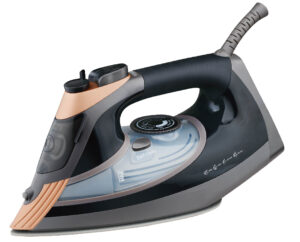
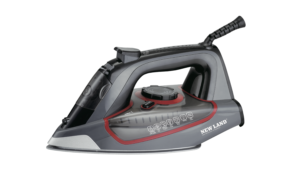
Iron or steamer?
| Task | Often better tool | Reason |
|---|---|---|
| Surface wrinkles on jacket | Steamer | Less pressure and contact |
| Precise collar or cuff | Steam iron | More control |
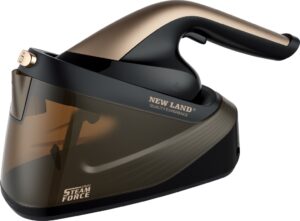
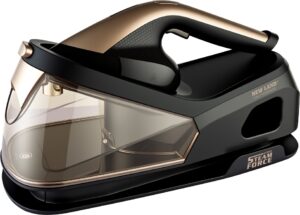
| Installed curtain | Upright steamer | Easier vertical work |
| Delicate fabric | Depends on care label | Material limits decide |
| Sharp formal crease | Steam iron | More precise pressing |
Steamer-head distance
There is no universal distance. Some heads are designed for contact and others are not. Follow both the appliance manual and garment care instructions.
Safe garment tension
Apply only gentle tension from the edge and keep the free hand away from the steam path. Never hold the fabric with a hand directly behind the steam head.
Professional sequence for a jacket or coat
- Test a hidden area.
- Release general wrinkles with gentle steam.
- Work the back.
- Work front panels without crushing interfacing.
- Handle sleeves.
- Finish lapels and edges carefully.
- Inspect pockets, prints, and trims.
- Hang until completely cool and dry.
Professional sequence for curtains
- Check label and fiber content.
- Test a concealed corner.
- Begin at the top.
- Work down in vertical strips.
- Use repeated separate passes on stubborn areas.
- Leave the curtain hanging freely until dry.
Why garments should cool while hanging
Warm, damp fibers remain shapeable. Folding or wearing immediately can create new wrinkles and distort a tailored garment’s form.
If shine appears
Stop applying heat and pressure. Once cool, reduce temperature and pressure for future work and use a pressing cloth.
If the steamer spits water
Resolve the appliance problem before approaching delicate fabric. Incomplete heat-up, hose condensate, or scale can produce hot droplets and water marks.
If the fabric is unknown
Start low, test a concealed area, and use a pressing cloth. For valuable or highly structured garments, professional garment care is the safer option.
Common mistakes
- Selecting heat by garment type instead of fiber content.
- Heavy pressing on jacket shoulders and lapels.
- Directly ironing dark face fabric without protection.
- Steaming curtains without checking nearby electrical equipment.
- Putting a hand behind fabric while steaming.
- Direct heat on prints, sequins, or stones.
- High heat on polyester and stretch fabrics.
- Dragging the soleplate across zippers or metal.
- Folding before cooling.
- Skipping the hidden-area test.
When is professional care preferable?
Professional cleaning or pressing is safer for valuable structured jackets, dry-clean-only garments, sensitive velvet, complex trims, unknown fabrics, or garments that have previously reacted badly to heat.
Summary
Successful care of jackets, manteaus, curtains, and delicate fabrics starts with the material. Care-label compliance, conservative temperature, controlled steam, pressing cloths, shape preservation, and hidden-area testing are the core principles.
Editorial safety note
This article was reviewed to separate user-safe checks from faults that require technical inspection, while preserving model-specific manual guidance as the final authority.
Common mistakes
Change only one variable at a time while diagnosing.
- Do not select temperature by garment name instead of fiber content.
- Do not heavily press jacket shoulders or lapels.
- Do not directly iron dark face fabric without protection.
- Do not direct steam toward curtain motors or outlets.
- Do not put a hand behind fabric while steaming.
- Do not directly iron prints or trims.
- Do not use high heat on polyester or stretch fabrics.
- Do not fold garments before cooling.
Frequently asked questions
Is a steamer or iron better for a jacket?
A steamer is useful for surface wrinkles with less pressure; an iron gives more control for collars and details.
How can I prevent shine on a dark coat?
Work from the reverse side, reduce heat and pressure, and use a pressing cloth.
Can curtains be steamed while installed?
Yes when the care label permits and surrounding electrical equipment is safe.
What temperature should I use for delicate fabric?
There is no universal number; follow the care label and actual fiber content.
Why can a jacket lose shape after ironing?
Excess pressure on interfacing, lapels, and shoulders can flatten its structure.
When is professional care safer?
For valuable tailored garments, dry-clean-only items, sensitive velvet, complex trims, or unknown fabrics.