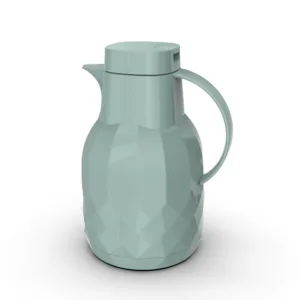
How to Wash Glass-Lined and Stainless-Steel Flasks Without Damage
Learn a safe routine for washing glass-lined and stainless-steel flasks, including mild detergent, soft brushes, lid and gasket care, rinsing, drying, and thermal-shock precautions.

For routine cleaning, use warm water, a small amount of mild detergent, and a soft brush. Clean the lid and gasket separately, rinse several times, and leave everything open until fully dry. Protect glass-lined flasks from impact and sudden temperature changes, and avoid abrasive tools or corrosive chemicals on stainless-steel interiors.
Before you start
How to Wash Glass-Lined and Stainless-Steel Flasks Without Damage
Proper flask cleaning should remove beverage residue without damaging the inner vessel, insulation, lid, gasket, or exterior finish. For most routine use, warm water, a small amount of mild detergent, a soft brush, thorough rinsing, and complete drying are enough. The key difference is that glass-lined flasks need extra protection from impact and sudden temperature change, while stainless-steel flasks should be protected from scratching, corrosive chemicals, and damage to seals or finishes.
Quick answer: Empty leftover drink promptly, wash with warm water and mild detergent, use a soft brush inside, clean the lid and gasket separately, rinse thoroughly, and let all parts dry completely. Protect glass-lined flasks from impact and thermal shock. Avoid steel wool, abrasive powders, and corrosive chemicals on stainless flasks. Use a dishwasher only when the manufacturer explicitly approves it for that model.
Glass-lined versus stainless-steel flask cleaning
| Issue | Glass-lined flask | Stainless-steel flask |
|---|---|---|
| Main sensitivity | Impact and thermal shock | Scratching, corrosive chemicals, surface damage |
| Best tool | Very soft non-metal brush | Soft non-abrasive brush |
| Sudden temperature change | Requires extra caution | Less fragile, but moderation is still better |
| Abrasive cleaners | Not recommended | Not recommended; may scratch |
| Dishwasher | Only if explicitly approved | Only if explicitly approved |
1. Empty the flask soon after use
Leaving tea, coffee, infusions, or sweet drinks for long periods makes cleaning harder and increases the chance of odor and staining. Empty leftovers when serving is finished.
2. Reduce extreme temperature difference before washing
If the flask is extremely hot or cold, especially a glass-lined model, do not immediately expose it to water at the opposite extreme. Let the temperature difference reduce first.
3. Start with warm water
Warm water is usually enough for routine cleaning. Extremely hot water is unnecessary for every flask and may increase thermal-shock risk with glass liners.
4. Use only a small amount of mild detergent
Too much detergent makes rinsing harder and can leave taste or fragrance behind. A small amount is usually sufficient for normal beverage residue.
5. A soft brush is better than an abrasive pad
A soft bottle brush reaches the bottom and sidewalls effectively. Steel wool, metal brushes, and highly abrasive pads can scratch stainless surfaces or damage glass liners.
6. Use gentle pressure with glass-lined flasks
Do not push aggressively against the sidewall or bottom. The glass insert is protected by the outer body, but it can still be damaged by impact.
7. Stainless steel should not be scrubbed with metal tools either
Stainless steel is durable but not scratch-proof. Deep scratches can damage appearance and create places where residue collects.
8. Clean the lid separately
Lids contain threads, grooves, sealing areas, and drink pathways that often need more attention than the main vessel. Disassemble only the parts that the manual allows you to remove.
9. Remove the gasket carefully
If the gasket is removable, note its orientation before taking it out. Wash it with warm water and mild detergent and reinstall only after it is fully dry.
10. Incorrect gasket installation can cause leakage
A twisted, reversed, or incompletely seated gasket can prevent proper sealing. Check that it sits evenly after cleaning.
11. Use a small soft brush for lid grooves
Tea and coffee residue can remain in narrow channels. Use a soft brush for accessible areas and avoid sharp tools that could damage the lid mechanism or sealing surfaces.
12. Pump flasks need attention to the outlet path
In pump models, the internal tube and beverage path should be cleaned according to the product instructions. Do not leave water or detergent trapped in parts that are not designed to be immersed.
13. Do not immerse the entire exterior unless the manufacturer allows it
Some flasks include pump mechanisms, base components, or lid structures that are not suitable for soaking. A conservative method is to wipe the exterior with a damp cloth unless the manual states otherwise.
14. Protect painted or printed finishes
Decorative coatings and printed surfaces can be damaged by abrasive cleaners or solvents. A soft cloth and mild detergent are safer for the exterior.
15. Avoid strong bleach unless specifically approved
Harsh chemicals may damage gaskets, plastics, coatings, or metal finishes and are unnecessary for routine cleaning.
16. Never mix cleaning chemicals
Combining household cleaners can be dangerous and does not guarantee better results. Use one mild, compatible method at a time.
17. If the only problem is tea or coffee odor
Do not automatically scrub harder. First inspect the lid, gasket, and drying routine. Odor removal requires a slightly different approach from normal washing.
18. If old stains are present
Old tea and coffee stains are different from routine soil. Stain removal should use a gentle method compatible with the specific inner material.
19. Do not knock a glass-lined flask against a metal sink
Handle the flask gently during washing. A hard impact against a sink or faucet can transmit shock to the inner glass vessel.
20. A softer sink surface can reduce impact risk
If you wash a glass-lined flask in a hard sink, a soft mat or secure hand position can reduce the chance of accidental impact.
21. Do not rinse a very hot glass liner with cold water
This is particularly important with glass-lined flasks. Rapid hot-to-cold or cold-to-hot changes can create thermal stress.
22. Let a hot stainless flask cool reasonably too
Steel does not shatter from thermal shock like glass, but extreme temperature changes can still stress lids, gaskets, or decorative coatings.
23. Can a flask go in the dishwasher?
Only if the manufacturer explicitly approves dishwasher use for that exact model. Dishwasher heat, strong detergent, and water pressure can damage insulation, coatings, gaskets, or lid mechanisms on some flasks.
24. Different parts may have different cleaning limits
Even if the main vessel can be washed with water, a pump mechanism or certain lid components may require hand cleaning. Follow the instructions for each part.
25. Rinse thoroughly
After washing, rinse several times with clean water until detergent foam and fragrance are gone. Pay attention to lid channels and gasket areas.
26. Drain excess water
After rinsing, empty as much water as possible. If the design allows, place the flask safely upside down for a short time to drain.
27. Complete drying helps prevent odor
A clean flask can still develop stale odor if it is stored damp and closed. Dry the vessel, lid, and gasket separately in normal airflow.
28. Avoid high heat for drying
Hot hair dryers, heaters, or direct flame can damage gaskets, plastics, and surface coatings. Natural drying is safer.
29. Avoid pushing linty towels inside
Towels can leave fibers or place pressure on the inner surface. After draining, open-air drying is usually preferable.
30. Do not close the lid until everything is dry
Closing too early traps moisture and is a common cause of stale odor after washing.
31. Check the gasket before the next use
Confirm that the gasket is seated correctly, the lid closes normally, and no removable part has been left out.
32. Stop using a glass-lined flask if you suspect breakage
If you hear loose broken pieces, see cracking, or suspect internal glass damage after an impact, do not use the flask for hot drinks.
33. A severe dent in a stainless flask deserves attention
A cosmetic dent does not always mean insulation failure, but if thermal performance also declines or the outer body becomes unusually warm, the insulation should be assessed.
34. A simple daily washing routine
| Step | Action |
|---|---|
| 1 | Empty leftover drink |
| 2 | Reduce any extreme temperature difference |
| 3 | Wash with warm water and mild detergent |
| 4 | Clean the inner vessel with a soft brush |
| 5 | Clean the lid and gasket separately |
| 6 | Rinse several times |
| 7 | Dry the vessel and lid fully while open |
35. When routine washing is not enough
If there is strong odor, old staining, visible mold, gasket damage, or a lid malfunction, identify the specific problem first. Randomly increasing cleaning strength can create additional damage.
Common mistakes
- Rinsing a very hot glass-lined flask suddenly with cold water
- Using steel wool or a metal brush
- Using too much detergent
- Ignoring the lid and gasket
- Mixing cleaning chemicals
- Putting the flask in a dishwasher without checking the manual
- Closing the lid before complete drying
- Using intense heat to dry the flask
- Knocking a glass-lined flask against the sink or faucet
- Reinstalling the gasket incorrectly
Conclusion
Safe flask cleaning depends more on gentle, consistent care than on strong chemicals. Warm water, mild detergent, a soft brush, careful lid and gasket cleaning, thorough rinsing, and open-air drying are enough for most daily use. Protect glass-lined flasks from impact and thermal shock, and protect stainless-steel flasks from abrasive tools and corrosive chemicals. When a cleaning method is uncertain, the instructions for the specific model are the final reference.
Common mistakes
Change only one variable at a time while diagnosing.
- Do not rinse a very hot glass-lined flask suddenly with cold water.
- Do not use steel wool or metal brushes.
- Do not use excessive detergent.
- Do not ignore the lid and gasket.
- Do not mix cleaning chemicals.
- Do not use a dishwasher without checking the manual.
- Do not close the lid before complete drying.
- Do not use intense heat for drying.
- Do not knock a glass-lined flask against the sink or faucet.
- Do not reinstall the gasket incorrectly.
Frequently asked questions
What water temperature should I use for a glass-lined flask?
Warm water is suitable for routine cleaning, but avoid abrupt extreme temperature changes that can create thermal shock.
Can I use steel wool inside a stainless-steel flask?
No. Metal and abrasive tools can scratch the surface; use a soft brush instead.
Can a flask go in the dishwasher?
Only when the manufacturer explicitly approves dishwasher use for that model.
How should I clean the lid gasket?
If removable, note its orientation, wash with warm water and mild detergent, dry fully, and reinstall correctly.
Why does a flask smell after washing?
It is often stored before the vessel, lid, or gasket is completely dry.
Can I use a hot hair dryer to dry it?
It is better not to; high heat can damage gaskets, plastic parts, and exterior finishes.