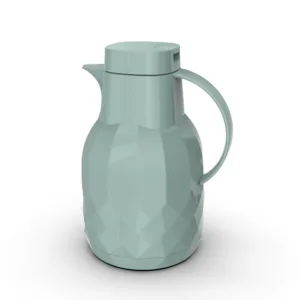
How to Remove Tea and Coffee Odor from a Flask
Persistent tea or coffee odor often comes from the lid, gasket, grooves, and trapped moisture rather than the vessel alone. Learn a safe cleaning and drying routine.

Wash the flask with warm water and mild detergent, clean the lid and gasket separately, rinse several times, and let all parts dry completely before closing. Persistent odor often comes from the lid and gasket. If odor remains, use only a mild cleaning method that is approved for the flask material, and never mix household cleaners.
Before you start
How to Remove Tea and Coffee Odor from a Flask
Lingering tea, coffee, or infusion odor usually develops when small amounts of drink remain around the lid, gasket, threads, or inner surface and the flask is closed before it is completely dry. Start with warm water and a mild dishwashing liquid, clean the lid and gasket separately, rinse thoroughly, and let the flask dry fully with the opening exposed to air. If odor remains, use only a secondary cleaning method that is compatible with the flask material and the manufacturer’s instructions.
Quick answer: Wash the flask with warm water and a small amount of mild detergent, clean the lid and gasket separately, rinse several times, and let all parts dry completely before closing. Persistent odor often comes from the lid and gasket rather than the main vessel. If odor remains after thorough cleaning, use only a model-approved mild odor-removal method and never mix household cleaners.
Where does flask odor usually come from?
| Likely source | Typical sign | What to do |
|---|---|---|
| Inner vessel | Tea or coffee smell remains after repeated use | Wash thoroughly and rinse several times |
| Lid gasket | Odor remains even when the vessel seems clean | Clean the gasket separately and dry fully |
| Lid threads and grooves | Residue or moisture is visible in recesses | Clean with warm water and a soft brush |
| Flask stored damp and closed | Stale or musty odor develops | Store open until fully dry |
| Old beverage stains | Brown discoloration appears with odor | Use deeper cleaning compatible with the material |
1. Empty the flask completely
Do not leave leftover tea, coffee, sugar, milk, or infusion particles inside. The longer residues remain, the more likely they are to create persistent odor and staining.
2. Start with warm water and mild detergent
For routine cleaning, warm water and a small amount of mild dishwashing liquid are usually appropriate. Use a soft bottle brush to reach the inner walls and bottom. Avoid metal or highly abrasive brushes.
3. Wash the lid separately
Lids contain threads, grooves, and small cavities where drink residue can remain. Cleaning only the vessel may leave the main source of odor untouched.
4. Do not forget the gasket
Silicone or rubber gaskets can retain odor more readily than glass or stainless surfaces. If the design allows removal, take the gasket out carefully, wash it with warm water and mild detergent, and reinstall only after it is fully dry.
5. Note the gasket orientation before removal
An incorrectly installed gasket can cause leakage and reduced thermal performance. Observe its direction and seating position before removal or follow the manual.
6. Use a soft brush for narrow grooves
Clean lid threads and accessible recesses with a small soft brush. Avoid sharp or metal tools that could damage sealing surfaces.
7. Rinse several times
Detergent residue can create its own unwanted smell or taste. Rinse the vessel, lid, and gasket thoroughly until no foam or detergent scent remains.
8. Complete drying is essential
A clean but damp flask can develop stale odor if closed immediately. Leave the flask open in normal airflow until the inner vessel and all lid components are fully dry.
9. Dry the lid separately
Do not close the lid on the flask while moisture remains in the lid grooves or gasket area. Allow each part to dry on its own.
10. Coffee odor often lingers longer
Natural coffee oils can cling to surfaces, especially lid and gasket components. A flask used frequently for coffee may need more careful cleaning of those parts.
11. Strong tea and infusions can also leave aroma
Tea tannins and aromatic compounds can remain on inner surfaces and seals. Washing soon after use helps prevent them from becoming persistent.
12. What if regular washing is not enough?
If the manual permits it, a mild secondary odor-removal method may be used. For example, a dilute baking-soda solution is suitable for some flask materials. Always rinse thoroughly afterward and respect the specific limits of glass-lined, stainless, or coated interiors.
13. Never mix household cleaners
Do not combine multiple cleaning chemicals in an attempt to remove odor faster. Mixing cleaners can be unsafe and may damage the flask or gasket. Use one mild approved method at a time.
14. Avoid strong bleach unless specifically approved
Harsh chemicals can damage metal, coatings, plastic components, or seals and may leave their own odor. If the manufacturer provides a sanitation method, follow that method first.
15. Very hot water is not suitable for every flask
Some flasks are designed for hot beverages, but thermal shock and material limits still matter. This is especially important for glass-lined vessels.
16. An abrasive brush can create future odor traps
Fine scratches can collect residue over time. A soft non-scratching brush is the better choice for routine care.
17. Milk-based drinks require faster cleaning
Milk residue develops odor more quickly than plain tea or coffee. Clean the flask promptly after milk-based drinks and do not leave dairy beverages in the flask for long periods without safe temperature control.
18. If the odor is only in the lid
Smell the lid separately from the vessel. If the main body is clean but the lid still smells strongly of coffee or tea, repeated cleaning of the gasket and grooves may be more effective than continuing to scrub the vessel.
19. If the gasket holds the odor
If the gasket is intact, repeat proper cleaning and drying. If it is cracked, deformed, hardened, leaking, or still has a very strong odor after repeated cleaning, replacement with a compatible gasket may be reasonable.
20. Stale beverage odor is different from a burnt smell
Tea, coffee, and dampness odors are usually cleaning issues. A burnt, overheated-plastic, or otherwise abnormal smell may indicate another problem and should not simply be treated as a cleaning issue.
21. Do not store the flask tightly closed while damp
For longer storage, keep the lid loose or off after everything is dry unless the manufacturer recommends otherwise. Air circulation helps prevent stale odor.
22. Switching between several drinks can mix aromas
If the same flask is used for coffee, tea, infusions, and plain water, residual aromas can transfer between uses. A thorough wash between strongly flavored drinks helps maintain better taste.
23. A dedicated coffee flask can be practical
In a high-use home or workplace, using one flask mainly for coffee and another for tea or water can reduce cross-transfer of aroma and flavor.
24. Pump flasks need attention to internal paths
In pump-style flasks, the inner tube, outlet path, lid, and pump area can retain beverage residue. Clean them according to the model instructions and do not leave liquid trapped in non-washable parts.
25. If odor returns a few hours after cleaning
This often means residue remains in the gasket, lid, or a hidden groove. Recheck removable parts and make sure they are completely dry before reassembly.
26. Sun drying is not necessary
Normal airflow is generally enough. Prolonged exposure to intense sunlight or high heat may not be suitable for some plastics and seals.
27. When should the gasket be replaced?
Consider replacement if the gasket is cracked, deformed, hardened, leaking, or still carries a strong odor after repeated correct cleaning. Use only a compatible replacement part.
28. A simple routine to prevent odor
| When | Recommended action |
|---|---|
| After every use | Empty, rinse, and wash promptly |
| After coffee or milk-based drinks | Clean the lid and gasket carefully |
| Before storage | Dry the vessel and lid completely |
| If odor persists | Use a deeper model-approved cleaning method |
| If the gasket is worn | Consider a compatible replacement |
Common mistakes
- Cleaning only the main vessel and ignoring the lid and gasket
- Closing the flask while it is still damp
- Using harsh chemicals without checking the manual
- Mixing multiple cleaners
- Using metal or abrasive brushes
- Leaving tea, coffee, or milk residue for long periods
- Reinstalling the gasket incorrectly
- Ignoring abnormal odors such as a burnt smell
Conclusion
Persistent flask odor often comes from residue in the lid, gasket, and trapped moisture rather than the vessel alone. Prompt washing, separate cleaning of lid components, thorough rinsing, and complete open-air drying are usually the most effective steps. If odor remains, use only a mild secondary method that is compatible with the flask material, and avoid harsh chemicals or mixing cleaners.
Common mistakes
Change only one variable at a time while diagnosing.
- Do not clean only the main vessel and ignore the lid and gasket.
- Do not store the flask damp and tightly closed.
- Do not mix household cleaners.
- Do not use harsh chemicals without checking the manual.
- Do not use metal or abrasive brushes.
- Do not leave tea, coffee, or milk residue for long periods.
- Do not reinstall the gasket incorrectly.
- Do not confuse a burnt smell with normal beverage odor.
Frequently asked questions
Why does my flask still smell like coffee after washing?
Odor often remains in the lid, gasket, or small grooves; clean these parts separately and dry them fully.
Can I use baking soda for flask odor?
It is suitable for some flask materials, but only when the product guidance allows it and thorough rinsing follows.
Is vinegar safe for every flask?
No. Inner materials and coatings vary, so check the model instructions first.
Why does a clean flask develop a stale smell?
If it is stored damp and closed, trapped moisture can create odor again.
Can a flask gasket absorb odor?
Yes. Silicone and rubber gaskets can retain tea and coffee aroma.
When should I replace the gasket?
Consider replacement if it is cracked, deformed, leaking, or still has a very strong odor after repeated correct cleaning.