
Why Is a Pump Flask Weak or Not Dispensing Water?
If a pump flask has weak flow, dispenses only air, or stops dispensing, check liquid level, the dip tube, outlet blockage, lid sealing, and the pump mechanism.
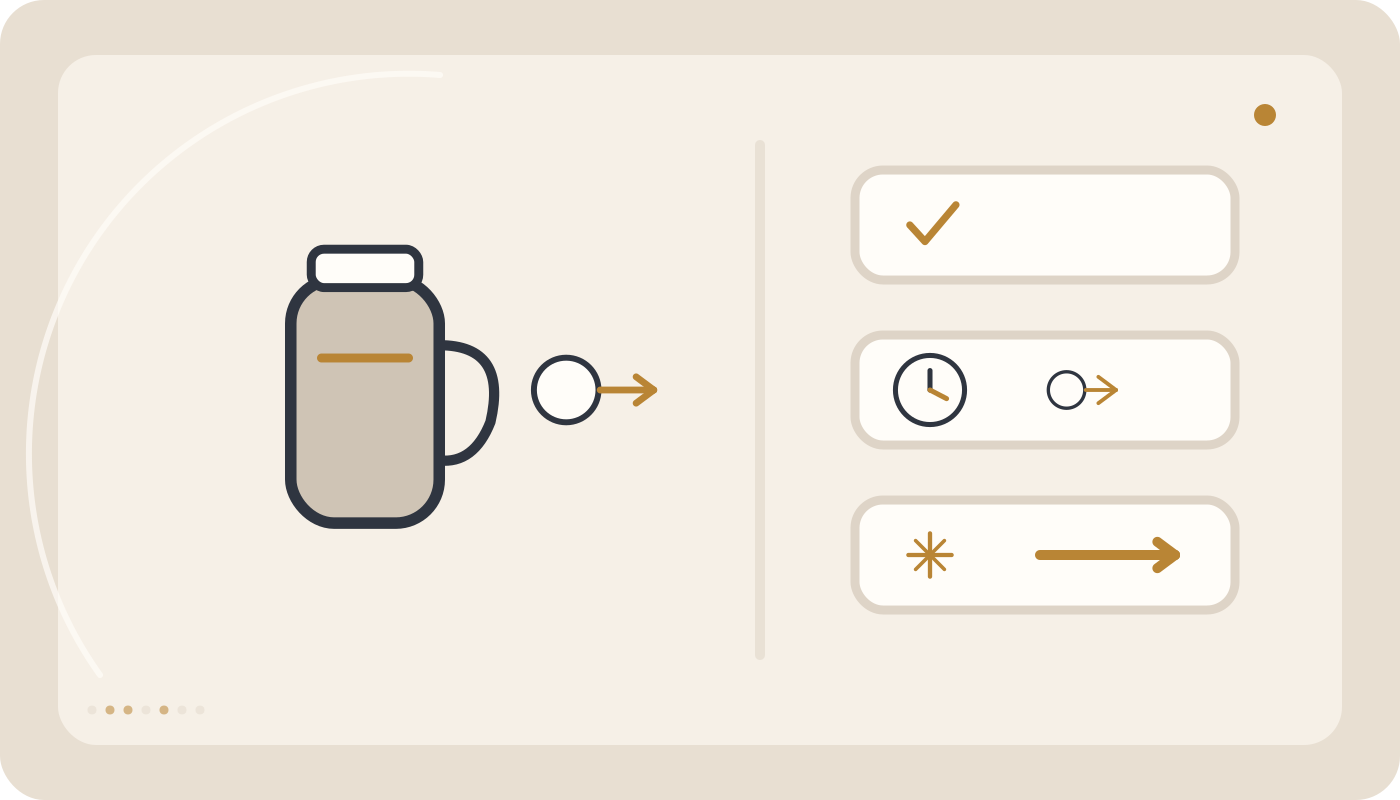
Check liquid level, full lid closure, the dip-tube connection, and outlet blockage first. If the pump moves only air, suspect a disconnected tube or air leak. If the pump becomes very stiff or unusually soft and correct cleaning and reassembly do not help, a mechanical fault is more likely and the internal mechanism should not be opened unless the manual permits it.
Where should you start?
Why Is a Pump Flask Weak or Not Dispensing Water?
When a pump flask dispenses very little liquid or nothing at all, the cause is often one of a few practical issues: low liquid level, a disconnected or incorrectly fitted dip tube, a blocked beverage path, an air leak around the lid or gasket, incomplete lid closure, or a fault inside the pump mechanism. Start with simple, safe checks before attempting any internal disassembly.
Quick answer: Check the liquid level, lid closure, dip-tube position, and cleanliness of the outlet path first. Tea, coffee, sugar, or milk residue can restrict the tube and reduce flow. If the pump moves air but no liquid rises, suspect an air leak, a disconnected tube, or sealing problem. Open spring-loaded or sealed pump mechanisms only if the product manual explicitly allows user disassembly.
Common pump-flask causes
| Symptom | Likely cause | First action |
|---|---|---|
| Pump works but flow is weak | Tube or outlet restriction | Clean the beverage path as instructed |
| Only air comes out | Disconnected tube or air leak | Check tube connection and lid seal |
| Pump feels unusually soft | Air leak or pump-seal problem | Inspect lid and gasket |
| Pump feels unusually stiff | Blockage or mechanical binding | Stop forcing it and clean the path |
| Works only when flask is nearly full | Tube is short, displaced, or damaged | Check tube length and position |
| Problem started after washing | Tube or gasket was reinstalled incorrectly | Check reassembly |
1. Make sure there is enough liquid
If the liquid level is below the end of the dip tube, the pump will pull air instead of beverage. Check fill level before assuming a mechanical failure.
2. The lid must close completely
A pump flask depends on air pressure to move liquid upward. If the lid is not fully closed or air escapes around the seal, the pump cannot build enough pressure.
3. Inspect the lid gasket
A dirty, twisted, cracked, or displaced gasket can create an air leak. If removable, clean it, dry it fully, and reinstall it correctly.
4. Check the internal dip tube
The tube running from the lid into the flask should be fully connected, free of kinks, and the correct length. If it has come loose, the pump may move only air.
5. The tube end must remain below the liquid level
If the tube has shifted upward or become too short, the flask may work only when nearly full. The tube should reach the intended lower part of the vessel according to the product design.
6. Tube blockage is common
Tea, coffee, milk, sugar, and infusion particles can leave residue inside the tube or outlet. Partial blockage usually produces weak or intermittent flow.
7. Check the outlet channel too
The tube may be clean while the spout or internal lid passage is restricted. Clean only with methods and tools approved for the model.
8. Do not use wire or sharp metal tools
Pushing wire, needles, or screwdrivers into the path can damage valves and sealing surfaces. Use a soft narrow brush or the recommended cleaning method instead.
9. If the pump moves only air
This usually means pressure is being created but liquid is not entering the tube. Check low liquid level, tube disconnection, tube leakage, and lid sealing.
10. If the pump feels very soft
A pump that moves with little resistance may not be holding pressure. Air leakage, worn internal seals, or a pump-mechanism problem may be involved.
11. If the pump feels very stiff
Unusual resistance can result from a blocked outlet, residue buildup, or mechanical binding. Do not apply excessive force, because parts may break.
12. Recheck assembly after washing
If the problem began immediately after cleaning, confirm that the dip tube, gasket, lid, and any removable components were reinstalled correctly.
13. Trapped water in the pump mechanism can cause problems
If part of the lid is not designed for immersion, water left inside may affect operation. Follow the cleaning limits for the specific lid design.
14. Sugary and milk-based drinks create more residue
Sweet tea, coffee with milk, and sugary drinks can leave sticky deposits that restrict narrow pump passages. Clean the pump path promptly after such drinks.
15. Drinks with particles may not suit every pump flask
Loose tea particles, herbs, or thick beverages can block narrow passages. Use only beverages that are appropriate for the product design.
16. Very cold conditions can change seal behavior
Some sealing materials become firmer in low temperatures. If the problem appears only under unusual temperature conditions, retest after the flask returns to normal use conditions.
17. Very rapid pumping does not always improve flow
The pump usually needs a brief moment to return to its starting position. Incomplete rapid presses may deliver less liquid.
18. Use a full, normal pump stroke
If the design calls for it, one smooth complete press usually performs better than several short partial presses. Do not force beyond normal travel.
19. Unusual sounds matter
Clicking, binding, a broken sound, or failure to return to the starting position can indicate mechanical damage. Stop forcing the pump.
20. If performance declined after an impact
A dropped lid or impact to the pump can dislodge the tube, spring, or internal seal. If the problem started after impact, closer inspection is warranted.
21. Can you open the spring mechanism?
Only if the model instructions allow it. Some pump assemblies contain springs, valves, and small components that are easy to damage or reassemble incorrectly.
22. What does an internal valve do?
Valves help direct air pressure in the correct direction. A stuck or leaking valve can weaken the pump, but many products do not provide user access to these parts.
23. Lid leakage and weak pumping can share the same cause
If the lid leaks and the pump is also weak, a gasket or lid-sealing problem becomes more likely.
24. If flow starts and stops
Intermittent flow is often linked to partial blockage, air entering the tube, or an imperfect tube connection.
25. If only the first press works well
The pump may not be returning fully or the air path may not be resetting properly. Allow a brief pause and observe the pump return action.
26. If liquid escapes around the pump button
This is not normal. The outlet path or internal sealing may be faulty. Stop use, especially with hot liquid, to reduce burn risk.
27. Safety with hot beverages
Do not troubleshoot with extremely hot liquid. First test with lukewarm water or another safe temperature allowed by the model.
28. Test on a stable surface
Place the flask on a flat, stable surface and keep hands and face away from the outlet. If a blockage suddenly clears, liquid may exit faster than expected.
29. A step-by-step troubleshooting sequence
- Fill the flask with enough lukewarm water.
- Close the lid fully.
- Confirm the dip tube is connected and below the liquid level.
- Press the pump once with a smooth full stroke.
- If flow is weak, clean the tube and outlet.
- If only air comes out, inspect sealing and tube connection.
- If the pump is stiff, stuck, or noisy, stop forcing it.
30. When cleaning can solve the problem
If beverage residue is restricting the path, proper cleaning of the tube and outlet can restore flow. Cleaning will not repair a broken spring, valve, or internal seal.
31. When should the gasket be replaced?
If the gasket is cracked, hardened, deformed, or leaking air, a compatible replacement may be necessary.
32. When should you seek service?
If the pump still does not work after correct cleaning and assembly, the mechanism is stuck, a spring appears damaged, liquid exits from the wrong area, or the lid is cracked, service inspection is the safer next step.
Quick diagnosis table
| Problem | Check first |
|---|---|
| No liquid dispenses | Liquid level, tube connection, lid seal |
| Weak flow | Tube and outlet blockage |
| Only air comes out | Dip tube and air leakage |
| Pump is very stiff | Restriction or mechanical binding |
| Pump is very soft | Air leakage or sealing weakness |
| Problem started after cleaning | Tube and gasket reassembly |
Common mistakes
- Testing with extremely hot water during troubleshooting
- Forcing a stuck pump
- Using wire or sharp metal tools in the outlet path
- Ignoring low liquid level
- Ignoring the dip-tube connection
- Reinstalling the gasket incorrectly
- Opening a spring-loaded mechanism without manual approval
- Using particle-heavy beverages in a flask not designed for them
- Continuing to use the flask when hot liquid leaks around the pump
Conclusion
Weak pump-flask performance usually starts with the liquid path, dip tube, or air sealing rather than complete pump failure. Check fill level, tube connection, lid closure, gasket condition, and blockage first. If correct cleaning and reassembly do not restore normal operation, and the pump remains stiff, unusually soft, ineffective, or leaking, a mechanical fault becomes more likely and service inspection is preferable to opening sensitive internal parts.
Common mistakes
Change only one variable at a time while diagnosing.
- Do not troubleshoot with extremely hot water.
- Do not force a stuck pump.
- Do not use wire or sharp metal tools in the outlet path.
- Do not ignore low liquid level.
- Do not ignore the dip-tube connection.
- Do not reinstall the gasket incorrectly.
- Do not open a spring-loaded mechanism without manual approval.
- Do not use particle-heavy drinks in a flask not designed for them.
- Do not continue use if hot liquid leaks around the pump.
Frequently asked questions
Why does my pump flask only blow air?
The liquid level may be too low, the dip tube may be disconnected, or air may be leaking around the lid or gasket.
Why has the pump become stiff?
A blocked path, residue, or mechanical binding can cause stiffness; do not force it.
Why did the pump stop working after cleaning?
The dip tube or gasket may have been reinstalled incorrectly, or water may remain in a non-immersible lid section.
Can I open the pump mechanism?
Only if the manufacturer allows it; some designs contain sensitive springs and valves.
Why does it work only when the flask is full?
The dip tube may be too short, displaced, or damaged and may draw air at lower liquid levels.
Does a weak pump always need replacement?
No. Check blockage, the tube, gasket, and sealing before assuming pump failure.
Related guides and products


Still having the problem?
If safe user-level checks do not solve the issue, do not open the appliance. Submit a service request for technical inspection.