What Is the Right Iron Temperature for Cotton, Linen, Wool, Polyester, and Delicate Fabrics?
A practical ironing-temperature guide for cotton, linen, wool, polyester, silk, and delicate fabrics, including care-label symbols, steam use, pressing cloths, and safe ironing order.
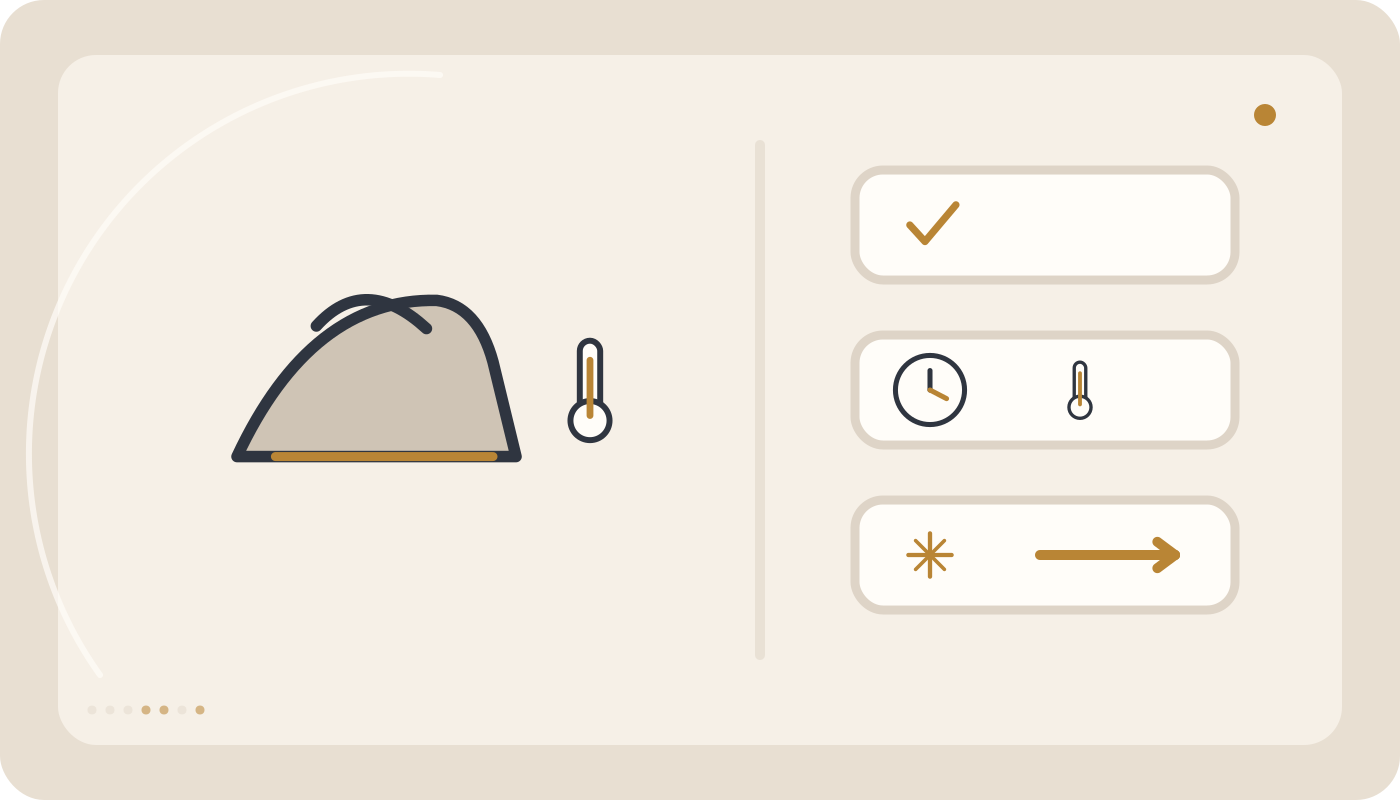
Always prioritize the garment care label. In general, synthetics and delicate fibers need low heat, wool moderate heat, cotton medium-to-high heat, and linen high heat. On blends, the most heat-sensitive fiber controls the setting.
Before you start
What Is the Right Iron Temperature for Cotton, Linen, Wool, Polyester, and Delicate Fabrics?
Correct temperature is the foundation of safe ironing. Too little heat can leave wrinkles unchanged, while excessive heat can scorch fibers, create shine, melt prints, shrink fabric, or permanently alter texture. No general chart replaces the garment care label, but a structured guide helps you find the correct range quickly.
Quick answer: Always prioritize the garment care label. In general, synthetics and delicate fibers need low heat, wool needs moderate heat with light pressure and a pressing cloth, cotton usually takes medium-to-high heat, and linen generally uses high heat. On blended fabrics, set temperature according to the most heat-sensitive fiber.
Quick temperature guide
| Fabric | General heat range | Steam | Main caution |
|---|---|---|---|
| Nylon / acetate / acrylic | Low | Low or none, as permitted | Avoid long direct contact |
| Polyester | Low to medium | Gentle if allowed | Avoid shine and surface melting |
| Silk | Low | Usually limited | Iron from reverse with a barrier |
| Wool | Medium | Gentle steam | Use pressing cloth and low pressure |
| Cotton | Medium to high | Usually suitable | Slight moisture can help |
| Linen | High | Suitable if permitted | Works best slightly damp |
1. Cotton
Cotton generally tolerates substantial heat and often benefits from medium-to-high temperature. Steam is effective on many cotton garments, especially for deep wrinkles.
2. Linen
Linen is relatively heat resistant but wrinkles deeply. High heat and steam can be effective when the garment label permits them.
3. Wool
Wool needs moderate heat and light pressure. Direct heavy contact can create shine and flatten the fabric surface.
4. Polyester
Polyester is more heat-sensitive than cotton. Low-to-medium temperature is safer because excess heat can make the surface glossy or even melt it.
5. Nylon
Nylon should be ironed at low heat, preferably from the reverse and with limited contact time.
6. Acrylic
Acrylic can be damaged by high temperature. Low heat and a pressing cloth are safer.
7. Acetate
Acetate is highly heat-sensitive. Use low temperature and iron from the reverse.
8. Silk
Silk is sensitive to both heat and moisture. Use low temperature, iron from the reverse, and consider a pressing cloth.
9. Viscose and rayon
These fibers can be sensitive to heat and moisture. Low-to-medium heat and reverse ironing are generally safer.
10. Spandex and elastane
Stretch fibers have limited heat tolerance. On blended garments, temperature should be based on the most sensitive component.
11. Cotton-polyester blends
Do not use full cotton heat simply because cotton is present. Polyester is the more heat-sensitive component and should guide the setting.
12. Wool-polyester blends
These blends often benefit from moderate or lower heat, light pressure, and a pressing cloth.
13. Denim
Heavy cotton denim can often handle medium-to-high heat, while stretch denim containing elastane requires more conservative settings.
14. Dark fabrics
Even when the fiber tolerates heat, direct ironing can create visible shine. Iron from the reverse or use a pressing cloth.
15. Suits and tailored garments
For tailored fabrics, pressure control is as important as temperature. Use gentle steam, a pressing cloth, and minimal direct compression.
16. Printed fabrics
Prints, logos, heat transfers, and vinyl areas may be less heat-resistant than the fabric itself. Avoid direct soleplate contact.
17. Delicate and embellished fabrics
Lace, sequins, glued decorations, foil prints, and delicate trims require extra caution. Indirect steaming or reverse ironing is often safer.
18. Why does the care label matter more than a generic chart?
A garment includes more than its fiber name. Dyes, coatings, prints, adhesives, linings, and finishing processes can change actual heat tolerance.
19. What does one dot on the iron symbol mean?
It generally indicates a low-temperature ironing range.
20. What do two dots mean?
They generally indicate a medium-temperature range.
21. What do three dots mean?
They generally indicate a high-temperature range, typically used for cotton and linen when permitted.
22. What does a crossed-out iron symbol mean?
The garment should not be ironed. Do not try to override this instruction by simply choosing a low setting.
23. Can steam be used at low temperature?
Some irons limit or disable steam at low temperatures to prevent water spitting. Follow the model’s steam-capable range.
24. Start with the lowest effective heat
For unknown or blended fabric, begin low and increase gradually only if necessary.
25. Why sort garments by temperature?
Starting with low-temperature fabrics and working upward reduces waiting time and lowers the risk of accidentally using a hot iron on a delicate garment.
26. Cooling takes time
Moving the dial from high to low does not cool the soleplate instantly. Wait before ironing a delicate fabric.
27. Steam helps wrinkles but does not replace correct heat
Steam can relax fibers, but excessive heat plus steam is not appropriate for a fabric that requires a low setting.
28. More pressure does not replace correct temperature
Excessive pressure can create shine on sensitive surfaces. Let appropriate heat and steam do the work.
29. When is a pressing cloth especially useful?
It is valuable on wool, dark clothing, tailored garments, silk, and surfaces prone to shine.
30. Test an inconspicuous area first
Begin on an inside seam or hidden section using lower heat. Increase gradually only if no shine, sticking, discoloration, or shrinkage appears.
Recommended ironing order
- Acetate, nylon, acrylic, and highly delicate fabrics
- Silk and viscose
- Polyester and blends
- Wool
- Cotton
- Linen
If the fabric starts to shine
Reduce both heat and pressure immediately. Continuing under the same conditions can worsen the change.
If the iron begins to stick
Lift the iron and inspect the temperature and soleplate. On synthetics, sticking may indicate the beginning of heat damage.
If the fabric smells scorched
Remove the iron immediately. A scorched smell indicates excessive temperature or contact time.
If a blended garment has no care label
Use a conservative low setting and test a hidden area. Do not default to Max when the fiber composition is uncertain.
Common mistakes
- Using one temperature for every garment.
- Starting directly at Max.
- Ignoring the care label.
- Ironing directly over prints and logos.
- Using heavy pressure on wool and dark fabrics.
- Moving immediately from high heat to delicate fabric without cooling time.
- Using Steam Boost to compensate for an incorrect temperature.
- Ironing unknown fabric without a hidden-area test.
A practical guide without relying on one fixed number
Because temperature control and calibration vary among irons, it is safer to use the garment care label + the dot symbols on the iron + a hidden-area test rather than memorizing a single absolute temperature for every appliance.
Summary
The basic rule is simple: more delicate fiber, lower heat; thicker and more heat-resistant fabric, higher heat. For blends, the most sensitive component controls the setting. The care label always takes priority over generic tables, and pressing cloths plus light pressure are especially useful for wool, dark, and tailored fabrics.
Editorial safety note
This article was reviewed to separate user-safe checks from faults that require technical inspection, while preserving model-specific manual guidance as the final authority.
Common mistakes
Change only one variable at a time while diagnosing.
- Do not use one temperature for all garments.
- Do not start directly at Max.
- Do not ignore the care label.
- Do not iron directly over prints or logos.
- Do not use heavy pressure on wool or dark fabrics.
- Do not move immediately from high heat to delicate fabric.
- Do not use Steam Boost as a substitute for correct temperature.
- Do not iron unknown fabric without testing.
Frequently asked questions
What heat is suitable for cotton?
Cotton generally tolerates medium-to-high heat, but the garment care label is the primary guide.
What temperature is suitable for linen?
Linen generally uses high heat, and slight moisture can improve wrinkle removal.
How should wool be ironed?
Use moderate heat, gentle steam, a pressing cloth, and low pressure.
Why does polyester become shiny?
Excess heat and direct contact can flatten or partially melt the fiber surface.
What should I do with a blended garment?
Set temperature according to the most heat-sensitive fiber in the blend.
What do three dots on the care label mean?
They generally indicate a higher ironing temperature range, subject to the garment and iron instructions.