
Why Is My Iron Not Heating or Why Is Its Temperature Unstable?
Troubleshoot an iron that stays cold or has unstable temperature, from the outlet, cord and Auto-Off to thermostat cycling, heating element, sensor, thermal fuse, and control electronics.
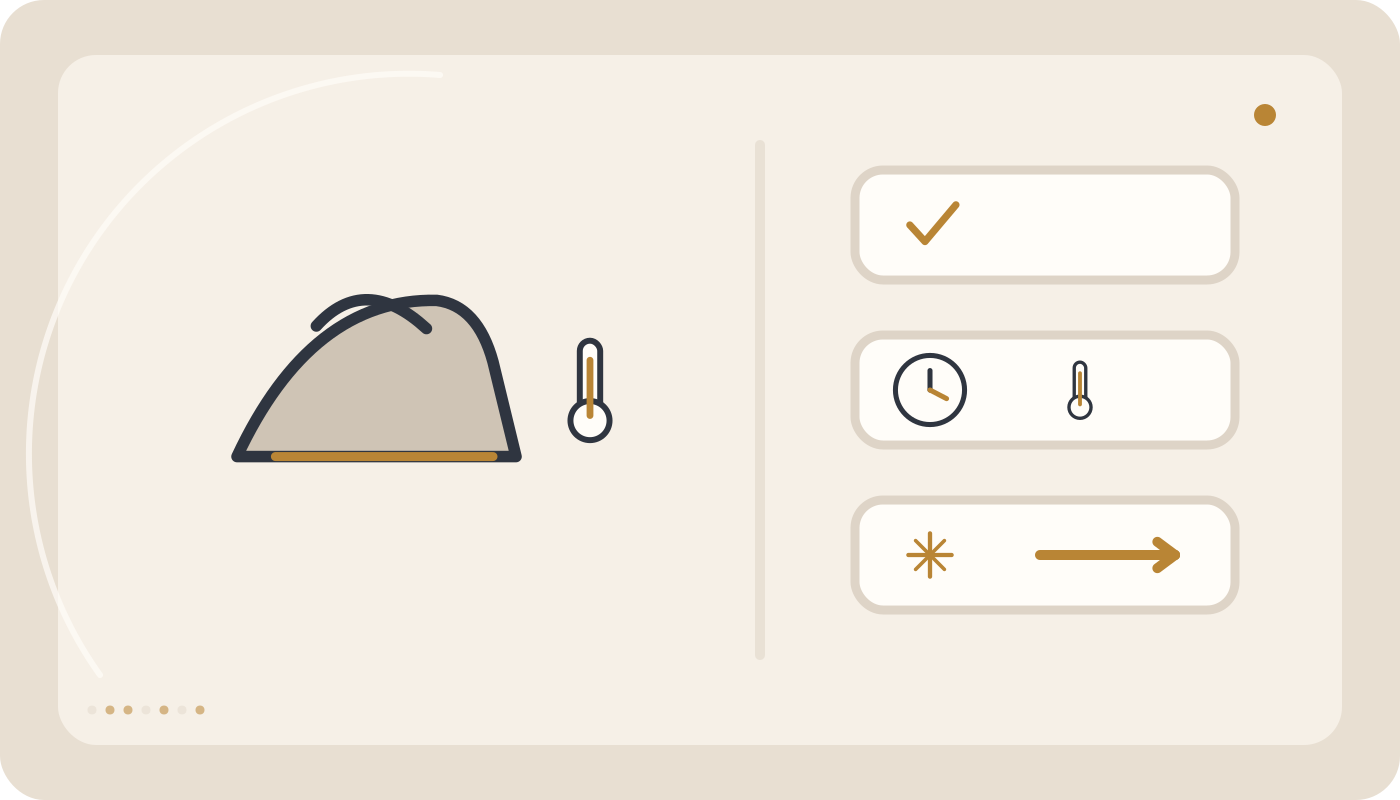
Check the outlet, cord, and temperature setting and allow full warm-up. Periodic Heating-light cycling is often normal thermostat operation; a cold soleplate, uncontrolled overheating, or cord-related cutouts require investigation.
Where should you start?
Why Is My Iron Not Heating or Why Is Its Temperature Unstable?
An iron that stays cold, heats very slowly, or swings noticeably in temperature can have anything from a simple setting issue to a fault involving the power supply, cord, thermostat, temperature sensor, heating element, or control electronics. One important distinction is that periodic thermostat cycling is normal on many irons.
Quick answer: Check the outlet, plug, cord, and temperature setting, then allow enough time for warm-up. A heating indicator that cycles on and off can be normal if the soleplate remains within its intended temperature range. Stop using the iron if it remains cold, overheats, cuts out when the cord moves, sparks, or produces a burning smell.
Identify the symptom first
| Symptom | Likely cause | First check |
|---|---|---|
| No light and no heat | Outlet, cord, plug, or input circuit | Power source and cord |
| Light is on but soleplate stays cold | Heating element or control fault | Stop prolonged testing and seek service |
| Heating light cycles on and off | Normal thermostat operation | Assess actual ironing performance |
| Heat comes and goes unpredictably | Cord, thermostat, or sensor | Observe interruption pattern |
| Iron overheats | Temperature-control fault | Stop use immediately |
1. The outlet has no power
Verify the outlet with a known working appliance before assuming the iron has failed.
2. The plug is not fully seated
A poor connection can cause intermittent power and unwanted heating at the plug or outlet.
3. The extension lead is unsuitable
Irons are high-power appliances. An undersized extension lead or power strip can cause voltage drop and overheating.
4. Temperature is set to minimum or off
Confirm that a mechanical dial has moved beyond Min/Off, or that the correct program is selected on a digital model.
5. The iron has not had enough warm-up time
Ready time varies by model. Follow the indicator behavior described in the manual.
6. Auto-Off has activated
Many irons stop heating after being stationary for a defined period. Movement or the model-specific restart action may reactivate heating.
7. Indicator cycling is not automatically a fault
A thermostat switches the heating element on and off to regulate temperature. The heating light may therefore cycle while the soleplate remains within its operating range.
8. Why is the soleplate not at one exact temperature?
Thermostatic control normally operates within a temperature band rather than holding one mathematically exact value.
9. The iron heats much more slowly than before
Supply voltage, heating-element performance, control faults, and in some designs heavy deposits can affect warm-up time.
10. The light is on but there is no useful heat
An indicator does not prove that the heating element itself is functioning. Persistent cold operation requires inspection.
11. Power cuts out when the cord moves
This can indicate conductor damage or a failing connection at the cord entry. Stop using the appliance.
12. The plug or cord becomes unusually hot
Significant heat at the plug, cord, or connection is not normal and requires disconnection.
13. The mechanical thermostat is worn or miscalibrated
A thermostat fault can cause underheating, excessive cycling, or overheating.
14. The temperature sensor is inaccurate
Electronic irons may use sensors and control circuitry. Incorrect sensor feedback can produce improper heating commands.
15. The heating element has failed
An open heating element or internal connection can leave the controls apparently active while the soleplate remains cold.
16. A thermal fuse has opened
Some irons use a thermal safety device to interrupt power under abnormal heat conditions. It should never be bypassed.
17. The control board or relay is faulty
Digital irons can use a relay or power-control circuit to switch the heater. This is a service-level repair.
18. Temperature rises above the selected setting
If low settings scorch fabric or the soleplate clearly overheats, stop using the iron because temperature control may have failed.
19. Temperature suddenly falls
Brief thermostat cycling is normal, but a long and obvious loss of heat can indicate a power, thermostat, or heater issue.
20. Repeated Steam Boost temporarily reduces temperature
Heavy steam production consumes thermal energy. Several rapid shots can require a recovery period.
21. Continuous maximum steam increases thermal load
If the symptom occurs only at maximum steam, allow recovery time before concluding that the heater has failed.
22. Can scale stop the iron heating?
Scale can affect steam and heat transfer, but it is not the first explanation for a completely cold soleplate. Electrical heating components deserve priority in that case.
23. Heating changed after the iron was dropped
Impact can damage internal connections, controls, sensors, or the soleplate assembly. Avoid prolonged trial use after a significant change in behavior.
24. The temperature dial feels loose
If the dial rotates without its normal resistance or no longer corresponds to temperature changes, its mechanism may be damaged.
25. The display does not match actual behavior
If Ready is shown while the soleplate is cold, or a low setting produces excessive heat, electronic control requires inspection.
26. Should you touch the soleplate to test heat?
No. A soleplate can cause severe burns within seconds. Use indicators and a safe test cloth instead.
27. Why does the iron make a clicking sound?
A light thermostat click can be normal. Arcing sounds, severe crackling, or clicking with burning odor are not.
28. Why does the heating light cycle frequently?
Cycle frequency depends on selected temperature, steam use, room conditions, and design. Stable ironing performance matters more than the light alone.
29. Can low building voltage affect heating?
Low voltage can reduce heater power and extend warm-up time. If several high-power appliances are affected, investigate the supply.
30. Can a power protector or strip cause the issue?
Any intermediary device must be rated for the iron’s load. Repeated tripping or heating should not be ignored.
Step-by-step test without opening the iron
- Inspect the cord and plug for visible damage.
- Use a known good, appropriately rated outlet.
- Avoid unnecessary extension leads or power strips.
- Select a medium temperature suitable for a test cloth.
- Allow full warm-up time.
- Observe the heating indicator; periodic cycling may be normal.
- Evaluate heat using a test cloth, never by touching the soleplate.
- If moving the cord interrupts power, stop immediately.
- If the iron remains cold or overheats, arrange service.
If the iron does not power on at all
Check the outlet, plug, and cord. If the supply is sound and there is still no sign of operation, home disassembly is not recommended.
If it powers on but does not heat
The heater, thermal fuse, thermostat, relay, or an internal connection may require technical diagnosis.
If temperature keeps rising and falling
Separate normal thermostat cycling from real instability. Large swings that affect the fabric suggest a control problem.
If the iron overheats
Switch it off and unplug it. A temperature-control failure can damage garments and create a safety hazard.
If temperature falls only during steaming
Some drop and recovery are normal. Reduce steam and allow time between boost shots. Severe persistent loss is not normal.
What should you avoid?
- Do not touch the soleplate to test temperature.
- Do not use an iron with a damaged cord.
- Do not bypass a thermal fuse.
- Do not compensate for poor heating by always selecting Max.
- Do not leave the iron on fabric while waiting to see if it heats.
- Do not continue using a hot plug or outlet.
- Do not open the appliance while connected to power.
- Do not dismiss sparks or burning odor as normal thermostat cycling.
When should use stop immediately?
Disconnect the iron if there is burning odor, smoke, sparking, abnormal heating of the cord or plug, power interruption when the cord moves, uncontrolled soleplate overheating, or water entering electrical areas.
When is technical service needed?
If the outlet and settings are correct but the iron will not heat, or temperature is clearly uncontrolled, the heating element, thermostat, thermal fuse, sensor, cord, and control board may require technical testing.
Summary
A heating indicator that switches on and off does not by itself indicate failure; on many irons it reflects normal thermostat cycling. The real concern is a soleplate that remains cold, overheats, or shows large unstable temperature swings. Begin with power and settings, and stop home testing when electrical or uncontrolled-heating symptoms appear.
Editorial safety note
This article was reviewed to separate user-safe checks from faults that require technical inspection, while preserving model-specific manual guidance as the final authority.
Common mistakes
Change only one variable at a time while diagnosing.
- Do not touch the soleplate to test temperature.
- Do not use an iron with a damaged cord.
- Do not bypass a thermal fuse.
- Do not always select Max to compensate for weak heat.
- Do not leave the iron stationary on fabric while testing.
- Do not continue with a hot plug or outlet.
- Do not open an appliance connected to power.
- Do not treat sparks or burning odor as normal cycling.
Frequently asked questions
Is it normal for the iron's heating light to switch on and off?
Yes. Many thermostatic irons cycle the heater to maintain a temperature range.
Why is the light on but the iron remains cold?
The heating element, thermal fuse, or control circuit may have failed.
Why does temperature fall after Steam Boost?
Heavy steam production consumes heat and may require a recovery period.
Why does the iron cut out when I move the cord?
The cord or an internal connection may be damaged and use should stop.
Can scale make an iron completely cold?
Scale mainly affects steam and heat transfer; a completely cold iron should first be checked for electrical heating faults.
When is service required?
When correct power and settings are present but the iron does not heat, overheats, or has genuinely unstable temperature.
Related guides and products
Still having the problem?
If safe user-level checks do not solve the issue, do not open the appliance. Submit a service request for technical inspection.