Smooth Cake Batter with a Stand Mixer: Proper Order and Speed
For smooth cake batter, cream butter and sugar at medium speed, add eggs gradually, then keep the mixer slow after flour is added.
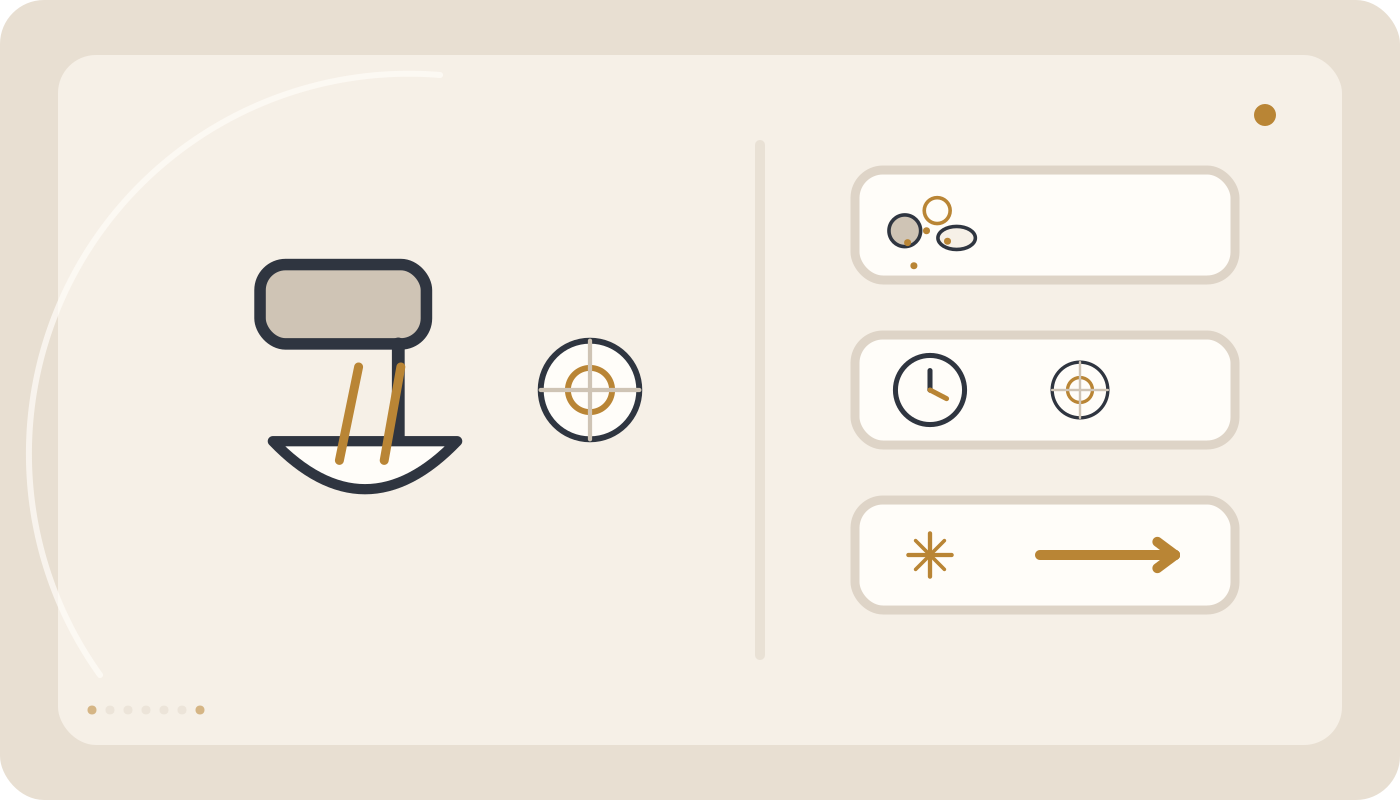
Beat softened butter and sugar first at low and then medium speed until lighter and fluffy. Add eggs one at a time. Combine dry ingredients separately, then add flour and milk in stages at low speed. Stop as soon as flour streaks disappear and finish gently with a spatula.
Before you start
Smooth Cake Batter with a Stand Mixer: Proper Order and Speed
Good cake batter should be smooth, light, and free of dry flour pockets, but excessive mixing can make the final cake dense and tough. With a stand mixer, ingredient order and speed matter more than simply extending mixing time. For many basic butter cakes, the sequence is butter and sugar, then eggs, followed by alternating dry and liquid ingredients.
Quick answer: Beat softened butter and sugar at medium speed until lighter and fluffy. Add eggs one at a time and mix only until each is absorbed. Combine dry ingredients separately. Add flour and liquid in stages at low speed. Stop as soon as visible flour streaks disappear, then finish with a spatula if needed.
Basic ingredients for a simple cake
| Ingredient | Approximate amount | Purpose |
|---|---|---|
| Flour | 2 cups | Structure |
| Sugar | 1 cup | Sweetness and tenderness |
| Softened butter | Half a cup | Fat and texture |
| Eggs | 3 | Structure and moisture |
| Milk | Three-quarter cup | Moisture control |
| Baking powder | 2 teaspoons | Leavening |
| Vanilla | Small amount | Flavor |
1. Prepare all ingredients before mixing
Stopping for measurements in the middle of mixing creates unnecessary delays and temperature changes.
2. Butter should be soft, not melted
Properly softened butter gives slightly under finger pressure while still holding its shape.
3. Melted butter behaves differently
If the recipe calls for softened butter, using liquid butter can change the structure.
4. Very cold eggs can split the mixture
When the recipe permits it, allow eggs to lose some refrigerator chill before mixing.
5. Combine dry ingredients separately
Mix flour, baking powder, and salt if used before they enter the mixer bowl.
6. Break up dry lumps
Sift flour or cocoa when needed.
7. Use the flat beater for most butter cakes
It is generally the best attachment for creaming butter and sugar and making standard cake batter.
8. A dough hook is not for cake batter
It is designed for heavier bread and pizza doughs.
9. A wire whisk is only needed for selected stages
It is useful for whipped egg whites or cream but not required for standard batter.
10. Do not overload the bowl
The batter needs room for even movement.
11. Add butter and sugar first
This creates the main aeration stage in many butter cakes.
12. Begin at low speed
A gentle start prevents sugar from scattering.
13. Move to medium speed
Once combined, medium speed helps lighten the mixture.
14. The butter-sugar mixture should become lighter
It should look softer, paler, and more aerated than at the start.
15. Do not rely on the clock alone
Butter temperature, sugar type, and batch size change the real timing.
16. Scrape the bowl midway
Stop the mixer and bring material from the walls and bottom toward the center.
17. Never use a spatula against a moving attachment
Scraping must happen only after complete stop.
18. Add eggs one at a time
Adding all eggs at once can destabilize the mixture.
19. Mix each egg only until absorbed
Extended beating after every egg is unnecessary.
20. Add vanilla with or after the eggs
Only a small amount is needed.
21. If the mixture looks slightly split, do not immediately add excess flour
Temperature differences can create that appearance.
22. Add dry ingredients at low speed
High speed scatters flour and increases the risk of overmixing.
23. Add flour in stages
For this size batch, three flour additions give good control.
24. Alternate liquid between flour additions
A simple pattern is flour, some milk, flour, remaining milk, then flour.
25. Start and finish with flour
This sequence works well for many butter-cake recipes.
26. Do not increase speed after flour is added
Aggressive mixing develops more gluten and can make the cake tougher.
27. Stop once flour streaks disappear
A few tiny remaining streaks can be folded in with a spatula.
28. Finish gently by hand
Use a few bottom-to-top folds to make sure no dry pockets remain.
29. Check the bottom of the bowl
Butter or flour can sometimes remain unmixed underneath.
30. Final batter should be thick but pourable
It should fall from a spatula in a thick ribbon.
31. If batter is too stiff
Too much flour or too little liquid may be involved.
32. If batter is too thin
Too much liquid, melted butter, or measurement errors may be responsible.
33. Do not add corrective ingredients blindly
Review measurement errors first.
34. Mix cocoa with the dry ingredients
This helps prevent dark streaks and lumps.
35. Chocolate cakes can need different moisture balance
Cocoa absorbs liquid, so follow the exact recipe proportions.
36. Fold nuts and chocolate in at the end
Do not run the mixer for a long time once these are added.
37. Add dried fruit at the end as well
Long mixing can break it down or drive it to the bottom.
38. Lightly flour heavy additions when appropriate
A very small coating can help distribute nuts or dried fruit.
39. Fold whipped egg whites by hand
Do not use the electric mixer to combine fully whipped whites into batter.
40. Add whipped whites in stages
Gentle folding helps preserve trapped air.
41. Whipped cream is also sensitive to aggressive mixing
Fold it gently if the recipe includes it.
42. Sponge cake uses a different sequence
Eggs and sugar may provide the main aeration, so this guide focuses mainly on simple butter cakes.
43. Identify the cake style before choosing the method
Not every recipe follows the same order.
44. Higher speed is not always better
Excess speed can cause splashing or excessive warming.
45. Low speed after flour is the key rule
This stage carries the greatest overmixing risk.
46. A repeatable method
- Measure ingredients accurately.
- Add softened butter and sugar to the bowl.
- Start low, then move to medium speed.
- Beat until lighter and fluffy.
- Scrape the bowl.
- Add eggs one at a time.
- Combine dry ingredients separately.
- Add flour and milk in stages at low speed.
- Stop as soon as flour streaks disappear.
- Scrape the bottom and sides by hand.
- Fold in nuts, chocolate, or dried fruit.
- Transfer batter to the prepared pan without a long delay.
47. Batter troubleshooting table
| Result | Likely cause | Correction |
|---|---|---|
| Lumpy batter | Dry ingredients were not prepared or speed was too high | Prepare dry mix and use low speed |
| Split-looking batter | Temperature mismatch or eggs added too quickly | Use closer temperatures and staged eggs |
| Batter too stiff | Too much flour or too little liquid | Review measurements |
| Batter too thin | Too much liquid or melted butter | Review ratios and butter temperature |
| Final cake becomes tough | Overmixing after flour | Mix only until combined |
| Unmixed material at bottom | Bowl was not scraped | Stop and scrape during mixing |
48. If flour flies out of the bowl
The initial speed is too high. Use the lowest speed first.
49. If batter sticks to the bowl walls
This is normal. One or two scraping stops are usually enough.
50. If the beater does not reach ingredients well
Check attachment installation and bowl height according to the appliance manual.
51. If the attachment strikes the bowl
Stop immediately and correct mechanical adjustment before continuing.
52. Very small batches may not work well in a large bowl
The attachment may not contact enough material.
53. Do not multiply a recipe far beyond bowl capacity
Capacity and motor load still apply.
54. Do not let finished batter stand for a long time
Leavening begins reacting after wet and dry ingredients are combined.
55. Prepare the baking pan first
Grease or line the pan before the final mixing stage.
56. Prepare the oven according to the recipe
If preheating is required, do it before the batter is finished.
57. Do not taste raw batter
Raw flour and eggs can carry food-safety risks and the batter should be fully baked.
58. This guide does not replace the speed-selection article
Use the dedicated mixer-speed guide for detailed attachment and speed choices.
59. This guide does not replace the attachment guide
Use the dedicated article for flat beater, dough hook, and wire whisk differences.
60. The final cake-batter principle
Build air during butter-and-sugar creaming, then become gentle after flour enters. Medium speed for creaming, staged eggs, and low speed for dry ingredients create a reliable cake-batter workflow.
Common mistakes
- Using melted butter instead of softened butter
- Adding all eggs at once
- Adding flour at high speed
- Mixing too long after flour is added
- Failing to scrape the bowl
- Using a dough hook for cake batter
- Adding all milk at once
- Overmixing nuts and chocolate
- Tasting raw batter
- Scaling beyond bowl capacity
Conclusion
Smooth cake batter comes from controlled speed and ingredient order. Cream butter and sugar at medium speed, add eggs one at a time, then keep the mixer slow once flour enters. Stop as soon as the batter is combined and finish gently with a spatula for a more repeatable texture.
Common mistakes
Change only one variable at a time while diagnosing.
- Do not use melted butter instead of softened butter.
- Do not add all eggs at once.
- Do not add flour at high speed.
- Do not mix for a long time after flour enters.
- Do not ignore the sides and bottom of the bowl.
- Do not use a dough hook for cake batter.
- Do not add all milk at once.
- Do not overmix nuts and chocolate.
- Do not taste raw batter.
- Do not scale far beyond bowl capacity.
Frequently asked questions
Which attachment should I use for cake batter?
For most basic butter cakes, the flat beater is the better choice; the dough hook is intended for heavier doughs.
What speed should I use for butter and sugar?
Start low, then move to medium once combined and continue until lighter and fluffy.
What speed should I use after flour is added?
Use low speed and mix only briefly.
Why does cake batter look split?
Temperature differences or adding eggs too quickly are common causes.
Why does the final cake become tough?
Overmixing after flour is added is a major cause.
Can I taste raw batter?
No. Raw flour and eggs can carry food-safety risks and the batter should be fully baked.