
Why Is Water Dripping from the Soleplate or Steam Holes of My Iron?
Troubleshoot water dripping from a steam iron, from low temperature and excessive steam demand to Steam Boost use, overfilling, mineral scale, Anti-Drip operation, and true tank leakage.
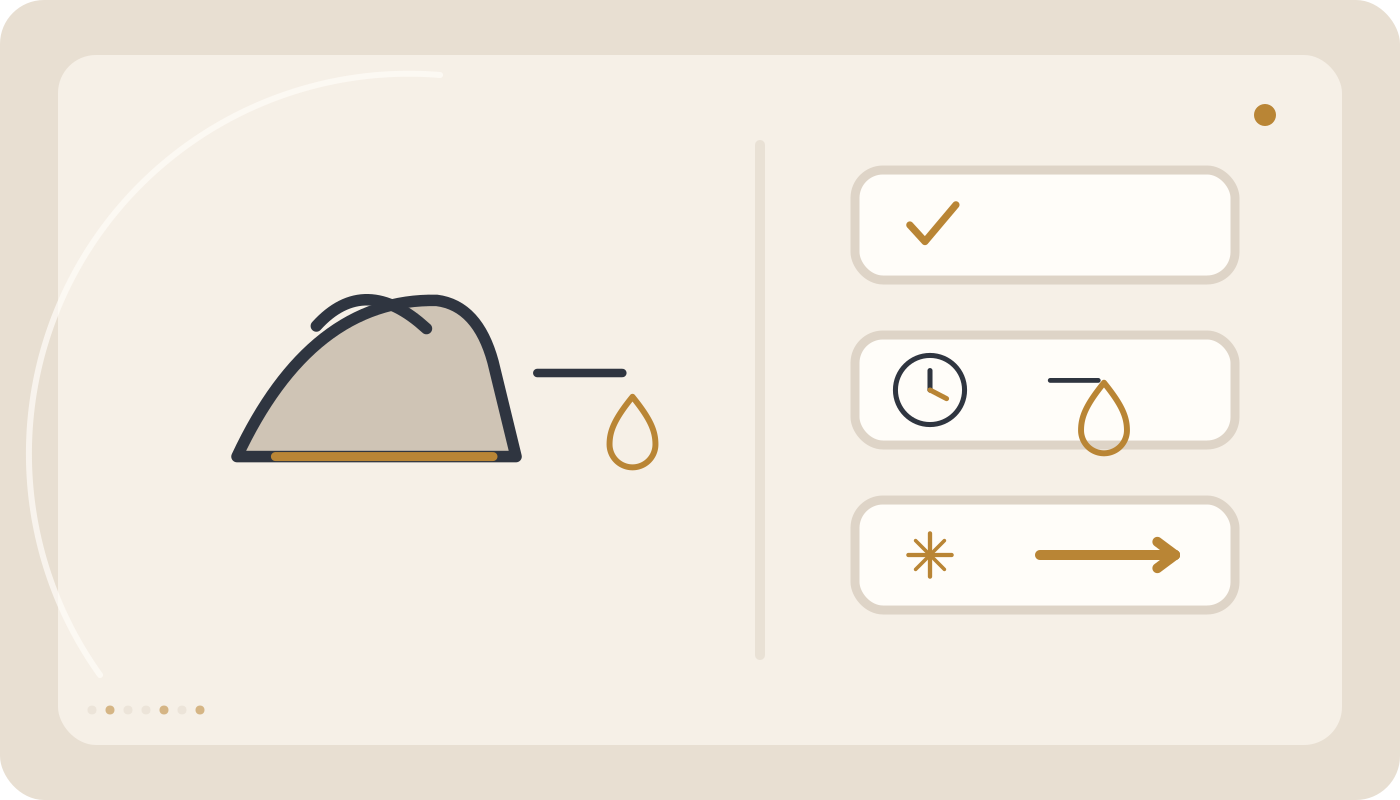
If droplets come from the steam holes, reduce steam, select a steam-capable temperature, and wait for full Ready status. Never fill above MAX. Leakage from the housing or electrical area requires immediate shutdown.
Where should you start?
Why Is Water Dripping from the Soleplate or Steam Holes of My Iron?
Water dripping from a steam iron is common, but it does not always indicate a leaking tank or a failed appliance. Often, water reaches the steam chamber before it can fully vaporize. Low temperature, excessive steam demand, steaming before full warm-up, overfilling, mineral scale, repeated Steam Boost use, and incorrect storage are common causes.
Quick answer: If droplets come from the steam holes, reduce the steam setting, select a steam-capable temperature, and wait for full Ready status. Keep the water below MAX. If dripping continues after complete warm-up with correct settings, inspect approved anti-scale maintenance and consider a water-control, tank, or internal sealing fault.
First identify exactly where the water is coming from
Water from the soleplate steam holes is a different problem from leakage around the tank cap, removable tank, housing, or power-cord area.
| Where/when it drips | Likely cause | First check |
|---|---|---|
| Steam holes during startup | Iron is not fully hot | Wait for Ready |
| At a low temperature | Water cannot fully vaporize | Select a steam-capable setting |
| After repeated Steam Boost | Water input exceeds momentary heat capacity | Allow recovery between shots |
| With white particles | Scale in the steam chamber | Anti-Calc / Self-Clean |
| From tank cap or housing | Tank or seal leakage | Stop use and inspect leakage |
1. The temperature is too low for steam
This is one of the most common causes of soleplate dripping. If water enters the steam chamber before sufficient heat is available, part of it can leave as liquid. On delicate-fabric settings, use steam only when the appliance permits it.
2. The iron has not reached Ready status
Switching the iron on does not make steam available immediately. After startup or increasing temperature, allow the heating cycle to complete.
3. Steam is on Max while temperature is too low
Steam rate and soleplate temperature must be compatible. High water delivery with insufficient thermal energy increases the chance of droplets.
4. Steam Boost is being pressed too rapidly
Each boost introduces additional water into the steam system. Repeated shots without recovery time can temporarily exceed the iron’s heating capacity.
5. The tank is filled above MAX
Extra water does not create extra steam. Maintain the designed fill level and remove excess water.
6. The iron is placed horizontal immediately after filling
On some designs, it is best to close the cap completely, wipe the exterior dry, and place the iron in the recommended position before operation.
7. The tank cap is not fully closed
Water around the cap is not the same as steam-hole dripping. Inspect the cap, seal, and seating area only when the appliance is unplugged and cool.
8. A removable tank is not seated correctly
Incomplete installation can cause leakage or irregular water delivery. Fit the tank according to the appliance instructions without excessive force.
9. The iron is tilted excessively while steaming
Orientation can affect water delivery on some designs. Use the normal ironing position and follow model-specific instructions for vertical steaming.
10. Vertical steam is unsupported or used incorrectly
Not all irons provide the same vertical-steam capability. If dripping occurs only while upright, confirm that the model supports the function and follow its operating method.
11. Scale has formed inside the steam chamber
Mineral deposits can disrupt water and steam flow. Dripping combined with weak steam or white particles makes scale more likely.
12. Steam outlets are partially restricted
If some holes are blocked, moisture and steam must pass through fewer outlets, producing an uneven discharge pattern.
13. Self-Clean maintenance is overdue
Where fitted, Self-Clean is intended to remove deposits and particles from the steam chamber. Follow the exact temperature and procedure specified for the model.
14. The Anti-Calc collector needs maintenance
Some irons have a removable anti-scale rod or collector. A saturated or dirty component can reduce system performance. Follow the model’s cleaning or replacement instructions.
15. Water hardness is accelerating scale
Hard water can increase mineral buildup, but there is no single water recommendation for every iron. Follow the manufacturer’s guidance.
16. The tank contains additives
Fragrance, starch, detergent, or unapproved chemicals can contaminate the steam path and alter water flow. Use only substances explicitly approved for the appliance.
17. Vinegar has been added to the tank
Vinegar is not a universal iron treatment. Acid may be incompatible with seals, metals, or internal coatings. Do not use it unless the manual explicitly says to.
18. The iron has been stored for a long period
Standing water, dried scale, or sealing changes can appear after storage. Restart the appliance according to its instructions and test on a spare cloth first.
19. Water from the previous use remains inside
Drainage guidance varies. If the manufacturer instructs users to empty the tank after use, doing so can reduce mineral deposits and residual water at the next startup.
20. The iron was stored flat with water inside
Many irons are intended to be stored on their heel. Long-term horizontal storage with a full tank can increase the chance of moisture or leakage.
21. What does Anti-Drip do?
On equipped irons, Anti-Drip restricts water flow when temperature is insufficient. It reduces dripping but cannot compensate for severe scale, overfilling, or operation outside the intended range.
22. Are a few startup droplets always a fault?
Not necessarily. Residual moisture or incomplete warm-up can produce a few initial drops. Persistent dripping after full Ready status deserves investigation.
23. Why does the iron leave water spots on clothing?
For clear droplets, investigate temperature and water spitting first. Brown, colored, or particle-filled water suggests contamination or scale and should be addressed before ironing important garments.
24. Why is brown or dark water coming out?
Possible causes include deposits, internal contamination, or foreign substances in the tank. Stop using the iron on clothing and perform only the approved cleaning procedure.
25. Why does water emerge after Self-Clean?
Self-Clean intentionally flushes water and deposits through the soleplate. Complete the specified draining, drying, and restart steps, then test on a spare cloth.
26. Why does dripping begin after reducing temperature?
When moving from a high setting to a lower one, the soleplate is cooling. If steam remains high, the thermal balance changes. Match the steam rate to the new temperature.
27. Why can droplets appear after Auto-Off?
If Auto-Off has stopped heating, allow the iron to regain a steam-capable temperature before resuming steam output.
28. Can an unsuitable extension lead or weak supply contribute?
If the iron cannot receive its intended heating power, thermal performance may fall. Use a supply consistent with the rating plate and an appropriately rated connection.
29. Thermostat or temperature-control failure
If the soleplate does not reach or maintain the selected temperature, water may not fully vaporize. This requires technical inspection rather than compensating with an unsafe temperature setting.
30. Water-control or Anti-Drip valve failure
If the iron is fully hot, correctly set, and properly maintained but still drips continuously, the water-control valve or anti-drip mechanism may be faulty.
Step-by-step test without opening the iron
- With the iron unplugged and cool, inspect for visible leakage.
- Fill with the recommended water to below MAX.
- Close and fit the tank correctly.
- Place the iron safely on its heel and switch it on.
- Select a steam-capable temperature.
- Wait for full Ready status.
- Test steam on a clean white spare cloth.
- If it drips, reduce steam one level and retest.
- If white particles appear, review official Anti-Calc/Self-Clean maintenance.
- If the housing or tank itself leaks, stop using the appliance.
If dripping occurs only during Steam Boost
Allow more recovery time between shots. If substantial water still emerges at the correct temperature with proper intervals, the boost path or water-control system may need inspection.
If dripping occurs only with continuous steam
Reduce the continuous-steam setting and confirm that temperature is appropriate. If the problem appears only at Max, water rate and thermal balance may be the cause.
If the iron leaks even when switched off
This points more toward the tank, cap, seal, crack, or water valve than steam generation. Keep the appliance unplugged and inspect externally without opening the housing.
If water appears near the power cord or electrical parts
Stop using the iron immediately. Water in an electrical area creates shock and short-circuit risk. Do not power it again for another test.
What should you avoid?
- Do not raise temperature beyond what the fabric permits just to stop dripping.
- Do not fill above MAX.
- Do not repeatedly pump Steam Boost without recovery time.
- Do not add unapproved vinegar or descaler.
- Do not scrape steam holes with drills or metal tools.
- Do not open a hot iron to investigate leakage.
- Do not treat housing leakage as normal steam-hole dripping.
- Do not test a suspected leaking iron directly on delicate clothing.
When should the iron be switched off immediately?
Unplug the iron if water is leaking from the housing, cord entry, electrical area, or a cracked tank, or if dripping is accompanied by sparking, burning odor, severe abnormal noise, a hot cord, or intermittent power.
When is technical service required?
If the iron uses the correct water, is filled properly, reaches a steam-capable temperature, and still drips continuously after approved Self-Clean or Anti-Calc maintenance, a water valve, Anti-Drip mechanism, thermostat, tank seal, or internal water path may require service.
Summary
Do not assume that soleplate dripping means a failed iron. Check three things first: adequate temperature, a steam rate that matches the temperature, and complete warm-up. Then check fill level, Steam Boost technique, scale, and Anti-Drip operation. Leakage from the housing or electrical area is different and requires immediate shutdown.
Editorial safety note
This article was reviewed to separate user-safe checks from faults that require technical inspection, while preserving model-specific manual guidance as the final authority.
Common mistakes
Change only one variable at a time while diagnosing.
- Do not overheat fabric just to stop dripping.
- Do not fill above MAX.
- Do not pump Steam Boost continuously.
- Do not add unapproved vinegar or descaler.
- Do not scrape steam holes with metal tools.
- Do not open a hot iron to investigate leakage.
- Do not confuse housing leakage with normal steam-hole dripping.
- Do not test a suspected leaking iron directly on delicate garments.
Frequently asked questions
Why does the iron release a few drops at startup?
It may not yet be at a steam-capable temperature, or residual moisture may remain in the path.
Why does water come out at low temperature?
The water cannot fully vaporize.
Can overfilling cause dripping?
Yes. Keep the water at or below the MAX line.
Why does it drip after repeated Steam Boost shots?
Rapid repeated shots can introduce water faster than the iron can recover heat.
Can mineral scale cause dripping?
Yes. Scale can disrupt water and steam flow, especially when weak steam or white particles are also present.
What kind of leakage is unsafe?
Any leakage from the housing, cord entry, or electrical area requires immediate disconnection and no further use.
Related guides and products
Still having the problem?
If safe user-level checks do not solve the issue, do not open the appliance. Submit a service request for technical inspection.