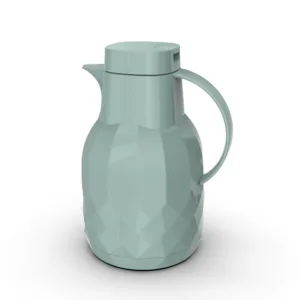
How to Choose the Right Flask Capacity and Type for Home, Office, and Travel
Choose flask capacity by number of users, real serving volume, filled weight, lid type, cleaning effort, and whether the flask will stay at home, go to work, or travel.
For personal daily use, a compact lightweight flask is usually more practical; for home and desk use, medium capacity often balances size and serving volume; and for meetings or multi-person use, a larger or pump flask can make sense. Convert capacity into real servings and consider filled weight, sealing, cleaning, lid type, and transport position.
How to Choose the Right Flask Capacity and Type for Home, Office, and Travel
Choosing a flask should not be based on appearance or capacity alone. Number of users, serving frequency, storage duration, beverage type, transport method, filled weight, lid design, and cleaning effort all determine which flask is practical. A compact flask may be ideal for one person, while the same size can become inconvenient for a family or meeting. Conversely, a very large flask can be unnecessarily heavy for solo travel.
Quick answer: For personal daily use, prioritize compact size, manageable weight, and secure sealing. For home and desk use, a medium capacity often balances serving volume and storage size well. For meetings and multi-person serving, a larger or pump flask can be more practical. Before buying, convert the stated capacity into the number of cups you actually drink and consider the flask’s weight when full.
Quick selection by use case
| Use case | Typical capacity range | Flask style | Main priority |
|---|---|---|---|
| Short personal use | About 0.5 to 1 litre | Compact flask | Low weight and easy transport |
| Desk or one-to-two-person daily use | About 1 to 1.5 litres | Standard flask with secure lid | Balance of capacity and size |
| Home and family | About 1.5 to 2 litres | Standard serving flask | Serving volume and easy cleaning |
| Meetings and multi-person service | About 2 to 3 litres or more | Pump flask | Repeated serving without full lid removal |
| Travel and vehicle use | Matched to users and storage space | Durable, securable flask | Sealing, weight, and transport position |
1. Start with the number of users
Identify how many people normally use the flask. One person drinking a few cups over several hours rarely needs a very large vessel, while family or meeting use can make a small flask inconvenient.
2. Convert litres into actual servings
A litre figure is abstract until it is translated into your normal cup size. If one serving is around 200 millilitres, one litre gives roughly five servings before allowing for safe headspace and fill limits.
3. Stated capacity is not always working capacity
Do not fill to a point that interferes with lid closure or immerses sealing components. The safe working volume may be slightly below the nominal capacity.
4. Bigger is not automatically better for one person
A large flask that is only partly filled carries unnecessary size and weight and leaves more internal air space. A capacity closer to real consumption is usually more practical.
5. What capacity makes sense at home?
For breakfast, afternoon tea, or family use, a medium flask often gives the best balance. It should cover one normal serving period without repeated refilling.
6. What matters at the office?
Desk space, number of users, serving frequency, and cleaning access matter as much as capacity. A compact flask suits personal use; a larger easy-serving model suits a shared room or meeting area.
7. Pump flasks are useful for meetings
A pump flask allows repeated serving without removing the entire lid, which can improve convenience for meetings, reception areas, and multi-person use.
8. A pump flask is not always best for travel
Pump models are often bulkier and heavier and generally need upright transport. For solo travel or limited vehicle space, a durable standard flask may be more practical.
9. Calculate filled weight
Each litre of water weighs about one kilogram. A three-litre flask therefore carries roughly three kilograms of liquid in addition to the empty product weight.
10. Check external dimensions too
Two flasks with similar capacity can have very different height and diameter. Compare real dimensions with cabinet, desk, vehicle, and bag space.
11. A tall flask may not fit every vehicle
For travel, make sure there is a secure upright location with enough height clearance.
12. Lid type strongly affects usability
Screw lids, push lids, flip mechanisms, and pump systems each suit different serving patterns. Choose according to how often and where the flask will be opened.
13. Sealing matters more than fast serving during transport
If the flask moves daily in a bag or vehicle, gasket condition and secure closure are more important than rapid access. Never assume horizontal transport is safe unless the manufacturer confirms it.
14. Easy serving matters more for table use
A flask that remains on a table can be larger. A stable base, good handle, smooth pump, and controlled outlet may matter more than compact dimensions.
15. Glass-lined or stainless steel?
Both can offer useful thermal performance, but their care requirements differ. Glass liners need more protection from impact and thermal shock. Stainless construction is generally less vulnerable to breakage during frequent movement, although strong impacts can still damage insulation.
16. Glass-lined models can suit stable home use
If the flask mainly stays on a table or kitchen counter and impact risk is low, a glass-lined design can be appropriate when thermal-shock precautions are followed.
17. Physical durability matters more for frequent travel
For repeated movement between vehicle, office, and travel locations, body durability, secure handling, and stable placement become more important.
18. Wide or narrow mouth?
A wide mouth can make filling and cleaning easier. A narrower opening may allow more controlled pouring. Lid design and sealing remain important in either case.
19. Think about cleaning before buying
If a suitable brush cannot reach the bottom or the lid contains many difficult recesses, routine cleaning becomes less convenient.
20. Accessible gaskets are useful for maintenance
The gasket is a key sealing component. A design that allows cleaning and compatible replacement can be an advantage over long-term use.
21. Coffee users should care about odor retention
Coffee oils and aroma can remain in lids and gaskets, so easy access to those areas is valuable for a flask used frequently with coffee.
22. Plain water is easier for multi-purpose use
If the flask mainly carries water, persistent aroma is less of a concern. If it alternates between water, tea, and coffee, thorough cleaning between uses matters.
23. Check temperature compatibility for very hot drinks
Products are not all designed for exactly the same temperature range. Confirm the intended beverage temperature before purchase and use.
24. Define how long you really need temperature retention
A drink needed for two hours on a desk has different requirements from one expected to remain hot through a full travel day. Longer storage places more importance on insulation, sealing, fill level, and correct use.
25. A claimed retention time is not the only measure
Real results depend on starting beverage temperature, preheating or precooling, fill volume, ambient conditions, and how often the lid is opened.
26. Preheating is more useful for longer hot storage
If a hot beverage will remain in the flask for several hours, preheating can improve the starting thermal condition. Precooling serves the same purpose for cold drinks.
27. Frequent service favors designs that keep the main lid closed
If many people serve drinks repeatedly, a pump or controlled-serving mechanism can reduce the need to remove the main lid each time.
28. Pump flasks require more operating space
In addition to height and diameter, leave room above the pump for pressing. A very low shelf can make the flask awkward to use.
29. A broad stable base helps on busy tables
For meetings and home serving, stability can be as important as capacity.
30. Handle design should match filled weight
A narrow or slippery handle can be uncomfortable on a large filled flask. Judge the product as a filled object, not only when empty.
31. For older users or reduced hand strength
Weight, body diameter, lid-opening force, and pump effort become more important. A lighter flask or simpler serving mechanism may be preferable.
32. One large flask or two medium flasks for family travel?
One large flask reduces the number of containers but is heavier. Two medium flasks can split the load and allow two different beverages.
33. If you want both tea and coffee
Separate flasks can reduce flavor and odor transfer and may be more practical than one oversized flask.
34. If the flask mainly stays at home
Prioritize capacity, serving comfort, cleaning, and table stability. Transport weight matters less than it does for travel.
35. If the flask goes to work every day
Dimensions, filled weight, sealing, upright storage, and quick cleaning become more important. Choose for normal daily consumption rather than rare maximum demand.
36. If it is for road trips
Check secure vehicle placement, movement resistance, safe opening while stopped, and filled weight. Do not leave it loose on a seat.
37. If it is for picnics and outdoor use
Secure handling, body durability, and a stable base matter more. Keep hot flasks away from table edges and children.
38. If it is for meetings or reception use
A larger pump flask can simplify multi-person serving. Also consider how easily the pump path and lid components can be cleaned.
39. How do you know the capacity is too small?
If one normal serving period requires several refills, the flask is probably undersized for the use case.
40. How do you know the capacity is too large?
If the flask is usually only partly filled, feels unnecessarily heavy, and consumes excessive storage space, it may be larger than your daily need.
41. A simple capacity calculation
- Count the number of users.
- Estimate normal cup size.
- Estimate servings per person during one use period.
- Add the total and allow a small practical margin.
- Choose the nearest suitable capacity rather than simply the largest available model.
42. Final selection matrix
| If your priority is… | Focus on… |
|---|---|
| Daily transport | Weight, dimensions, sealing, upright carrying |
| Multi-person serving | Capacity, pump or easy serving, stable base |
| Long temperature retention | Insulation, lid, gasket, preheating or precooling |
| Fast cleaning | Accessible mouth and lid components |
| Frequent travel | Body durability, filled weight, vehicle securing |
Common buying mistakes
- Choosing only by maximum capacity
- Ignoring filled weight
- Assuming every flask supports horizontal transport
- Ignoring lid and gasket design
- Buying a large pump flask for brief personal use
- Buying a small flask for meetings or a high-use family
- Ignoring cabinet, desk, or vehicle space
- Ignoring lid-cleaning difficulty
- Comparing only claimed retention hours
- Choosing without considering beverage type
Conclusion
The right flask is not simply the biggest or most expensive one; it is the model that fits your real usage pattern. Personal use favors portability, home use favors balanced capacity and cleaning, office use favors sealing and serving convenience, meetings favor capacity and pump service, and travel favors durability, filled weight, and secure transport. Before buying, translate capacity into real servings and imagine the flask when fully filled.
Common mistakes
Change only one variable at a time while diagnosing.
- Do not choose only by maximum capacity.
- Do not ignore filled weight.
- Do not assume every flask supports horizontal transport.
- Do not ignore lid and gasket design.
- Do not buy an oversized pump flask for brief personal use.
- Do not choose too little capacity for meetings or high-use families.
- Measure cabinet, desk, and vehicle space.
- Check how difficult the lid is to clean.
- Do not compare only claimed retention hours.
- Consider the beverage type.
Frequently asked questions
What flask capacity is suitable for one person?
About 0.5 to 1 litre is often enough for personal use, but your actual daily drink volume is the better guide.
What capacity is suitable for a family?
Around 1.5 to 2 litres suits many family situations, but user count and serving frequency matter more than a fixed number.
When is a pump flask better?
For meetings, offices, hospitality, and multi-person use with repeated serving.
Is a pump flask or standard flask better for travel?
A compact durable standard flask is often easier for frequent transport, while pump flasks suit larger-volume stationary serving.
Is glass-lined or stainless steel better?
Glass needs more protection from impact and thermal shock; stainless is generally less vulnerable to breakage during frequent movement. The best choice depends on use.
How do I calculate the right capacity?
Multiply the number of users by normal cup volume and expected servings per use period, then choose a capacity close to the real requirement.