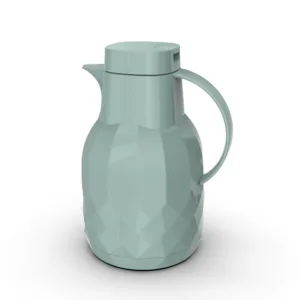
How to Remove Tea and Coffee Stains from Inside a Flask
Start tea and coffee stain removal with warm water, mild detergent, and a soft brush, then use only a material-compatible mild secondary method for older stains.

Start with warm water, a small amount of mild detergent, and a soft brush. If a stain remains, identify the inner material and use only a mild compatible secondary method, such as a dilute baking-soda solution where permitted. Rinse several times and dry completely. Avoid abrasive tools, strong bleach, and mixing cleaning chemicals.
Before you start
How to Remove Tea and Coffee Stains from Inside a Flask
Brown tea and coffee stains usually come from beverage pigments, natural compounds, and in the case of coffee, small amounts of oil remaining on the inner surface. For ordinary stains, start with warm water, mild detergent, and a soft brush. If an older stain remains, use only a mild secondary method that is compatible with the flask material and manufacturer instructions, such as a dilute baking-soda solution where permitted. Avoid abrasive tools, strong bleach, and mixing household cleaners.
Quick answer: Wash the flask first with warm water, a small amount of mild detergent, and a soft brush. If staining remains, identify the inner material and use only a mild compatible secondary method when permitted. Rinse several times and dry completely. Protect glass-lined flasks from thermal shock and excessive brushing pressure, and protect stainless-steel interiors from scratching and corrosive chemicals.
Where tea and coffee stains usually collect
| Area | Typical sign | First approach |
|---|---|---|
| Inner wall | Brown or yellow film | Warm water, mild detergent, soft brush |
| Bottom | Darker concentrated stain | Longer contact with a mild cleaning solution |
| Mouth and rim | Colored ring | Soft cloth or brush |
| Lid and grooves | Sticky residue | Clean lid separately |
| Gasket | Discoloration with odor | Clean separately and inspect condition |
1. Clean fresh stains the same day
The longer tea or coffee residue remains, the harder the pigments can be to remove. Empty and rinse the flask soon after use.
2. Start with normal washing before deep stain removal
Many stains improve substantially with warm water, mild detergent, and a soft brush. Do not begin with aggressive chemicals.
3. Warm water is enough to begin
Warm water helps soften beverage residue. With a glass-lined flask, avoid abrupt extreme temperature changes if the vessel is very cold.
4. Use only a small amount of detergent
More detergent does not necessarily clean better and makes rinsing more difficult.
5. A soft brush is better than hard scrubbing
Use a soft bottle brush for the sidewalls and bottom. Steel wool and metal brushes can damage both glass-lined and stainless surfaces.
6. Use less pressure on glass liners
Glass-lined vessels are more sensitive to impact and concentrated force. Clean gently.
7. Stainless steel should not be scratched either
Stainless steel is durable but not scratch-proof. Deep scratching can make future cleaning more difficult.
8. Soak a bottom stain instead of scraping it
Allow warm water and mild detergent to remain in contact with the stain for a reasonable time before using the soft brush.
9. Inspect the lid separately
Brown rings often remain in threads, grooves, or serving paths even when the main vessel looks clean.
10. Gaskets can become discolored
Silicone or rubber gaskets can retain both odor and color. Clean removable gaskets separately and dry them fully.
11. Discoloration does not always mean active dirt
Some gasket materials can change color over time even when clean. If no residue, odor, or tackiness remains, color alone does not necessarily mean contamination.
12. When should you use a secondary method?
Only after routine cleaning has been performed correctly and a brown film remains. Check the flask material and instructions first.
13. Baking soda may help on some flasks
When the product guidance does not prohibit it, a small amount of baking soda dissolved in warm water can help with some tea and coffee stains. Rinse thoroughly afterward.
14. Do not scrub with dry baking soda powder
Even a relatively mild substance can become abrasive when used dry with pressure. Dissolve or dilute it rather than using it as a scouring powder.
15. Keep contact time reasonable
Older stains may benefit from a short soak, but there is usually no need to leave a cleaning solution in the flask for extremely long periods unless the manufacturer recommends it.
16. Rinse completely after any secondary cleaning
Remove all cleaning residue with several clean-water rinses.
17. Vinegar is not a universal default
Inner materials, coatings, lid parts, and seals differ. Do not assume acidic cleaners are suitable for every flask.
18. Avoid strong bleach unless specifically approved
Harsh chemicals can damage metals, coatings, plastics, and gaskets and may leave their own odor.
19. Never mix cleaning chemicals
Combining household cleaners can create dangerous reactions. Use one mild approved method at a time.
20. Abrasive powders are not suitable for the flask interior
They can scratch glass or stainless surfaces. Softening residue is preferable to aggressive abrasion.
21. Do not scrape stains with metal objects
Spoons, wire, knives, and sharp tools can damage the inner vessel or coating.
22. Avoid hard-particle shaking methods
Methods that rely on rice, grit, or other hard particles striking the interior can damage surfaces, especially glass liners.
23. Coffee stains can be oilier than tea stains
Natural coffee oils may make residue cling more strongly, so mild detergent plays an important role.
24. Tea often creates rings and films
Tea compounds can leave rings where liquid remains in contact with a surface. Prompt washing reduces buildup.
25. Milk and sugar make residue more complex
Milk-based or sweetened drinks add fat and sticky residue to the staining problem, making prompt detergent washing more important.
26. Separate staining from odor
A flask may be stained without smelling, or smell without obvious staining. If odor is the main issue, use an odor-removal routine rather than increasing scrubbing.
27. If stains return quickly after every wash
Delayed cleaning, very strong beverages, or residue in lid areas may be the reason. Improve the after-use cleaning routine.
28. Pump flasks can stain beyond the main vessel
The internal tube and outlet path may also discolor or collect residue and should be cleaned according to the model instructions.
29. If the pump tube is discolored
Do not scrub it with hard tools. If removable and washable, clean it with warm water and mild detergent.
30. Staining inside a crack or deep scratch is different
Cracks and deep surface damage can trap pigments. In a glass-lined flask, cracking is a safety issue, not simply a cleaning problem.
31. Investigate peeling or particles from the surface
If material appears to flake, peel, or detach from the interior, stop stain-removal attempts until you know whether the issue is food residue or surface damage.
32. Dry completely after cleaning
Residual moisture can promote odor and new staining. Dry the vessel and lid separately in normal airflow.
33. Do not close the lid while damp
Wait until the vessel, gasket, and lid grooves are fully dry.
34. A simple stain-prevention routine
| When | Action |
|---|---|
| Immediately after use | Empty and rinse the flask |
| The same day | Wash with warm water, mild detergent, and a soft brush |
| After coffee or milk drinks | Clean the lid and gasket more carefully |
| For older stains | Use only a mild material-compatible secondary method |
| Before storage | Dry all parts completely |
35. Step-by-step routine for ordinary stains
- Empty and rinse the flask with warm water.
- Add a small amount of mild detergent.
- Clean the sidewalls and bottom with a soft brush.
- Wash the lid and gasket separately.
- Rinse several times.
- If a stain remains, use only a compatible secondary method.
- Rinse again and dry completely.
36. What if the stain does not come off?
If several correct mild-cleaning attempts make no difference, do not keep increasing chemical strength. The mark may be permanent discoloration or surface damage, in which case identifying the material condition is more useful than aggressive cleaning.
Common mistakes
- Scrubbing the interior with steel wool
- Using dry abrasive powder with heavy pressure
- Mixing multiple cleaning products
- Using strong bleach without product approval
- Creating thermal shock in a glass-lined flask
- Scraping stains with metal tools
- Ignoring the lid and gasket
- Closing the flask while damp
- Confusing food staining with peeling or cracking
- Increasing cleaning strength repeatedly when mild methods fail
Conclusion
Gentle cleaning is more important than aggressive scrubbing for tea and coffee stains. Start with warm water, mild detergent, and a soft brush. For older stains, use only a mild secondary method that is compatible with the flask material, then rinse and dry thoroughly. Protect glass liners from impact and thermal shock and stainless interiors from scratching and corrosive chemicals.
Common mistakes
Change only one variable at a time while diagnosing.
- Do not scrub the flask with steel wool.
- Do not use dry abrasive powder with heavy pressure.
- Do not mix cleaning products.
- Do not use strong bleach without manufacturer approval.
- Do not create thermal shock in a glass-lined flask.
- Do not scrape stains with metal tools.
- Do not ignore the lid and gasket.
- Do not close the flask while damp.
- Do not confuse peeling or cracking with food staining.
- Do not repeatedly increase chemical strength when mild methods fail.
Frequently asked questions
What causes brown stains inside a flask?
They usually come from tea and coffee pigments and, with coffee, small amounts of natural oil.
Can I use baking soda for flask stains?
It can help on some flasks, but only when compatible with the material and product instructions, and it should be used in a dilute form.
Can I scrub with dry baking soda?
It is better not to; dry powder used with pressure can become abrasive.
Is vinegar safe for every flask?
No. Inner materials and coatings differ, so the product instructions should be checked first.
Why do stains return quickly?
Cleaning may be delayed or residue may remain in the lid and gasket areas.
What if the stain will not come off?
Do not randomly switch to stronger chemicals; the mark may be permanent discoloration or surface damage.