What Factors Change How Long a Flask Keeps Drinks Cold?
Cold retention depends on more than insulation: starting temperature, precooling, fill level, lid opening, ambient heat, sealing, and flask condition all change the result.
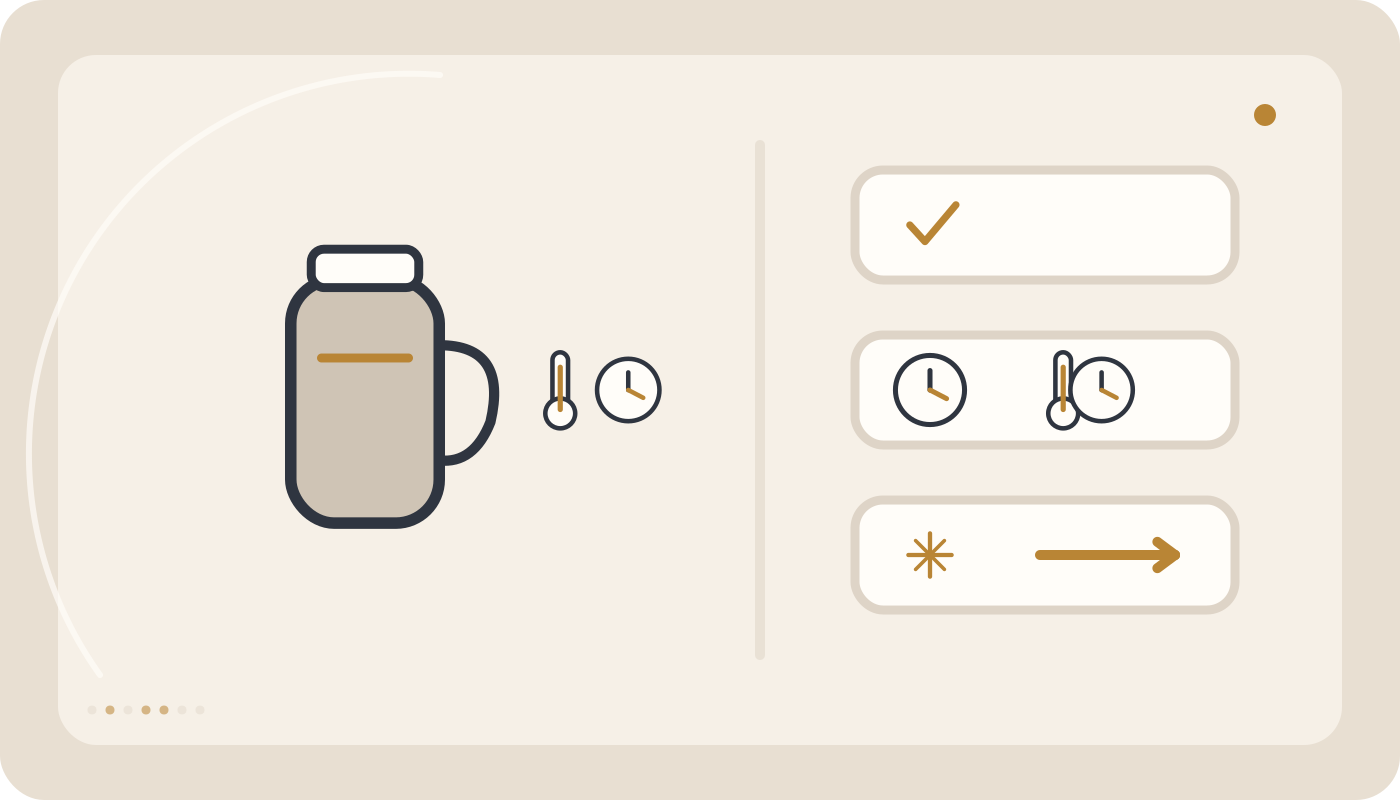
Cold retention depends on starting drink temperature, precooling, fill level, lid-opening frequency, ambient temperature, and lid and gasket condition. For better results, start with a fully chilled drink, precool when allowed, fill appropriately, and keep the flask away from direct heat.
Quick comparison
What Factors Change How Long a Flask Keeps Drinks Cold?
Cold retention depends on more than the insulation itself. Starting beverage temperature, flask precooling, fill level, lid-opening frequency, ambient temperature, beverage composition, lid and gasket condition, and even how the flask is positioned can all change the result. This is why two users can have different cold-retention experiences with the same flask.
Quick answer: Start with a fully chilled drink, precool the flask when the model allows it, fill it appropriately, open the lid less often, and keep the flask away from direct heat. If cold retention is still much shorter than expected under good conditions, inspect the gasket, lid, and insulated structure.
Key factors at a glance
| Factor | Typical effect | Better practice |
|---|---|---|
| Starting drink temperature | A colder starting drink takes longer to warm | Chill the beverage before filling |
| Flask precooling | Reduces heat transferred from the inner wall | Precool according to product instructions |
| Fill level | Less internal air can improve temperature stability | Fill appropriately within the safe limit |
| Lid opening | Warm ambient air enters the vessel | Open less often |
| Ambient temperature | Hotter surroundings increase thermal load | Keep away from sun and heat sources |
| Gasket condition | Air leakage can increase heat transfer | Keep the gasket clean and intact |
1. Starting beverage temperature is the first key factor
A flask does not actively cool a drink; it slows warming. If the beverage is only slightly chilled at the start, the flask cannot make it colder.
2. Chill the drink before filling
For better results, bring the beverage to the desired temperature before it enters the flask. A flask is not a substitute for refrigeration.
3. Precooling improves the starting condition
If the flask interior begins at room temperature, some cooling capacity from the beverage is spent chilling the inner wall. Precooling reduces that initial loss.
4. Precooling does not improve damaged insulation
It only improves the starting condition. A failed seal or damaged insulated structure still needs separate attention.
5. Fill level affects performance
A partly empty flask contains more air. That air is exchanged with the environment when the lid opens and can contribute to faster warming.
6. Fill more, but only within the allowed limit
Good fill level can help, but never fill above the maximum level or into the lid sealing area.
7. Every lid opening affects cold retention
Opening allows colder internal air to mix with warmer room air. Repeated serving will therefore shorten effective cold retention.
8. How long the lid stays open matters too
A brief opening has less impact than leaving the lid open for several minutes. Close promptly after serving.
9. Ambient temperature can make a large difference
The same flask behaves differently in a cool room, a hot vehicle, or direct sunlight. Greater temperature difference with the surroundings increases thermal load.
10. Direct sunlight is a difficult condition
Sunlight can heat the outer shell and increase the heat reaching the product. Shade is preferable.
11. A closed vehicle can become very hot
A flask left near vehicle glass in strong heat experiences more demanding conditions than normal indoor use.
12. Beverage composition also matters
Plain water, thicker drinks, ice-containing beverages, and drinks with fruit pieces do not have exactly the same thermal behavior.
13. Ice is not automatically better for every flask
Ice can extend cold time when the product is suitable for it, but glass-lined vessels require care around hard ice and abrupt temperature change.
14. Ice also occupies beverage volume
Large amounts of ice reduce the volume of actual drink, so balance ice quantity with serving needs.
15. Flask size should match beverage quantity
A very large flask holding a small amount of liquid has more internal air space. Capacity closer to real usage tends to behave more predictably.
16. The lid is part of the thermal system
Even an excellent insulated body can lose performance through a poor or incorrectly closed lid. Gasket integrity matters.
17. A dirty gasket can weaken sealing
Residue on the gasket or sealing lip can prevent full contact and increase air exchange.
18. A worn gasket can allow air leakage
A cracked, hardened, or deformed gasket may reduce both leak resistance and temperature retention.
19. Incomplete lid closure matters
A cross-threaded or partially closed lid creates an easy path for warmer air.
20. Pump flasks have their own advantages and limits
Pump flasks allow serving without removing the main lid, which can reduce large air exchanges. The pump path and seals still need to remain healthy.
21. Frequent pumping still introduces air
Each pump cycle moves air through the system, so very frequent serving still changes the internal condition over time.
22. Upright storage suits most flasks
Keeping the flask upright reduces constant liquid contact with upper lid passages and also lowers leakage risk.
23. Carry horizontally only when approved
If the manufacturer does not approve horizontal transport, keep the flask upright.
24. Exterior material alone does not define insulation quality
A stainless or plastic-looking shell does not by itself indicate how well the flask retains cold. Internal insulation and lid design matter more.
25. Glass-lined and stainless flasks can both perform well
The inner material alone is not the deciding factor. Insulation condition, sealing, and use method matter more.
26. Impact can change insulation performance
If cold retention drops noticeably after a fall or strong impact, internal damage becomes possible.
27. A sudden performance change deserves investigation
If the flask worked well until recently and suddenly warms much faster, check the gasket, lid, and impact history.
28. What does exterior condensation mean?
A small amount of moisture can relate to humidity and local temperature conditions, but rapid heavy condensation over the main body can indicate increased heat transfer.
29. An outer body that becomes cold very quickly can also matter
If the cold from the beverage rapidly reaches the outer wall, the insulation may not be performing as before.
30. Mouth size affects heat exchange during serving
A wider opening exchanges more air while open. Keep serving time short if the flask is opened repeatedly.
31. Compare retention under similar conditions
Keep drink volume, starting temperature, room conditions, lid-opening frequency, and storage time as similar as possible when judging performance.
32. Different test conditions can mislead
A cool day versus a hot day, or a full flask versus a partly filled one, cannot be compared fairly.
33. Precooling must happen before the actual drink
After conditioning, discard the cooling water and add the cold beverage promptly so the interior does not warm again.
34. Do not put a warm drink in a flask and expect it to cool
Cool the beverage safely first, then transfer it to the flask.
35. Poor cleaning can damage sealing parts
Harsh chemicals or unsuitable heat may degrade gaskets and lid parts, indirectly reducing cold retention.
36. Lid residue can have an indirect thermal effect
Residue can prevent complete closure or displace a gasket, so cleanliness is part of thermal maintenance.
37. Larger capacity does not automatically mean longer cold retention
Capacity alone is not enough. Fill level and insulation design must be considered together.
38. Appropriate filling matters more than size alone
A one-litre flask that is nearly full may perform more predictably than a three-litre flask holding only a small amount, assuming similar insulation quality.
39. Avoid unnecessary opening during long storage
Opening the lid just to check temperature changes the very condition you are trying to measure.
40. A simple routine for better cold retention
- Chill the beverage before filling.
- Precool the flask if the product allows it.
- Discard conditioning water and add the drink promptly.
- Fill appropriately without exceeding the maximum.
- Close the lid completely.
- Keep the flask shaded and away from direct heat.
- Open only when serving.
41. If the drink warms too quickly, check these first
| Check | What to look for |
|---|---|
| Starting temperature | The drink was not fully chilled |
| Fill level | A large portion of the flask was empty |
| Lid opening | The lid was opened frequently |
| Environment | The flask was in direct sun or a hot vehicle |
| Gasket and lid | Seal is incomplete or gasket is worn |
| Insulation | The main outer body quickly becomes cold or wet |
Common mistakes
- Starting with a drink that is only slightly chilled
- Using an oversized flask for a small amount of beverage
- Opening the lid repeatedly to check temperature
- Leaving the flask in direct sun or a very hot vehicle
- Ignoring a worn gasket
- Closing the lid incompletely
- Expecting precooling to repair failed insulation
- Comparing performance under very different conditions
- Using ice in a model not suitable for it
- Ignoring sudden performance loss after impact
Conclusion
Cold retention is the result of several factors working together, not insulation alone. Starting beverage temperature, precooling, fill level, lid-opening frequency, ambient temperature, lid and gasket condition, and insulation health all matter. If you control the usage conditions and performance is still clearly poor, then investigating the flask itself becomes reasonable.
Common mistakes
Change only one variable at a time while diagnosing.
- Do not start with a barely chilled drink and expect long retention.
- Do not use a very large flask for a small beverage volume.
- Do not open the lid repeatedly just to check temperature.
- Do not leave the flask in direct sun or a very hot vehicle.
- Do not ignore a worn gasket.
- Do not leave the lid incompletely closed.
- Do not expect precooling to compensate for failed insulation.
- Do not compare performance under very different conditions.
- Do not use ice in a model not suitable for it.
- Do not ignore sudden performance loss after impact.
Frequently asked questions
What has the biggest effect on cold retention?
Starting beverage temperature, insulation condition, sealing, and usage pattern are among the most important factors.
Does precooling help?
Yes. It can reduce the initial warming of the drink, but it does not improve the insulation itself.
Does a half-filled flask warm faster?
Often, extra air space and air exchange during opening can contribute to faster warming.
Does opening the lid matter a lot?
Yes. Each opening introduces warmer ambient air.
Why does a drink warm faster in a vehicle?
High ambient temperature and solar heat increase the thermal load on the flask.
When should I suspect insulation failure?
If performance suddenly declines under similar conditions and the main outer body becomes cold or wet quickly, inspection is reasonable.