
Why Does Espresso Drip Out So Slowly? 8 Common Causes and Fixes
If espresso drips very slowly instead of forming a steady stream, check grind size, dose, distribution, tamp, basket cleanliness and water flow before assuming the machine has failed.
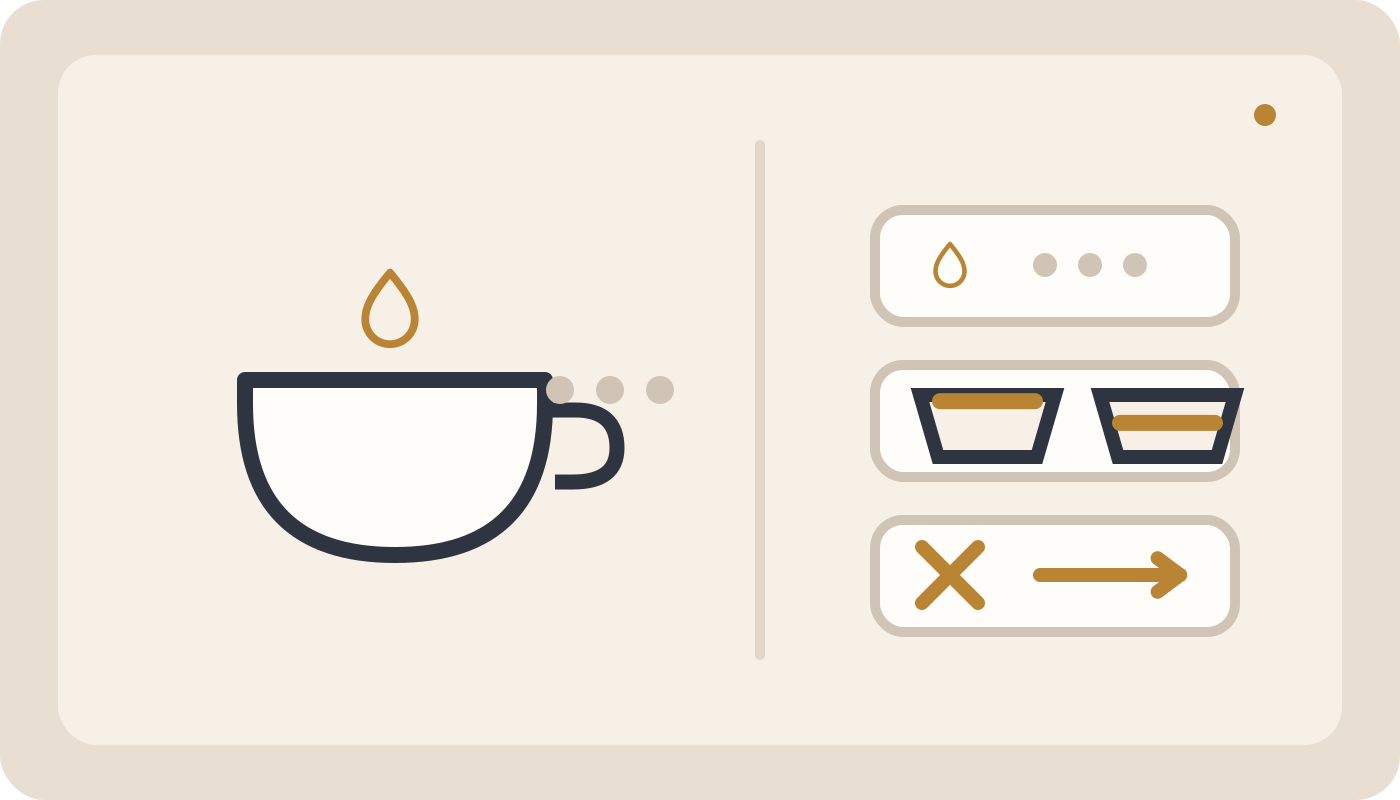
Very slow espresso flow usually means the coffee puck is creating too much resistance. Move the grind one step coarser first, then check dose, distribution, tamp and basket cleanliness. If water flow is also weak without the portafilter, inspect the water path and service needs separately.
Where should you start?
What does very slow espresso flow usually mean?
If coffee takes a long time to appear after extraction starts and then continues as dark, slow drips, the coffee puck is usually creating too much resistance. Grind size, dose and puck preparation should normally be checked before blaming the pump or machine.
Baseline test: pull one shot with the current settings, change only one variable, then compare. Changing grind, dose and tamp together makes the real cause difficult to identify.
1. The grind is too fine
Very fine particles reduce the pathways available for water. Move the grinder only one step coarser and compare the next shot for start time, stream and taste.
2. The dose is too high for the basket
Too much coffee creates a thicker puck and reduces headspace. Match the dose to the basket and the guidance for the specific machine; one fixed dose is not correct for every espresso maker.
3. Distribution is too dense or uneven
Dense clumps and uneven preparation can restrict water flow. Distribute the coffee evenly before tamping and avoid creating heavily compacted areas.
4. Tamping is inconsistent
The objective is a flat, repeatable puck. Extreme tamping force is not a standard solution for flow control. When grind and dose are appropriate, a tilted or unnecessarily heavy tamp can make results less consistent.
5. The basket holes are dirty or restricted
Coffee oils and fine particles can restrict basket openings. Once components are cool, clean the basket and portafilter according to the machine instructions and keep washable passages clear.
6. A new coffee behaves differently
Bean type, roast and freshness can change puck resistance. If the problem started immediately after changing coffee, re-dial the grinder for that coffee.
7. The shower screen or water path needs approved cleaning
If water flow without the portafilter is also weaker or less even than before, the issue may not be limited to the coffee puck. Clean approved user-serviceable areas and descale only as instructed for the model. Do not open internal components without proper service guidance.
8. When should a technical fault be considered?
If a coarser grind, correct dose, clean basket and proper preparation do not restore normal flow—and water delivery without the portafilter, pump sound or other machine functions have also changed—technical inspection becomes more relevant. One slow shot alone is not enough to diagnose pump failure.
Recommended correction sequence
Move the grind one step coarser first. If the problem remains, check dose and basket fit, then distribution and tamp, basket cleanliness and finally the machine’s water flow. Change one factor at a time.
How is slow flow different from low pressure?
A slow shot can simply be caused by excessive puck resistance, while low pressure can involve other water-path or machine factors. If grind and dose changes clearly affect the shot, correct coffee preparation first. If the machine also behaves abnormally without the portafilter, review Article 001 on low pressure.
Very slow flow is not automatically stronger espresso
Excessive resistance can overload the machine and produce harsh, bitter, or dry flavors. Adjust grind slightly coarser first, then check dose and basket cleanliness.
If water is also slow without coffee, move the diagnosis away from the coffee bed and toward the shower screen, scale, tank, or water path.
Common mistakes
Change only one variable at a time while diagnosing.
- Do not jump several grind settings coarser at once.
- Do not drastically reduce dose without considering basket capacity.
- Do not use extreme tamping changes instead of correcting grind.
- Do not change several variables at the same time.
- Do not damage basket holes with unsuitable tools.
- Do not diagnose pump failure from one slow shot alone.
Frequently asked questions
Why does espresso come out only in drops?
The most common causes are an overly fine grind, excessive dose, dense puck preparation or a restricted basket. Start by moving the grind one step coarser.
Can tamping too hard slow espresso flow?
It can increase resistance, but grind and dose usually have a more fundamental effect. Aim for a flat, repeatable tamp rather than maximum force.
Should I adjust the grinder when changing coffee?
Often yes. Bean type, roast and freshness can change the appropriate grind setting.
Does slow flow mean the pump is weak?
Not necessarily. If water flow without the portafilter is normal and grind changes affect the shot, correct puck preparation first.
What is the difference between Articles 004 and 005?
Article 004 covers flow that is too fast and low puck resistance; Article 005 covers the opposite condition—very slow flow and excessive resistance.
Related guides and products
Still having the problem?
If safe user-level checks do not solve the issue, do not open the appliance. Submit a service request for technical inspection.