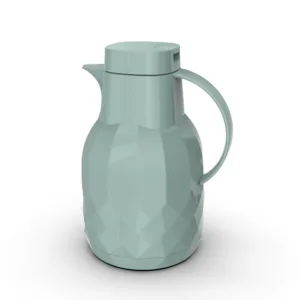
How to Prepare and Serve with a Flask for Everyday Hospitality
A complete everyday flask routine from preparation and conditioning to correct filling, safe table service, pump-flask use, and end-of-day cleaning.
Start with a clean, intact flask, preheat or precool when useful, fill with a ready beverage without exceeding the limit, keep the rim and gasket clean, and close the lid fully. During serving, place the flask on a stable surface and avoid unnecessary lid opening. After use, empty leftovers, wash the flask, and let all parts dry fully while open.
Before you start
How to Prepare and Serve with a Flask for Everyday Hospitality
A flask becomes truly useful for daily serving when it is handled correctly from preparation and filling through serving, refilling, table placement, and end-of-day cleaning. A few simple habits help protect beverage quality, reduce leakage and odor, and make serving at home, work, or meetings more organized.
Quick answer: Start with a clean, intact flask. Preheat for hot drinks or precool for cold drinks when appropriate, add the beverage at the correct starting temperature without overfilling, keep the rim and gasket clean, and close the lid fully. During serving, keep the flask on a stable surface and avoid unnecessary lid opening. After use, empty leftovers, wash the flask, and let all parts dry fully while open.
The daily routine at a glance
| Stage | Main action | Purpose |
|---|---|---|
| Before filling | Check cleanliness, gasket, and lid | Reduce odor and leakage |
| Temperature preparation | Preheat or precool when useful | Reduce initial temperature change |
| Filling | Use a ready beverage and stay within the fill limit | Support retention and sealing |
| Serving | Stable placement and minimal opening | Improve safety and temperature retention |
| After use | Empty, wash, and dry open | Reduce staining and odor |
1. Good serving starts with a clean flask
Before filling, check for trapped moisture, stale odor, or residue from the previous use. If the flask was stored damp and closed, clean and rinse it first.
2. Give the lid and gasket a quick check
The gasket should be intact, clean, and correctly seated. Threads and the sealing rim should be free from dried tea, coffee, sugar, or residue.
3. Decide the beverage before conditioning
A hot-drink flask and a cold-drink flask are prepared differently. Preheating is useful for hot beverages, while precooling can improve the starting condition for cold drinks when allowed by the model.
4. Preheat for hot drinks
Add suitably hot water, wait a few minutes, discard it, and immediately add the actual hot beverage. This reduces the amount of beverage heat spent warming the inner vessel.
5. Precool for cold drinks
Use cold water or another approved method, discard the conditioning water, and add the cold beverage promptly. Use ice only when the product design allows it.
6. The beverage should be ready before it enters the flask
A flask is not the primary appliance for brewing, heating, or chilling. Prepare the drink to the desired temperature first.
7. Avoid over-steeping tea inside the flask
Leaving tea leaves or infusion material in the drink for too long can produce a bitter or heavy taste. A prepared, strained beverage is usually better for holding.
8. Keep particles out of pump paths
Tea leaves, herbal particles, and thick drinks can restrict a pump-flask tube and outlet. Strained beverages are safer for routine pump service.
9. Do not overfill
Filling into the sealing area can increase leakage and interfere with lid closure. Stay below the maximum level.
10. Very low fill level is not ideal either
A large flask holding only a small drink volume contains more internal air. Match flask capacity to actual serving needs.
11. Wipe the mouth before closing
Remove spilled tea or coffee from the sealing rim so the gasket can sit evenly.
12. Close the lid straight and fully
Do not cross-thread a screw lid. Correct closure does not require excessive force.
13. Dry the exterior before taking it to the table
A wet body can look untidy and may become slippery. Wipe the outside with a soft cloth.
14. Place the flask on a flat, stable surface
Keep it away from table edges. Large filled flasks, especially pump models, can be heavy.
15. Leave working space around the flask
Do not crowd it with cups and serving items in a way that makes accidental contact more likely.
16. Leave room above a pump flask
Make sure the pump can move through its normal range without hitting a shelf or object.
17. Unlock the pump only when needed
On models with a lock, use it according to the product design and relock when serving is finished.
18. Position the cup before pumping
Place the cup under the outlet first and keep fingers out of the direct path of hot liquid.
19. Pump smoothly
Short rapid presses can make serving inconsistent. A controlled normal stroke usually gives cleaner dispensing.
20. Stabilize the cup before pouring from a standard flask
Use the handle or intended grip and pour slowly. Support a large heavy flask with the second hand when appropriate.
21. Open the lid only as much as needed
If serving requires lid removal, keep the opening period short to reduce temperature exchange.
22. Do not repeatedly open the lid just to check temperature
Every unnecessary opening changes the internal condition.
23. Do not pour leftovers from a used cup back into the flask
This can introduce contamination, particles, and altered flavor into the remaining beverage.
24. Do not top up an unknown old remainder with fresh drink
If the remaining beverage has been held for an unclear period or under uncertain conditions, empty and clean the flask before refilling.
25. Prepare a volume that matches the serving period
Rather than filling an oversized flask for a few guests, match beverage volume to expected use.
26. For long hospitality periods, consider staged preparation
Fresh batches at suitable intervals can preserve flavor better than holding one batch much longer than necessary.
27. Do not switch from coffee to tea without proper cleaning
Coffee aroma can remain in the lid and gasket and influence tea flavor.
28. Separate tea and coffee when both are served
Two flasks can reduce aroma transfer and make serving more organized.
29. Keep a hot-water flask clearly identifiable
If one flask holds hot water and another contains tea, use consistent placement or identification so they are not confused.
30. Serve very hot drinks carefully
The flask may retain heat better than expected. Check the cup temperature before drinking and keep hot flasks away from children.
31. Children should not be responsible for serving very hot drinks
Filled flask weight and beverage temperature create burn risk.
32. Keep the flask away from traffic paths
Choose a stable accessible position that is not on the edge of a table or in a common movement path.
33. Stop serving if you notice leakage
Do not simply wipe the leak and continue. Check sealing, gasket position, and fill level first.
34. Do not force a weak or stuck pump
Weak pumping can result from blockage or air leakage. Excess force can create more damage.
35. Observe the outer body during use
If a hot-filled flask becomes unusually warm over the main body, or a cold-filled flask quickly develops heavy condensation, insulation performance may need attention.
36. Keep cold-drink flasks away from direct sun
Direct heat increases thermal load and shortens cold retention.
37. Hot drinks are also affected by the environment
Very cold outdoor conditions increase heat loss. Keep the lid closed and the flask stable.
38. Empty leftovers when serving is finished
Leaving tea or coffee in the flask until the next day promotes staining, odor, and residue.
39. Wash the flask the same day
Warm water, a small amount of mild detergent, and a soft brush are enough for most routine cleaning. Clean the lid and gasket too.
40. Clean pump paths after sweet drinks
Sweet tea, coffee, and milk-containing drinks can leave sticky deposits in narrow serving paths.
41. Dry all parts fully after washing
The vessel, lid, gasket, and washable parts should be fully dry before tight closure.
42. Store with airflow between uses
When fully dry and where product guidance allows, keeping the lid loose or separate can help prevent stale odor.
43. A practical home routine
| Stage | Recommendation |
|---|---|
| Morning or afternoon | Prepare a volume matched to family use |
| On the table | Keep stable and away from the edge |
| Serving | Keep lid opening brief |
| After use | Empty and wash the same day |
44. A practical office routine
| Stage | Recommendation |
|---|---|
| Start of day | Fill for realistic daily consumption |
| Desk placement | Keep away from electronics and papers |
| Shared use | Create a consistent cup and serving area |
| End of day | Empty, wash, and dry open |
45. A routine for meetings and group hospitality
- Match capacity to the number of guests.
- Prepare the flask before guests arrive.
- On pump models, test pump and lock operation with safe-temperature water if needed.
- Place the flask on a stable surface with sufficient space.
- Arrange cups before serving begins.
- Watch for leakage and outlet problems during service.
- Clean the serving path and lid the same day.
46. A one-minute pre-serving checklist
- The flask is clean and free from stale odor.
- The gasket is intact and correctly installed.
- The beverage is at the desired starting temperature.
- The flask is not overfilled.
- The sealing rim is clean.
- The lid is fully closed.
- The exterior is dry.
- The flask is in a stable safe location.
Common mistakes
- Filling a damp flask that still smells from previous use
- Skipping preheating or precooling for longer holding periods
- Overfilling
- Putting tea leaves or particles into a pump flask
- Leaving the lid open too long while serving
- Returning drink from a used cup to the flask
- Placing a hot flask near children or a table edge
- Continuing service despite leakage
- Forcing a weak or stuck pump
- Leaving beverages until the next day and delaying cleaning
Conclusion
Good everyday flask use is a complete cycle: inspection, preparation, correct filling, controlled serving, and prompt cleaning. When these five stages are handled consistently, beverage quality is easier to maintain, pump and lid residue is reduced, and leakage, odor, and staining become less likely. Match flask capacity and type to the number of users and the real serving pattern.
Common mistakes
Change only one variable at a time while diagnosing.
- Do not fill a damp flask that still carries previous odor.
- Do not skip preheating or precooling for longer holding periods.
- Do not overfill.
- Do not put particle-heavy tea or infusions into a pump flask.
- Do not leave the lid open for long periods during service.
- Do not return drink from a used cup to the flask.
- Do not place a hot flask near children or a table edge.
- Do not continue serving when leakage is present.
- Do not force a weak or stuck pump.
- Do not leave beverages in the flask until the next day.
Frequently asked questions
What should I do before putting tea in a flask?
Check the vessel, lid, and gasket, and preheat when appropriate for better hot retention.
How full should a serving flask be?
Stay below the maximum level and leave enough room for correct lid closure.
Should tea leaves go into the flask?
For routine use, strained tea is usually better, especially in pump flasks where particles can block the serving path.
How often can I open the lid during serving?
There is no fixed number; fewer and shorter openings generally preserve temperature better.
When should I wash the flask after hospitality?
Empty and clean the vessel, lid, and gasket the same day whenever practical.
Can I use the same flask for tea and coffee?
Yes, but clean thoroughly between beverages to reduce aroma transfer; separate flasks can be easier for frequent dual use.