
Why Does Espresso Machine Pressure Go Too High?
High espresso pressure usually points to excessive resistance. Check an overly fine grind, excessive dose, puck preparation, blocked basket holes, and scale buildup.
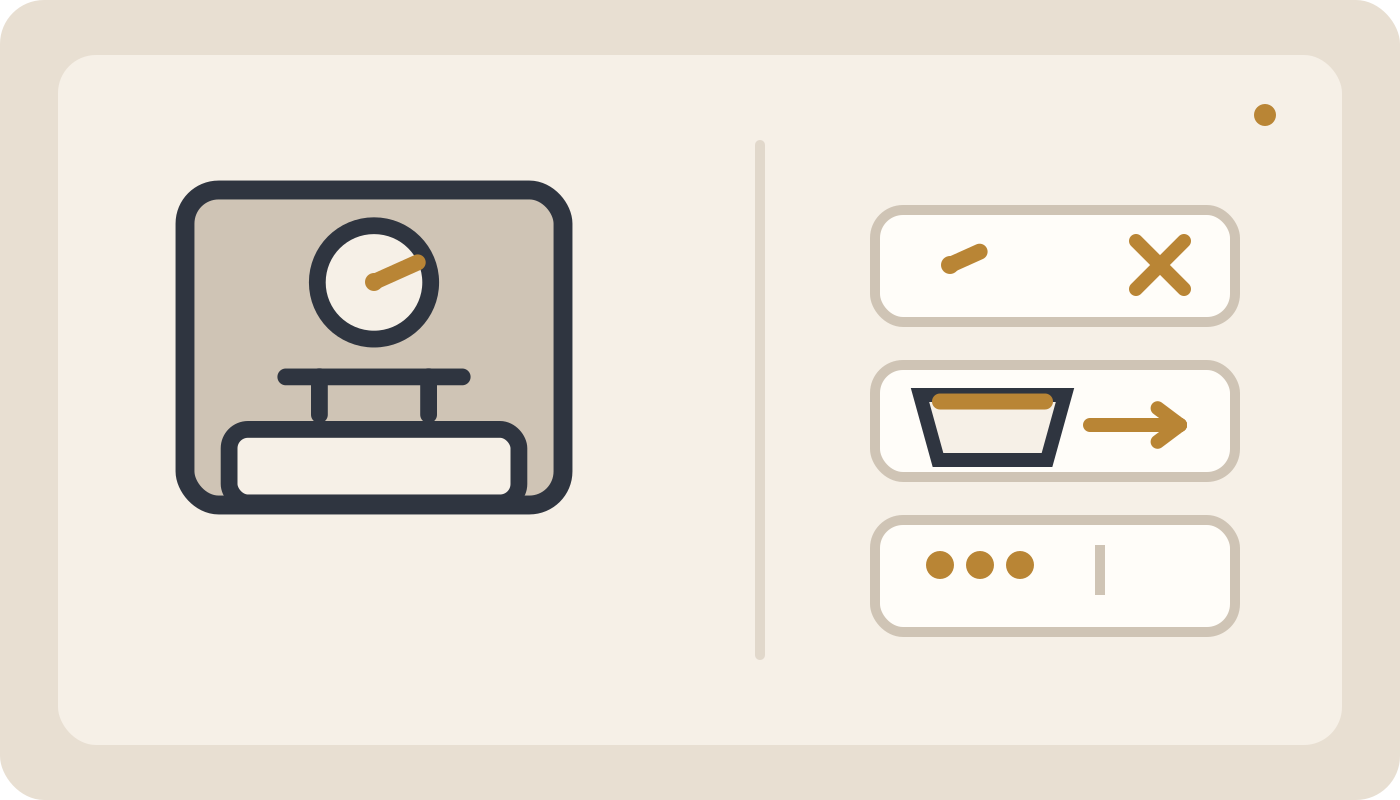
If high pressure occurs with extremely slow flow, adjust the grind slightly coarser and check the dose first. Then review distribution, tamping, and basket cleanliness. Abnormal free water flow points to the water path.
Where should you start?
Why is my espresso machine pressure too high?
High pressure during extraction does not automatically mean better espresso. In many cases, excessive resistance in the coffee bed makes it difficult for water to pass through. A grind that is too fine, an excessive dose, blocked basket holes, restricted outlets, and scale are common causes.
Quick test: if high pressure occurs together with extremely slow or dripping coffee flow, check grind size and dose first. If water flow is abnormal even without coffee, focus more on the water path and machine cleaning.
1. The coffee is ground too fine
An excessively fine grind creates high resistance and can slow or stop flow. Adjust the grinder coarser in small steps while keeping the coffee dose consistent.
2. The basket is overfilled
An excessive dose reduces puck headspace and can create unnecessary resistance. Respect the useful capacity of the basket instead of increasing coffee quantity without control.
3. Uneven distribution creates overly dense areas
Poor distribution can leave parts of the puck unusually compact and produce uneven resistance. Distribute the coffee evenly before tamping.
4. Tamping is excessive or uneven
The purpose of tamping is to create a level and consistent coffee bed, not to apply the greatest possible force. A tilted or inconsistent tamp can make extraction less predictable.
5. Basket holes or the portafilter outlet are restricted
Coffee oils and fine particles can restrict the outlet path. Clean washable components according to the machine instructions and inspect basket holes for blockage.
6. The group head or water path needs cleaning
Coffee residue around water-delivery components can affect flow. Follow the recommended cleaning routine for the group area and relevant removable parts.
7. Scale is restricting water flow
If the problem developed gradually or free water flow has also declined, mineral buildup may be contributing. Descale according to the instructions for the specific machine.
8. The gauge, valve, or pressure-control system needs inspection
If the displayed pressure remains abnormal and extraction does not respond logically to grind and dose adjustments, the gauge or pressure-control components may require qualified inspection.
Should you chase a specific gauge number?
No. Gauge readings should be interpreted together with extraction time, flow, brew ratio, and taste. Raising pressure simply by grinding finer or adding more coffee can make the result worse.
Best correction order
Start by adjusting the grind slightly coarser and checking the dose. Then review distribution, tamping, and basket cleanliness. If free water flow is also abnormal, review cleaning and descaling before arranging service if the problem remains.
Distinguish pressure from resistance
A high gauge reading does not automatically mean pump failure. Fine grind, excessive dose, and blocked basket holes can raise resistance. Test one variable at a time and suspect internal pressure-control parts only when abnormal behavior remains with a clean unrestricted path.
Common mistakes
Change only one variable at a time while diagnosing.
- Do not grind finer simply to achieve a higher gauge reading.
- Do not overfill the basket.
- Do not treat extreme tamping force as a quality target.
- Do not ignore blocked basket holes.
- Do not use unsuitable descaling chemicals.
- Do not open pressure-control components without appropriate technical knowledge.
Frequently asked questions
Does higher pressure always produce better espresso?
No. Pressure should be evaluated together with flow, time, brew ratio, and taste.
Why is pressure high while coffee only drips out?
The coffee bed is often too resistant because the grind is too fine or the dose is excessive.
Can very heavy tamping cause problems?
Excessive force is not a useful target; consistency and even puck preparation matter more.
Can a blocked basket affect pressure behavior?
Yes. Restricted outlet holes can reduce flow and change system behavior.
When is service appropriate?
When free water flow is also abnormal or the gauge does not respond logically to reasonable grind and dose changes.
Related guides and products
Still having the problem?
If safe user-level checks do not solve the issue, do not open the appliance. Submit a service request for technical inspection.